 Skip to content
A new patio or walkway can change how your entire yard feels, but the wrong surface can become a costly headache after a few North Texas summers. When homeowners ask about pavers versus concrete, they are usually weighing more than appearance. They want a surface that handles heat, shifting soil, rain, pool traffic, pets, and family gatherings without demanding constant repairs.
Both materials can look great and perform well when installed correctly. The best choice depends on where the surface is going, how you use your outdoor space, your budget, and how much flexibility you want years from now.
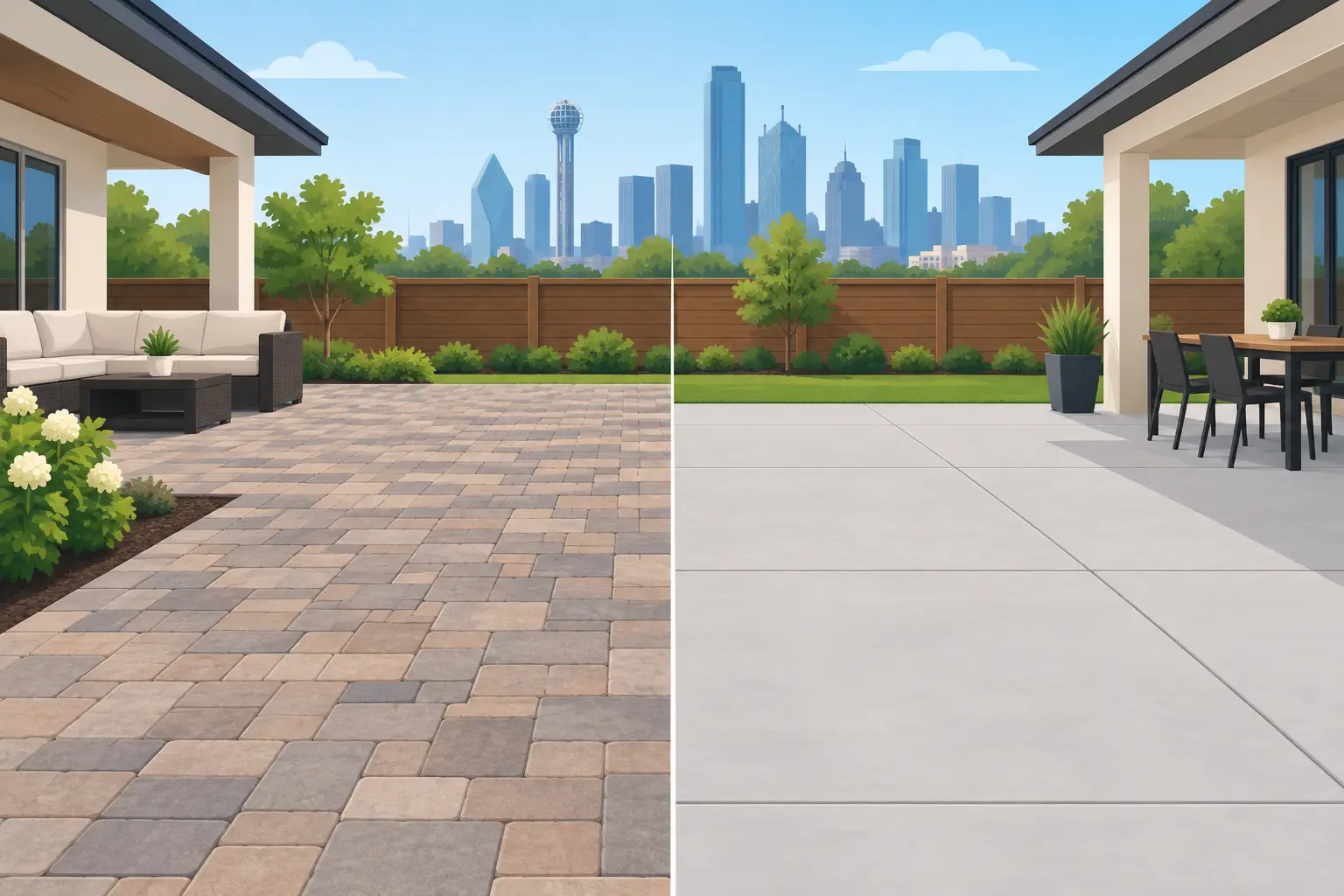
Pavers Versus Concrete: The Main Difference
Concrete is poured as one continuous slab. It can be finished smooth, brushed for traction, stamped for a decorative look, or colored to fit the landscape. It creates a clean, solid surface that works well for larger patios, driveways, and utility areas.
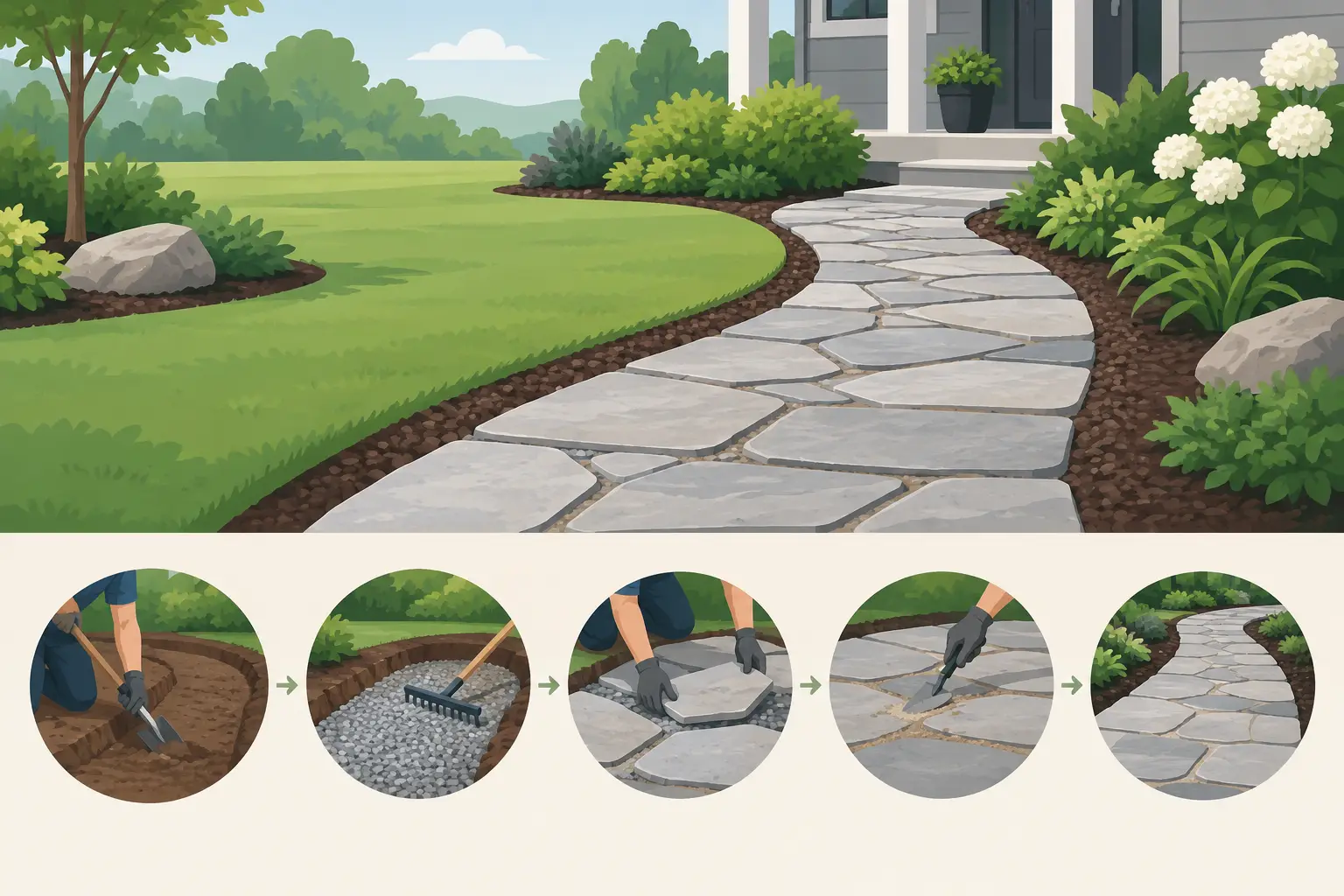
Pavers are individual units made from concrete, natural stone, or brick. They are installed over a properly prepared compacted base, with sand or joint material between each piece. That modular design gives pavers their biggest advantage: individual sections can move slightly with the ground and can be removed and reset if repairs are needed.
For Dallas-area homes, ground movement matters. Clay-heavy soil can expand when wet and contract during hot, dry periods. No outdoor hardscape is completely immune to those conditions, but pavers and concrete respond differently when the soil moves.
Appearance and Design Options
Concrete offers a simple, modern look. A standard broom-finished concrete patio is clean, practical, and easy to coordinate with many homes. Decorative concrete adds options such as staining, stamping, exposed aggregate, and custom borders. It can give a backyard a polished look without the higher material cost of some paver systems.
Pavers offer more built-in texture and visual detail. They come in different shapes, colors, laying patterns, and border options, making them a strong choice for patios, walkways, fire pit areas, pool decks, and outdoor kitchens. A paver patio can feel more custom because the layout can follow curves, define separate outdoor zones, or complement stone retaining walls and artificial turf.
The trade-off is that more visual detail typically means more labor and a higher initial price. If your priority is a broad, clean surface with a straightforward design, concrete may be the better fit. If the patio is a centerpiece of the backyard and you want a more finished, upscale look, pavers often earn their cost.
Cost: Upfront Price Versus Long-Term Value
Concrete is usually less expensive upfront, particularly for a basic patio with a standard finish. It requires less installation time than a detailed paver layout, which can make it appealing for homeowners working within a defined budget.
Pavers generally cost more because the installation process is more involved. The crew must excavate to the proper depth, establish grading, install and compact a base, set edge restraints, lay each paver, and finish the joints. A quality base is not optional. It is the foundation that helps the finished surface stay level and drain properly.
The initial price is only part of the decision. A cracked concrete slab can be difficult to repair without leaving a visible patch or color difference. Depending on the issue, repairs may involve resurfacing or replacing a larger section of the slab. With pavers, an installer can often lift the affected area, correct the base, and reinstall the same units. Keeping a few extra pavers from the original project is a smart move for future repairs.
That does not mean pavers are automatically the best value for every project. A properly installed concrete patio can provide many years of dependable use. But for a premium outdoor living area where long-term repairability matters, pavers can be a worthwhile investment.
Durability in Dallas Heat and Shifting Soil
Dallas weather puts outdoor surfaces through a lot. Summer heat is intense, sudden storms can drop heavy rain in a short time, and dry spells can cause soil movement. Installation quality has a major impact on how either material holds up.
Concrete naturally develops cracks over time. Control joints are cut into the slab to encourage cracking along planned lines, but they do not guarantee that cracks will remain invisible or stay exactly where intended. Small cracks can be mostly cosmetic, while larger cracks, separation, or uneven sections can create drainage and trip hazards.
Pavers do not eliminate movement, but their joints allow the system to flex more than a single slab. If one area settles, it can often be addressed locally rather than replacing the entire patio. The key is correct excavation, base preparation, compaction, edge restraints, and grading. Pavers installed over an inadequate base can still sink, separate, or become uneven.
For driveways, parking areas, or spaces that carry heavier loads, the required base depth and material selection become even more important. A contractor should design the installation for the actual use of the area, not treat every paver project like a garden walkway.
Drainage Can Decide the Project
A beautiful patio that sends water toward your foundation is not a successful patio. Drainage should be planned before any concrete is poured or pavers are placed.
Concrete needs the correct slope to direct water away from the house and toward a safe drainage path. Once the slab is poured, changing the slope is difficult and expensive. Low spots can also hold water, encourage staining, and make the surface slick.
Pavers can be designed with intentional grading as well, and certain systems allow water to pass through the joints into a prepared base below. Permeable pavers are not the right answer for every property, but they can be useful where runoff is a concern. They require the right base design and maintenance plan to keep the joints functioning properly.
Before selecting either material, look at gutters, downspouts, existing yard grades, pool drainage, and low areas near the home. If water already collects in the backyard, solve that problem as part of the hardscape project instead of covering it up with a new surface.
Maintenance and Everyday Use
Concrete is low maintenance in the basic sense. Sweep it, rinse it off, and address stains as needed. Sealing may help protect decorative finishes and make cleanup easier, but it should be done on the right schedule and with the right product. Pool chemicals, barbecue grease, rust, leaves, and hard-water deposits can all stain concrete.
Pavers also need routine care, especially in the joints. Over time, joint sand may need to be replenished, and weeds can appear if the installation is neglected or surrounding debris builds up. Polymeric sand can help stabilize joints and reduce weed growth when installed correctly. Periodic cleaning and sealing can refresh the color and help protect the surface.
Around pools, texture and heat are worth considering. Both concrete and pavers can become hot in direct Texas sun. Lighter colors generally stay more comfortable than darker surfaces. For pool decks, choose a finish with reliable traction when wet and avoid making the decision based on appearance alone.
Which Surface Fits Your Backyard?
Concrete makes sense when you want an efficient, budget-conscious surface with a clean appearance. It is a practical choice for straightforward patios, larger utility areas, and projects where a simple finish fits the home.
Pavers are often the stronger option for homeowners building a custom backyard space. They work especially well around outdoor kitchens, fire features, landscaped seating areas, walkways, and pool environments where design flexibility and repairability are valuable. They also pair naturally with artificial turf, flagstone accents, retaining walls, and planting beds.
There is also room for a combination approach. A homeowner may use concrete for a broad patio foundation and reserve pavers for a walkway, border, or high-visibility gathering space. The right layout can control costs while still giving the yard a finished, intentional appearance.
Get the Installation Details Right
The material is only as good as the work beneath it. Whether you choose concrete or pavers, ask how the area will be excavated, graded, compacted, and drained. Ask where water will go during a heavy storm and how the surface will connect to existing landscaping, turf, fencing, or a pool.
At Sod Green, hardscape planning starts with how you want to use the space, not with a one-size-fits-all surface recommendation. A properly designed patio should look sharp on installation day and continue working for your backyard after years of Texas weather.
Your outdoor space should make it easier to spend time outside, not give you another repair project to worry about. Choose the surface that fits your budget and style, then make sure the base, drainage, and installation are built to match.


Leave A Comment