 Skip to content
A patio has to do more than look good on installation day. In Dallas-Fort Worth, it must hold up through punishing summer heat, sudden downpours, shifting clay soil, pool traffic, pets, and weekends with a full house. When homeowners compare pavers versus concrete patios, the better choice usually comes down to the condition of the yard, the look you want, and how much future flexibility matters to you.
Concrete offers a clean, cost-conscious surface that works well for many backyards. Pavers cost more upfront, but they bring design range and easier repairs when the ground moves. Neither material wins every project. A well-built patio starts with the right material and proper base preparation, drainage planning, and installation.
Pavers Versus Concrete Patios: The Main Difference
A concrete patio is a continuous slab poured into a prepared area, then finished with a broom texture, smooth surface, stain, stamp, or decorative coating. It creates a solid, simple surface with fewer joints and a streamlined appearance.
Pavers are individual units made from concrete, natural stone, or brick. They are installed over a compacted gravel base and bedding sand, with edge restraints that keep the pattern in place. The joints between pavers allow a small amount of movement, which is a major consideration in North Texas.
The visible difference is obvious, but the construction difference is what homeowners feel over time. A concrete slab moves as one large piece. Pavers can move slightly without turning a small soil shift into one large crack.
Cost: Upfront Price Versus Long-Term Value
Concrete is typically the lower-cost option at the start. A basic broom-finished concrete patio is efficient to install and provides a durable space for outdoor furniture, grilling, and everyday use. Decorative concrete, including stamped patterns, borders, color, and special finishes, can raise the price considerably.
Pavers generally require more labor and more base work, so the initial investment is usually higher. That investment can make sense for homeowners building a long-term outdoor living area, especially when the patio is part of a larger landscape plan with a fire pit, retaining wall, artificial turf, pool deck, or walkway.
Price should not be the only deciding factor. A cheaper patio that drains poorly or cracks early is not a bargain. The square footage, access to the backyard, excavation needs, demolition, grading, drainage corrections, material selection, and edge details all affect the final project cost.
When Concrete Is the Better Budget Choice
Concrete makes sense when you need a straightforward, functional patio and want to keep the initial cost under control. It is a practical choice for a small grilling pad, a simple furniture area, or a backyard where the patio is not the main design feature.
It can also be a good fit when access is difficult and bringing in paver materials or making extensive base preparations would add unnecessary cost. The key is making sure the slab has appropriate reinforcement, control joints, slope, and a properly prepared subgrade.
When Pavers Are Worth the Extra Investment
Pavers are often worth it when visual impact and repairability matter. They offer more colors, textures, shapes, borders, and laying patterns than a standard slab. Homeowners can create a patio that feels tailored to the home instead of looking like an afterthought.
They are also a strong option for yards with known soil movement or areas where underground repairs may be needed in the future. If a section settles or utility work disturbs the patio, individual pavers can be lifted, the base corrected, and the surface reinstalled. Matching an older concrete slab after a repair is often much harder.
Dallas Clay Soil Changes the Conversation
North Texas expansive clay soil is one reason this choice deserves more thought than a quick material comparison. Clay expands when it holds moisture and contracts during dry periods. That movement can put stress on concrete slabs, particularly when drainage is poor or the soil beneath the patio was not adequately prepared.
Concrete control joints are designed to encourage cracking in planned locations. They help, but they do not guarantee a crack-free patio. Hairline cracks may be mostly cosmetic, while wider cracks, uneven sections, or sinking edges can affect appearance and function.
Pavers do not eliminate the need for preparation. A paver patio installed over a weak or poorly compacted base can settle, separate, or develop low spots. But a correctly built paver system has more flexibility than a continuous slab. That can be an advantage in yards where seasonal soil movement is part of the landscape.
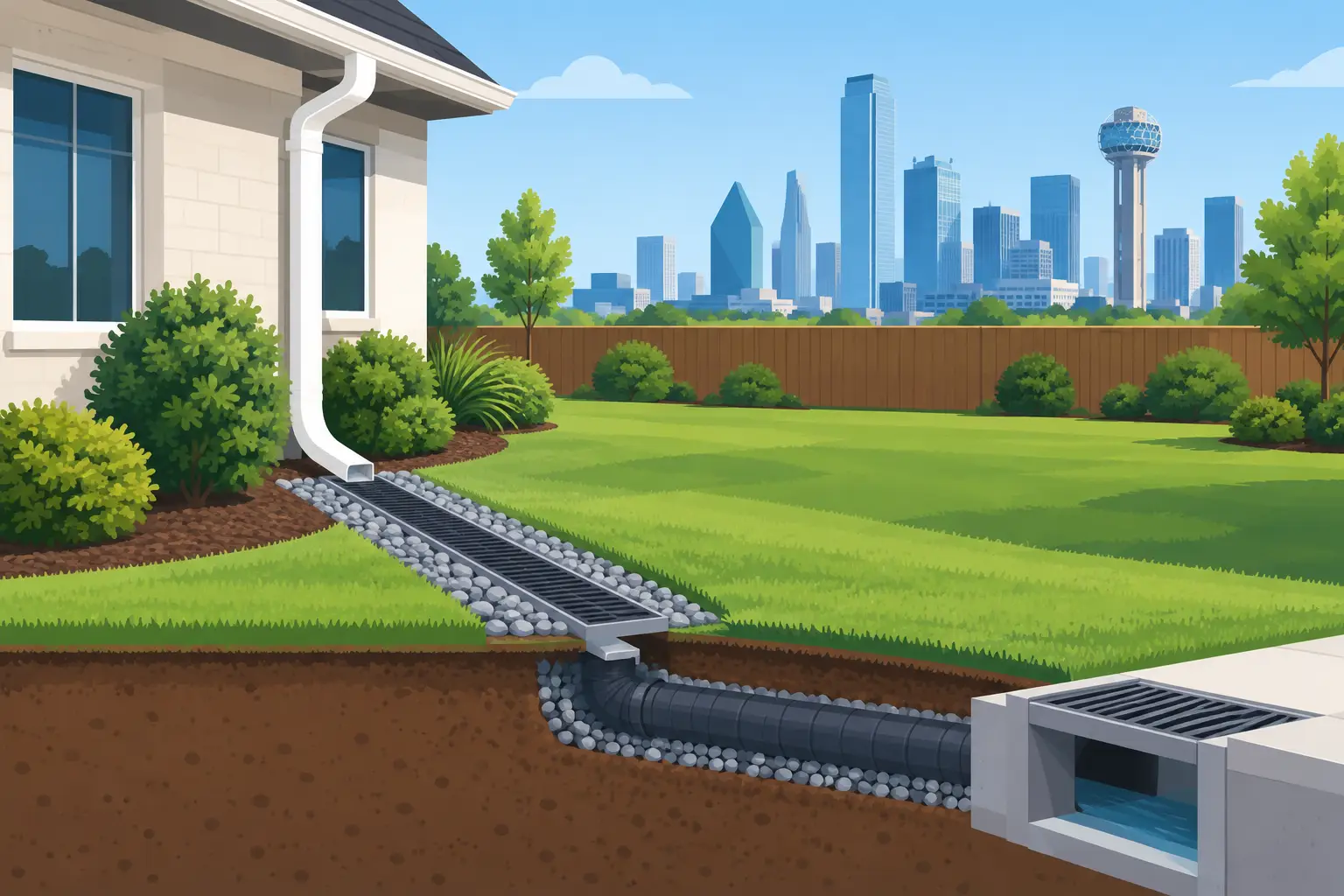
Drainage matters just as much as the surface material. Water should move away from the home and not collect against patio edges, under a turf seam, or near a foundation. Before installing either option, a contractor should evaluate the slope, downspout discharge, low areas, and runoff from nearby roofs or pool decks.
Heat, Comfort, and Everyday Use
Every hardscape surface gets hot in a Dallas summer. Concrete can reflect substantial heat, especially in light colors and open areas with no shade. Dark pavers also absorb heat, but their color, texture, and joint layout give homeowners more design choices to manage the look and feel of the space.
For a patio beside a pool, texture deserves attention. A finish that is too smooth can become slippery when wet. Broom-finished concrete, textured pavers, and certain natural stone options offer better traction than polished surfaces. The best choice depends on whether the area will see frequent splashing, kids running through the yard, or mostly dry outdoor dining.
Furniture and grills work well on both surfaces. Concrete gives a level, uninterrupted base for heavy items. Pavers work just as well when the installation is properly compacted and leveled. For either material, plan the patio size around how you actually use the backyard. A table, chairs, grill, walkway clearance, and lounge furniture take more room than most homeowners expect.
Maintenance and Repairs
Concrete is low maintenance, but it is not maintenance-free. It should be kept clean, and sealing may help protect decorative finishes from stains and weathering. Small cracks are common over time. Once a slab has cracked or settled significantly, repairs can be visible and sometimes involve patching, lifting, or replacing a larger section.
Pavers need occasional attention to the joints and surface. Joint sand may need to be refreshed, and weeds can appear if the joints are neglected. Sealing is optional depending on the paver type and desired finish, but it can help protect color and make cleanup easier. The advantage is localized repair. A stained, chipped, or settled section can often be addressed without tearing out the full patio.
Homeowners who want the least day-to-day maintenance may lean toward concrete. Homeowners who want a patio that can be repaired in sections often favor pavers. Both outcomes depend heavily on installation quality. The base beneath the surface is where long-term performance begins.
Design Flexibility and Curb Appeal
If your backyard design includes clean modern lines, a simple rectangular concrete patio may be exactly right. Concrete can be shaped for curved edges, colored for warmth, or stamped for a more decorative look. It pairs well with contemporary landscaping, pergolas, and straightforward outdoor living layouts.
Pavers provide more visual depth. A border in a contrasting color can define the patio, while a herringbone, running bond, or modular pattern can complement the style of the house. Pavers also transition naturally into walkways, fire pit areas, garden paths, and pool surrounds. For homeowners adding artificial grass, pavers can create a crisp, durable frame around turf and planting beds.
Stamped concrete can imitate stone or pavers, but the finish remains one continuous slab. That may be ideal for the budget and appearance you want, yet it will not offer the same individual-unit repair options as real pavers.
How to Choose the Right Patio for Your Yard
Choose concrete when you want a practical, lower-cost surface, a clean minimal look, and a simple layout with solid drainage. It is a dependable choice when the subgrade is stable and the project is designed with proper slope and control joints.
Choose pavers when you want a more customized appearance, expect soil movement, value easier future repairs, or are building a complete outdoor space that connects patios, walkways, turf, and landscape features. They require a larger initial investment, but they can provide a more flexible long-term surface.
The right decision should be made after looking at the actual property, not just comparing photos online. A backyard with drainage problems, a steep grade, mature tree roots, tight side-yard access, or a pool may need a different approach than a flat, open lot. Sod Green can evaluate the site, explain the trade-offs clearly, and build a patio that fits the way your family uses the space.
A good patio should make the backyard easier to enjoy, not give you another repair project to worry about. Start with the surface that fits your budget, soil conditions, and design goals, then make sure the work underneath it is built to last.


Leave A Comment