 Skip to content
A great backyard should not sit empty for most of the year. It should be a place where kids play, pets have room to run, guests gather after dinner, and homeowners can relax without staring at patchy grass or muddy corners. The biggest outdoor living design trends are moving Dallas backyards in that direction: polished, usable spaces built around low maintenance, comfort, and durable materials that can handle Texas weather.
For homeowners, the goal is not to copy a photo from a design magazine. The best outdoor upgrades fit the way your family actually uses the property. A putting green may make sense for a golf-focused household. Artificial turf can be a smart answer for pet owners and busy families. A larger patio and shaded seating area may matter most for people who entertain. The right plan starts with practical needs, then turns them into a backyard that looks finished from every angle.
Outdoor Living Design Trends Built for Dallas
Dallas homeowners are investing in outdoor spaces that work harder. Instead of treating the yard as a separate area to mow and water, they are connecting it to the home with patios, walkways, turf, planting areas, and seating zones. This creates a more intentional layout and makes the backyard feel like an extension of the house.
The strongest designs also account for heat, sudden rain, active kids, pets, and the reality of maintaining a lawn through a long Texas summer. A beautiful backyard is only valuable if it remains enjoyable after the installation crew leaves. That is why durable surfaces, proper drainage, and clearly defined use areas are becoming central to outdoor projects.
Low-Maintenance Turf Takes Center Stage
Artificial grass remains one of the most practical ways to create a consistently green outdoor surface. Modern synthetic turf systems are designed to look more natural than the stiff, bright green products many homeowners remember. When installed correctly with the right base preparation and drainage, turf provides a clean, durable area for play spaces, pet runs, pool surrounds, side yards, and putting greens.
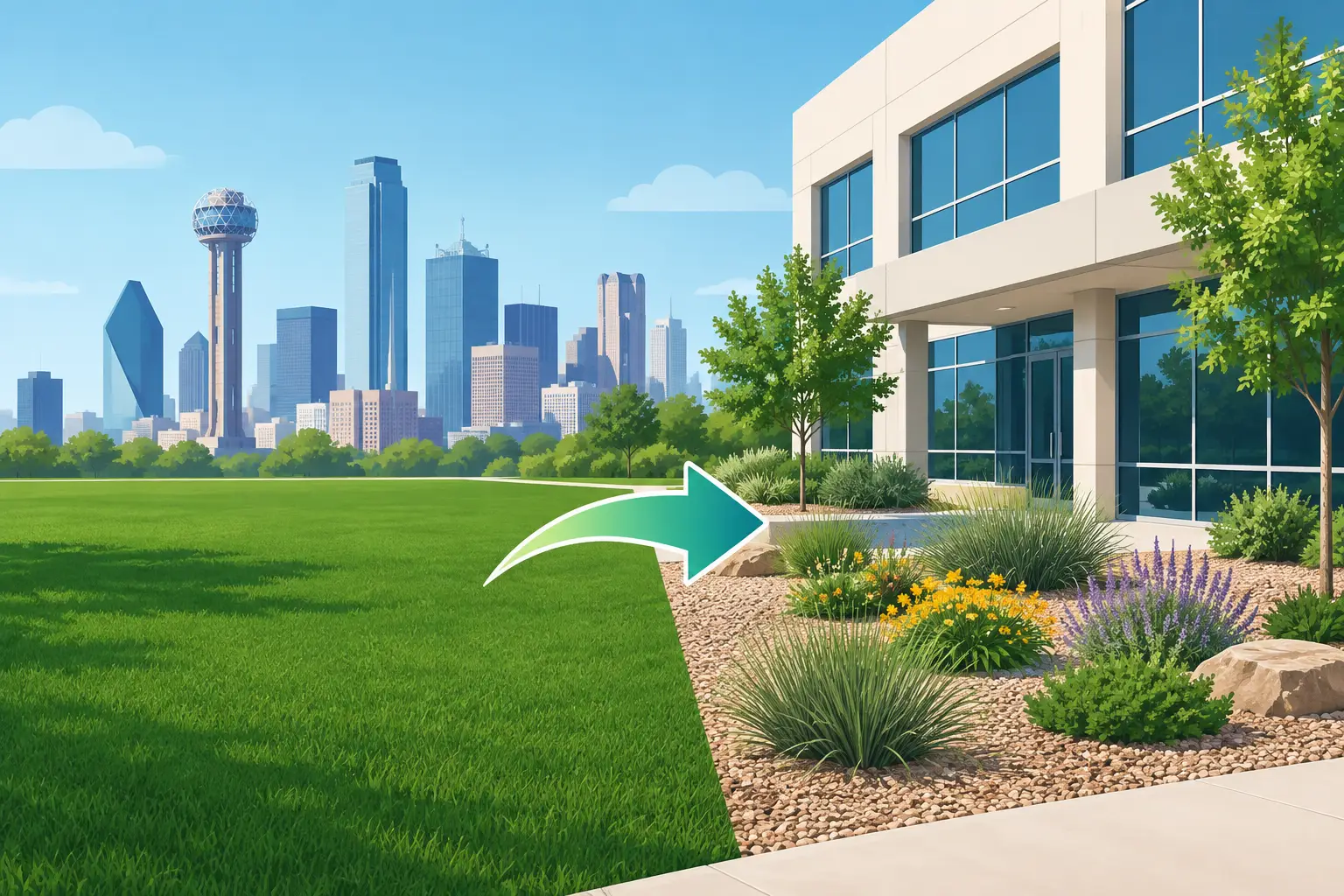
This trend is especially appealing in yards where natural grass struggles. Heavy shade, poor soil, high foot traffic, and pet damage can leave even a well-kept lawn thin and worn. Artificial turf does not eliminate every responsibility – it still needs occasional rinsing, brushing, and debris removal – but it can significantly reduce watering, mowing, and ongoing lawn repair.
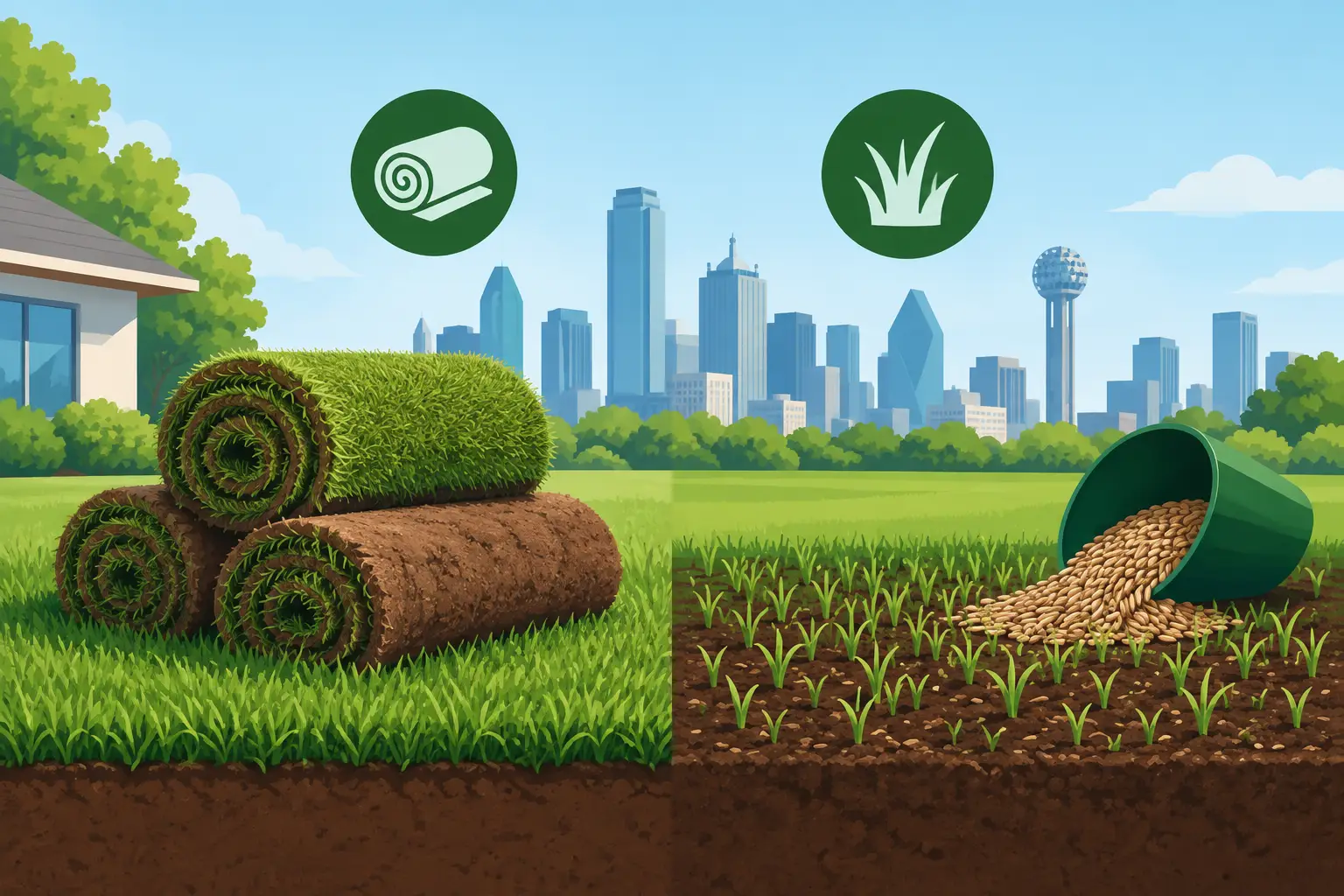
Natural sod still has a place in many Dallas properties. Fresh sod can transform a tired front yard quickly and gives homeowners the look and feel of a living lawn. The decision between sod and turf depends on sun exposure, traffic, water use, budget, and how much ongoing maintenance the homeowner wants to take on. In many cases, a combination works best: sod in the front yard, turf in a high-use backyard or narrow side yard.
Defined Zones Make Backyards More Useful
One large open lawn is not always the most functional use of space. Current outdoor living design trends favor defined zones that give each part of the yard a purpose. A hardscape patio might hold a dining table, while a turf section provides a soft play area. A stone walkway can lead to a quiet seating area, garden bed, or fire feature.
Creating zones does not require a massive property. Even a compact backyard can feel larger when the layout is organized. The key is to avoid forcing too many features into a small footprint. A crowded yard with oversized furniture, narrow walkways, and competing materials can feel less useful than a simple plan with two or three well-designed areas.
For families, a common layout includes a patio near the home, a turf play area, and a separate dog-friendly space. For homeowners who entertain, the priority may be a larger gathering area with a clear path from the kitchen or pool. The design should follow how people move through the yard, not just where features look good on a sketch.
Shade and Comfort Are No Longer Optional
Texas sunshine is great until a patio becomes too hot to use by midday. More homeowners are planning shade into their outdoor living projects from the beginning instead of adding a temporary umbrella later. Covered patios, pergolas, shade structures, and strategically placed trees can make a major difference in how often the space gets used.
Surface selection matters here as well. Stone and hardscape materials should be chosen with both appearance and heat exposure in mind. Some materials can become uncomfortably hot in full sun, particularly around pools or barefoot areas. A contractor can help homeowners balance the desired color and texture with the practical demands of the space.
Comfort also includes privacy. Thoughtful landscape beds, decorative screening, retaining walls, and changes in elevation can help create a more private backyard without making it feel closed in. This is particularly valuable in newer neighborhoods where homes are built close together and outdoor areas are visible from multiple sides.
Hardscapes Add Structure and Lasting Value
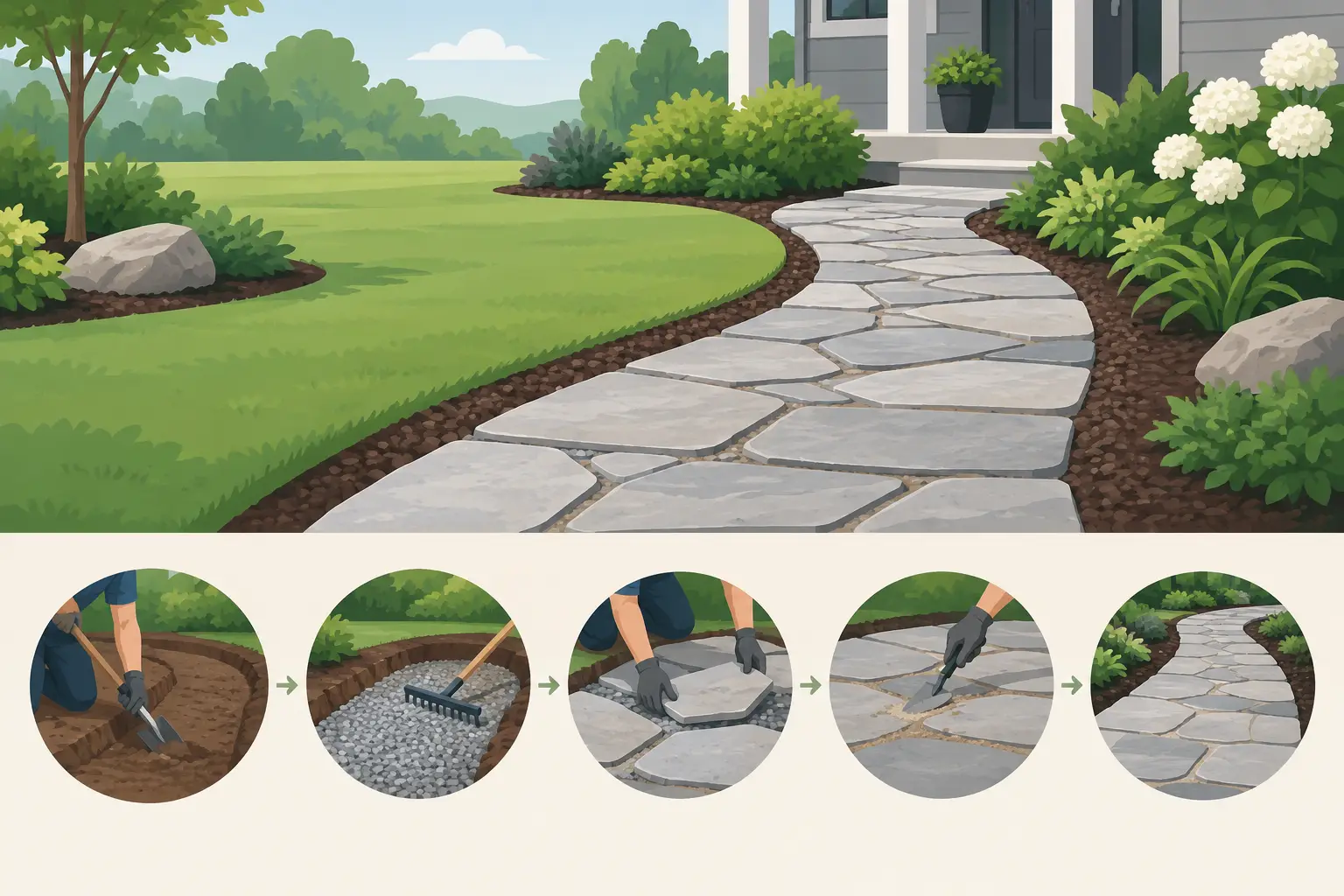
Flagstone patios, paver walkways, retaining walls, and stone borders continue to be popular because they give a yard a finished, permanent feel. Hardscapes also solve problems. A walkway keeps foot traffic out of muddy grass. A retaining wall can manage a sloped section of the property. A patio creates a clean, level surface for furniture and outdoor cooking.
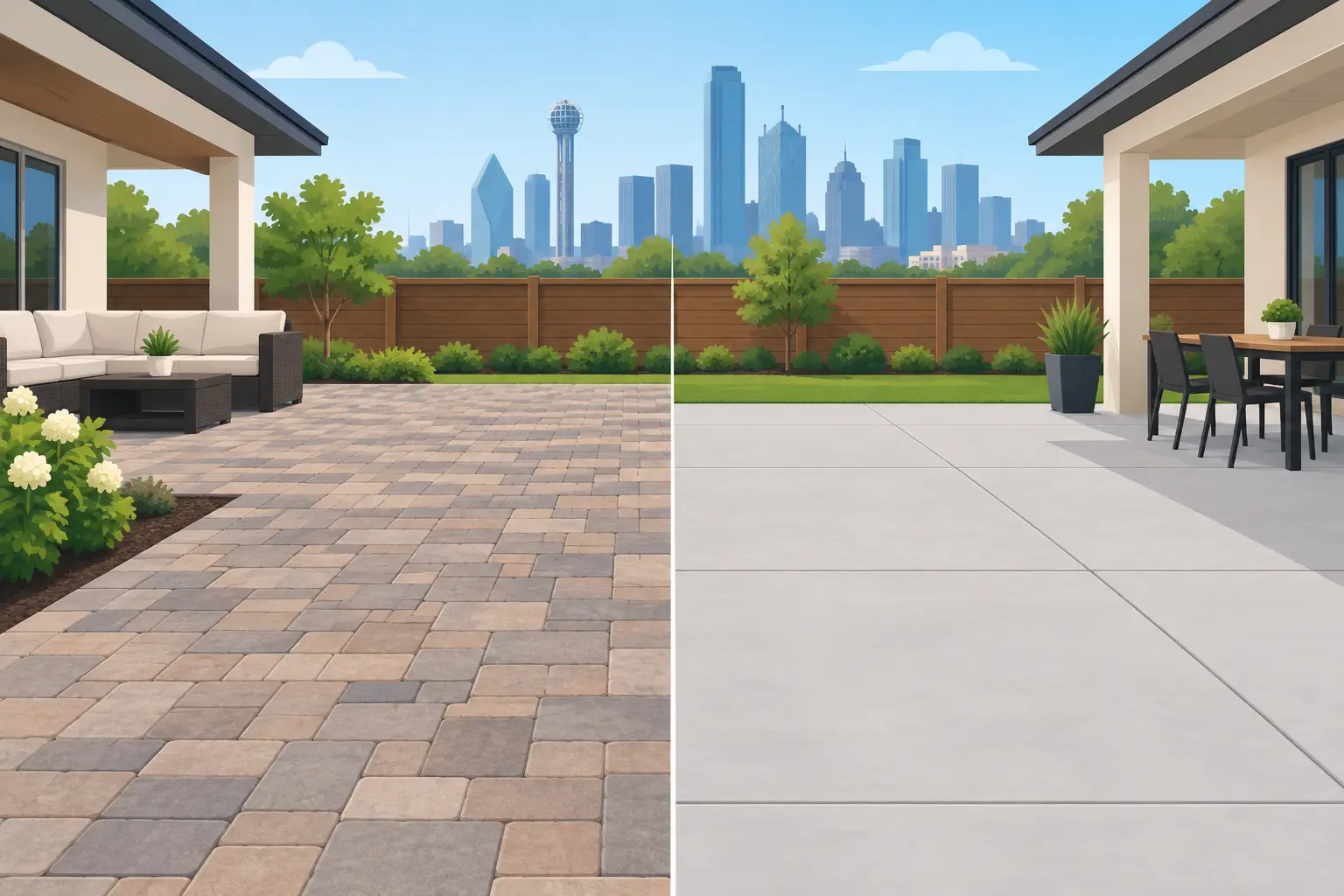
Material selection should match the home and the maintenance expectations. Natural stone brings character and variation, while pavers offer a more uniform look and can be easier to repair in certain situations. Concrete can be cost-effective for larger areas, but it may not provide the same visual detail as stone or pavers. There is no single best option for every yard.
The important part is installation quality. A patio or walkway is only as reliable as its base, grading, and edge restraint. Skipping preparation may save money at first, but shifting materials, standing water, and uneven surfaces can turn into expensive problems later.
Drainage Is a Design Feature, Not an Afterthought
A backyard can have premium turf, new stone, and attractive planting beds, yet still fail if water has nowhere to go. North Texas storms can expose drainage issues quickly. Standing water damages lawns, creates muddy areas, weakens hardscape bases, and can make a backyard unusable when you want it most.
Good outdoor design starts with grading and water flow. In some yards, the solution may be subtle: adjusting slopes, preparing a proper turf base, or placing hardscape surfaces so water moves away from the home. Other properties may need more direct drainage solutions, especially when low spots, downspouts, or neighboring lots send water into the yard.
Drainage should be addressed before the final surface is installed. It is far more efficient to solve it during construction than to pull up new turf or stone after the first heavy rain. Homeowners should be cautious when a contractor focuses only on the visible finish and does not ask where water currently collects.
Backyard Putting Greens Stay Personal
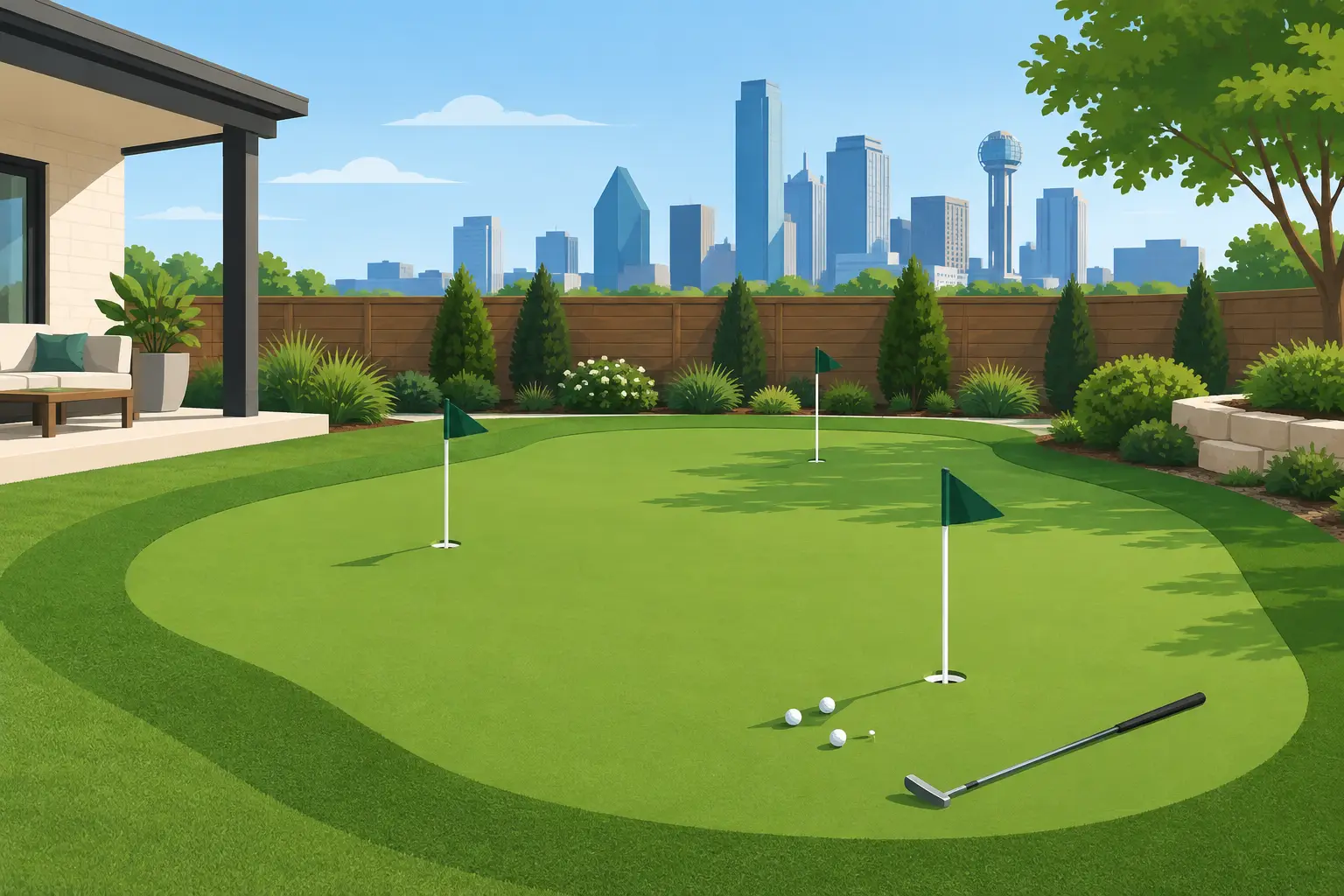
A backyard putting green is one trend that keeps growing because it combines recreation with a polished landscape feature. It can be designed for casual family fun, regular practice, or a more challenging setup with breaks, fringe areas, and multiple cup locations. Unlike a natural grass practice area, synthetic putting turf stays consistent without daily mowing and watering.
A putting green is not the right choice for every backyard. It requires enough room to feel useful, and the design should leave space for the functions a family needs most. But for golfers, it can turn an underused side yard or backyard corner into a feature that gets used year-round.
Make the Front Yard Part of the Plan
Outdoor living is often associated with the backyard, but curb appeal is still one of the strongest reasons homeowners improve their landscapes. A clean sod installation, defined stone borders, fresh planting areas, and a welcoming walkway can dramatically change the first impression of a home.
Front-yard upgrades should stay practical. If the property has poor drainage, thin grass, or areas that receive constant foot traffic, address those issues before spending heavily on decorative elements. A sharp, healthy-looking front yard does not have to be complicated. It needs balanced proportions, clean edges, and materials that hold up through the seasons.
The best outdoor space is not the one with the most features. It is the one that solves the problems you have now and gives your family more reasons to step outside. Whether that means fresh sod, low-maintenance turf, a flagstone patio, better drainage, or a custom putting green, start with a plan built for your property, your routine, and the Texas weather it has to handle.


Leave A Comment