 Skip to content
A small backyard can feel crowded long before it actually is. One oversized patio, a poorly placed walkway, or a drainage swale running through the middle of the space can leave you with a yard that looks unfinished and functions even worse. Smart hardscape planning for small yards turns limited square footage into a clean, durable outdoor area with a purpose for every section.
For Dallas-Fort Worth homeowners, the goal is rarely to fill every inch with stone. The best results come from making the yard easier to use through hot summers, heavy rain, family gatherings, pets, and everyday traffic. A well-planned patio, path, retaining edge, or turf border can make a compact backyard feel organized, open, and ready to enjoy.
Start With How You Want to Use the Yard
Hardscape should solve a practical problem first. Before choosing pavers, flagstone, or decorative gravel, decide what the space needs to do. A family may need a dining patio and a durable pet run. A pool owner may need safe walking surfaces and proper drainage. A golfer may want a compact putting green with a clean stone border and a place to stand between shots.
Trying to give a small yard every possible feature usually creates a cramped layout. Choose one primary use and one supporting use. For example, a 300-square-foot backyard may work best with a modest seating area as the main feature and artificial turf as the secondary feature. That combination gives the yard a finished appearance without sacrificing usable open space.
It also helps to think about traffic before construction starts. People need a clear route from the house to the gate, pool, grill, or seating area. If that route cuts across grass or loose gravel, it will quickly become worn, muddy, or uneven. A properly placed walkway protects the landscape and keeps the yard cleaner.
Create Zones Without Breaking Up the Space
Small yards benefit from clear zones, but those zones should still feel connected. A patio can serve as the anchor, while a turf area, planting bed, or putting green gives the eye a second destination. Using complementary materials helps the entire yard read as one finished project rather than several disconnected additions.
For instance, a flagstone patio can transition into synthetic turf with a stone or steel edge. A narrow paver walkway can lead to a small fire feature or seating corner. The materials do not have to match exactly, but they should work together in color, texture, and scale.
Avoid using too many small patterns in a compact space. Tiny pavers, several border colors, and multiple surface changes can make the yard look busy. Larger-format stone or pavers often create a calmer, more open appearance because there are fewer visible joints. The right choice depends on the home style, budget, and amount of foot traffic, but simple layouts tend to age better.
Make the Patio Fit the Furniture
A patio that looks good on paper may still be too small for the furniture you plan to use. Measure the table, chairs, grill, and any lounge seating before finalizing the layout. Chairs need room to pull out, and walkways need enough clearance for people to move without squeezing past furniture.
In many small Dallas backyards, a simple rectangle or square patio is more efficient than a curved design. Curves can be attractive, especially around a pool or garden bed, but they sometimes consume valuable square footage and add cutting labor. Straight lines may provide more usable seating area for the same installation cost.
Treat Drainage as Part of the Design
Drainage is not the glamorous part of a hardscape project, but it is one of the most important. North Texas storms can send a large volume of water across a small yard in minutes. If a patio or walkway is installed without the right slope, water can collect against the home, settle on the surface, or wash out adjacent landscape areas.
A professional plan should account for existing grades, downspout discharge, low spots, and where water will exit the property. In some yards, that means adjusting the base beneath a patio. In others, it may require a French drain, channel drain, catch basin, or a carefully graded turf area. The best solution depends on the property, not a one-size-fits-all drainage product.
Do not assume a new hardscape surface will fix standing water by itself. Impermeable surfaces move water somewhere else. That water needs a controlled path away from the foundation and away from areas where it can create erosion or pooling. Addressing drainage before installation protects the investment and prevents expensive rework later.
Choose Materials That Match Texas Conditions
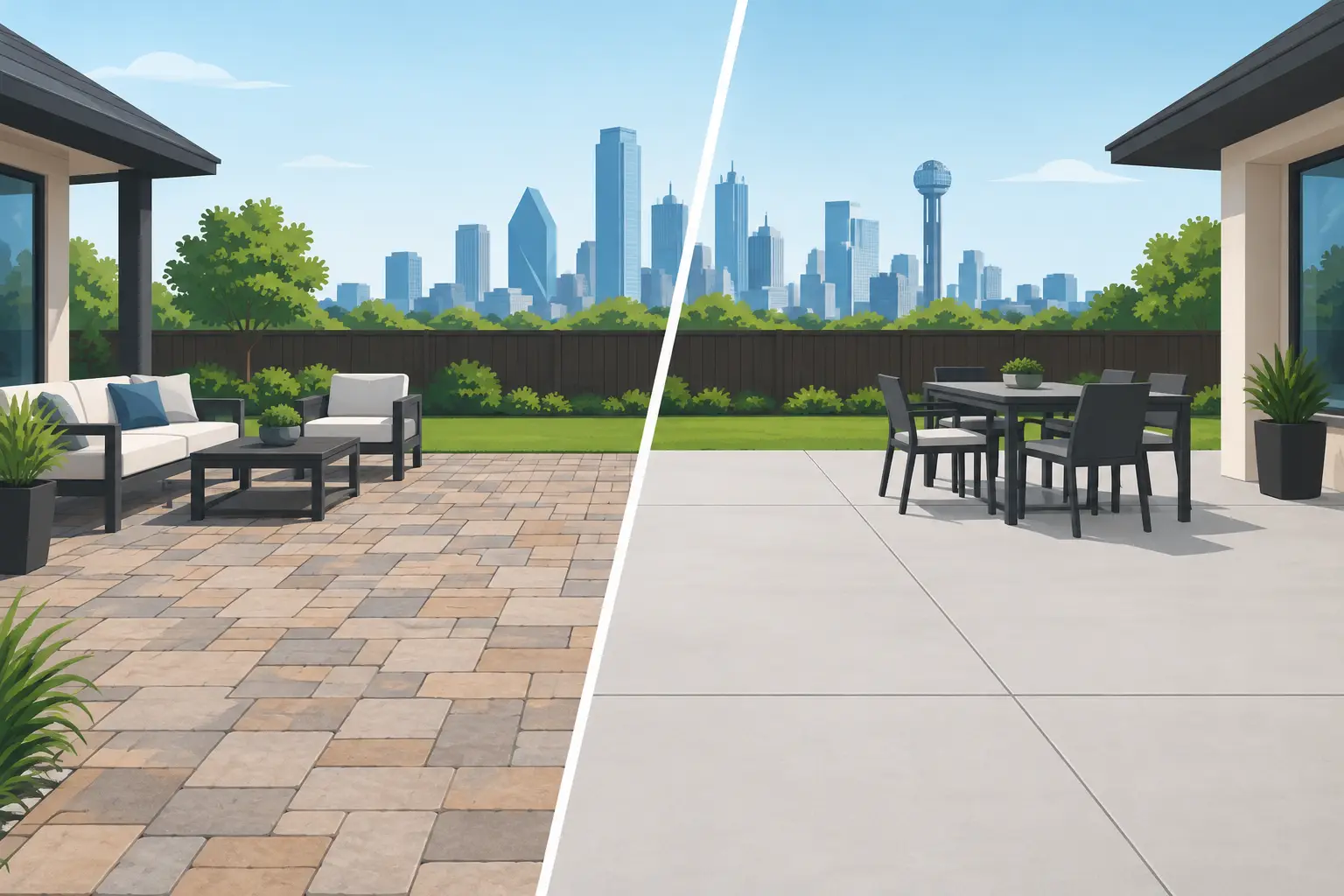
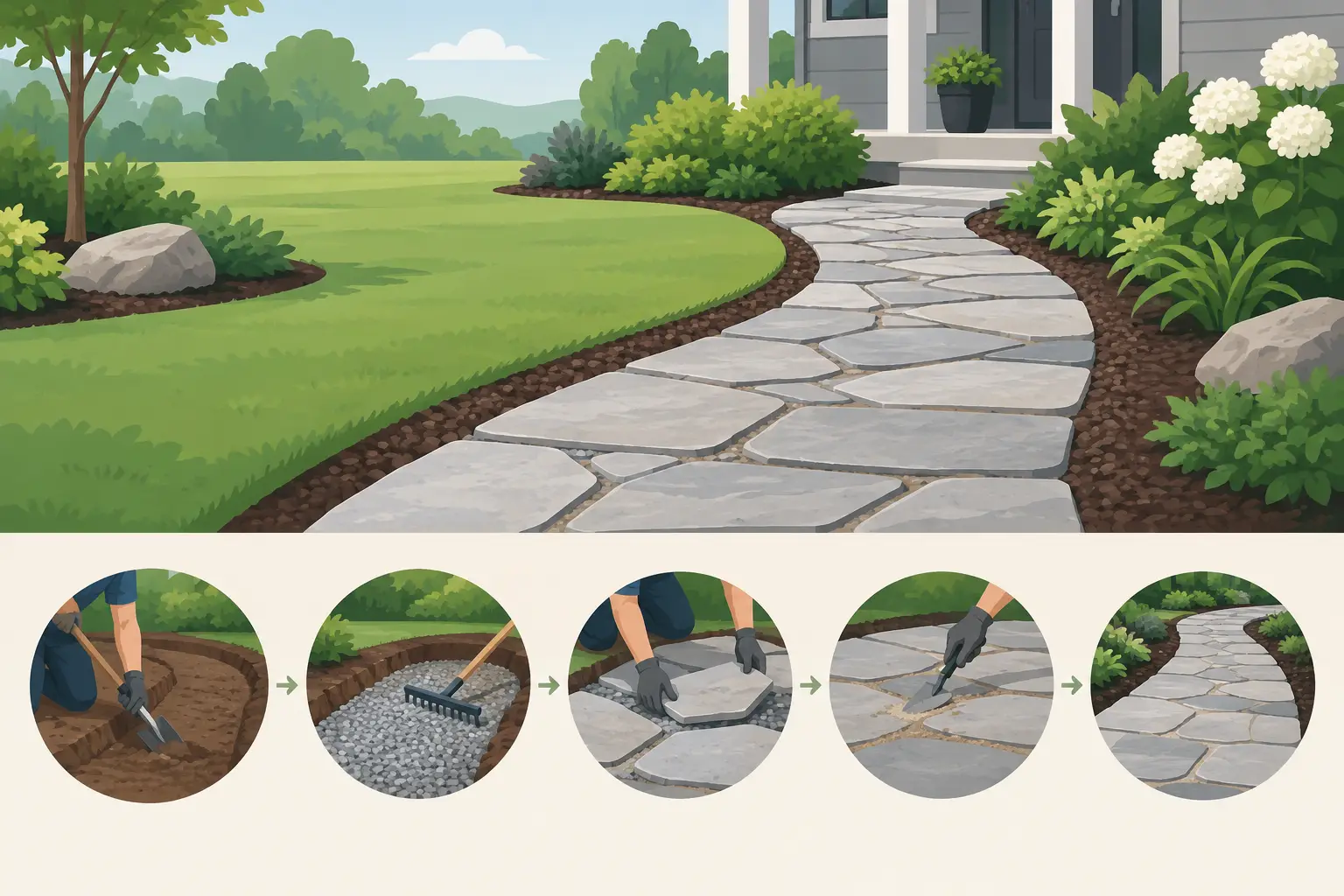
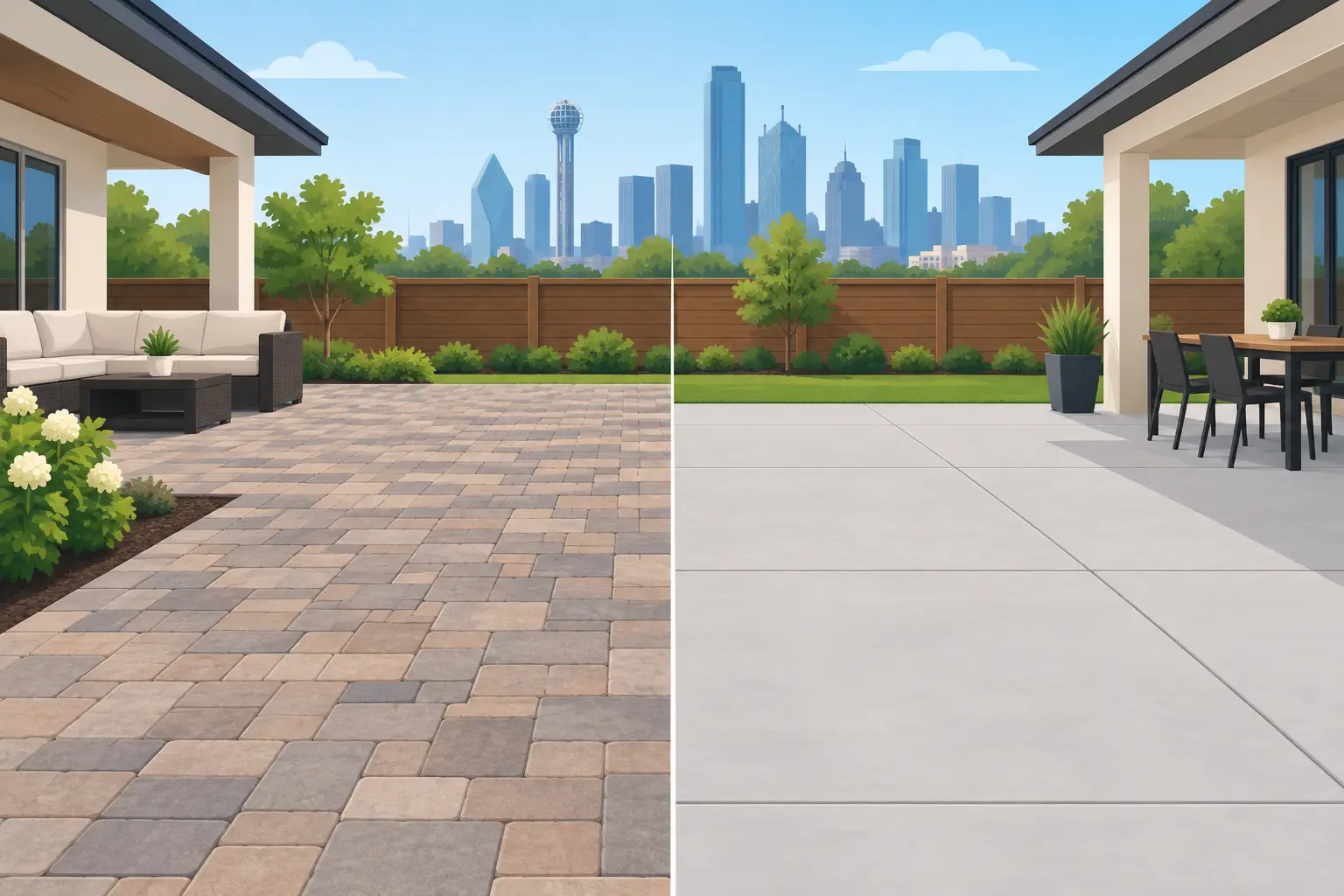
The material should suit the way the yard will be used, not just the look you saw in a photo. Flagstone delivers a natural, high-end appearance and works well for patios, walkways, and poolside areas when installed on a proper base. Concrete pavers offer clean lines, consistent sizing, and a wide range of colors. Decorative gravel can be useful for narrow side yards or low-traffic accents, but it is not always the best option for children, pets, or outdoor dining spaces.
Heat matters, too. Dark hardscape surfaces can become uncomfortable during a Dallas summer afternoon, especially in full sun. Lighter colors may reflect more heat, though they can show dirt and leaf stains more easily. Textured finishes provide better traction around pools and outdoor kitchens, while smoother materials may be easier to sweep and maintain.
A durable installation depends on what is below the finished surface. Excavation depth, compacted base material, edge restraint, and proper grading all affect whether a patio stays level. Quality workmanship is not always visible on day one, but it becomes obvious when a surface remains stable through changing weather and regular use.
Pair Hardscape With Low-Maintenance Green Space
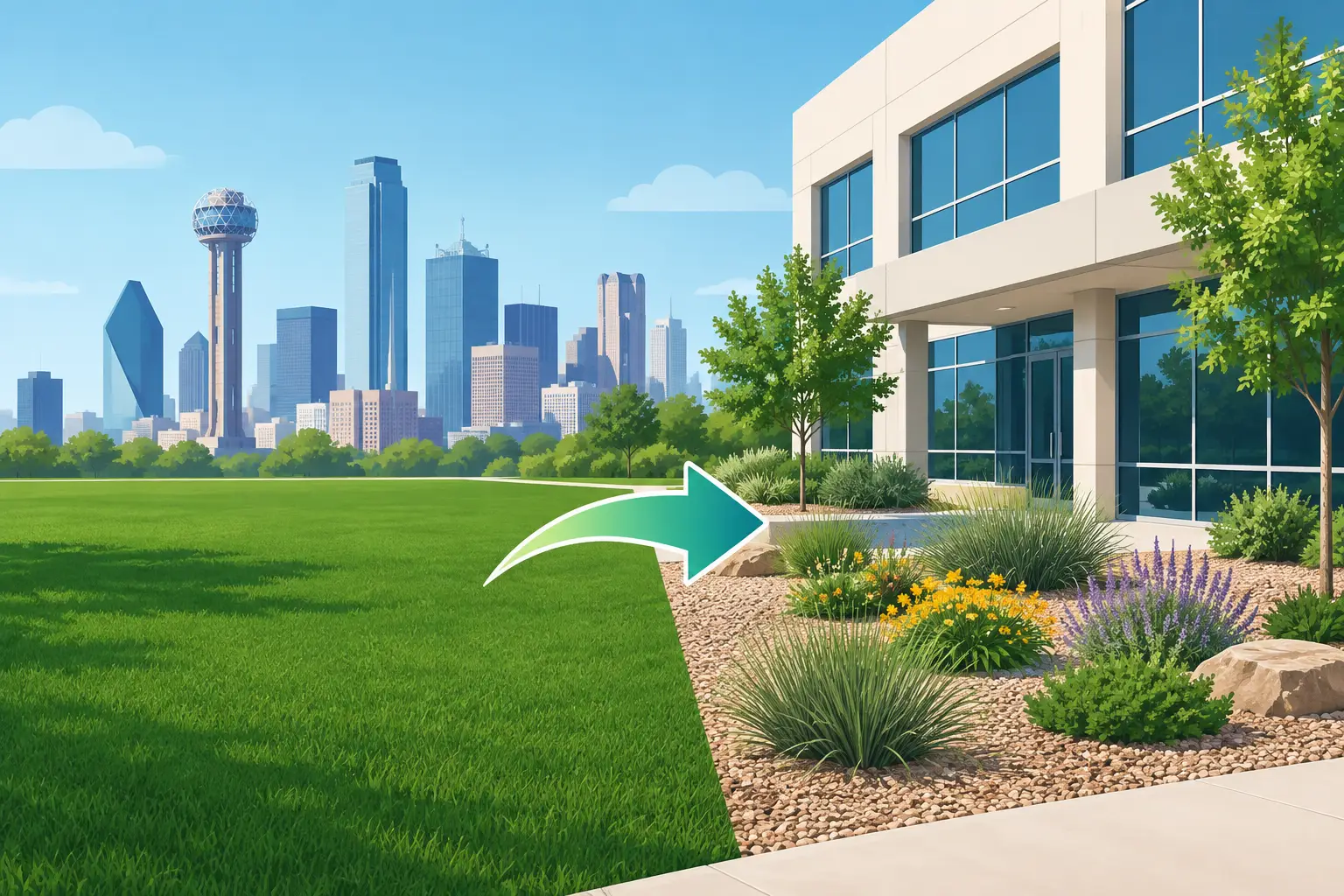
Hardscape does not need to replace every bit of green in a small yard. In fact, a balanced layout often feels cooler and more comfortable than a space made entirely of stone. Artificial grass is a practical option for homeowners who want a clean green area without the water use, mowing, mud, and bare spots common with natural grass in tight backyards.
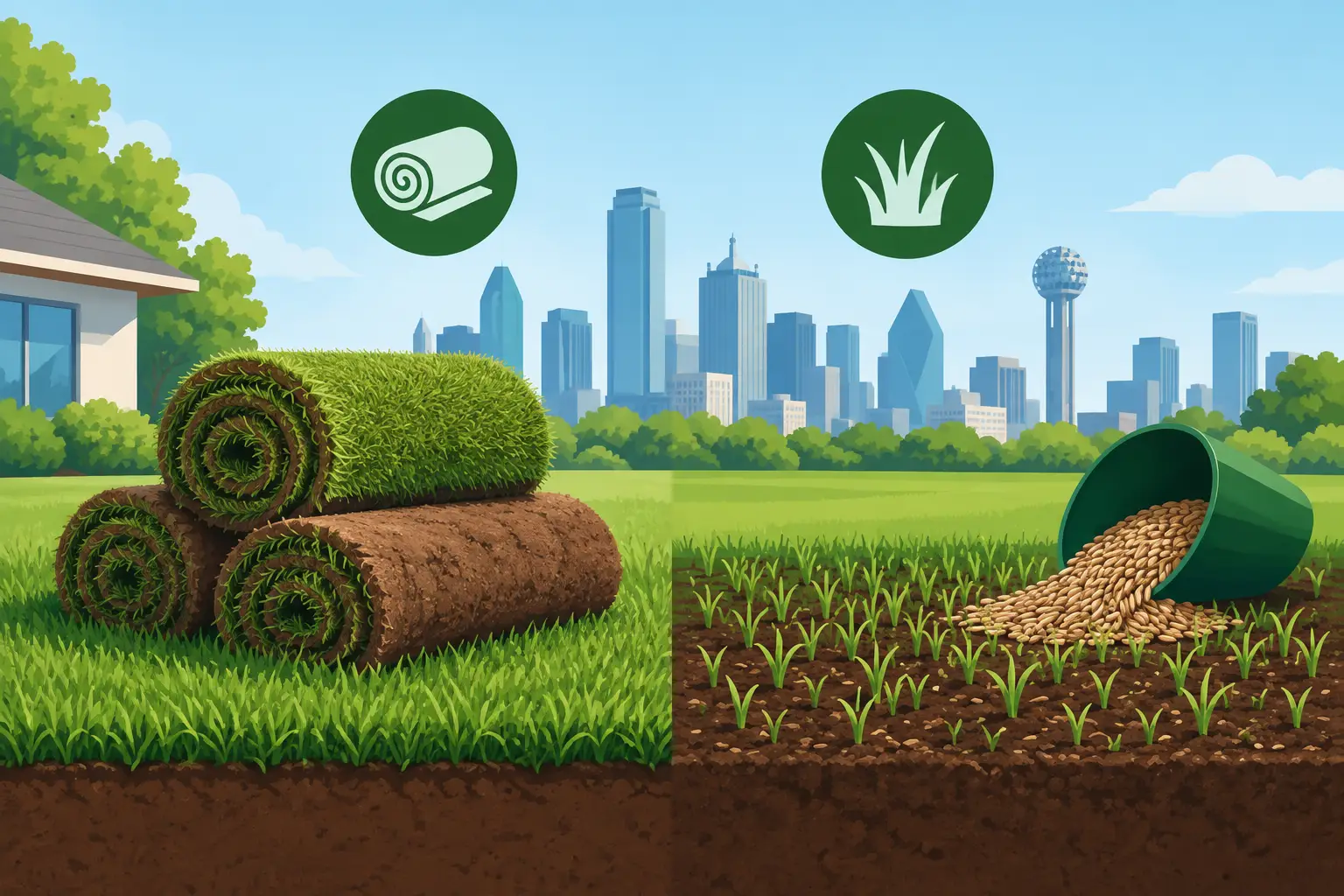
A turf section can soften the edge of a patio, create a play area for children, or provide a pet-friendly surface between stone features. It also works well around backyard putting greens, where clean transitions and proper base preparation matter. Natural sod can be the right choice when homeowners want a living lawn and have enough sunlight, irrigation, and room for it to establish.
The key is sizing the green area realistically. A narrow strip of turf can add color, but it may not function as a play space. If the goal is a usable lawn, protect enough open area for that purpose instead of treating turf as an afterthought.
Keep Maintenance and Access in the Plan
Even a low-maintenance yard needs occasional attention. Leave room to access gates, fence lines, drains, pool equipment, and irrigation controls. A beautiful patio becomes frustrating if a technician has to walk across furniture or remove pavers to reach essential equipment.
Plan for cleanup as well. Trees drop leaves, storms bring debris, and outdoor living areas need a place for hoses, trash bins, or gardening supplies. A small screened storage area, side-yard path, or designated gravel strip can keep those necessities out of the main view.
Hardscape planning for small yards also benefits from restraint at the edges. Raised planters and retaining walls can add definition and solve grade changes, but oversized walls can make a compact yard feel boxed in. Use vertical elements where they serve a purpose, such as holding back soil or creating a built-in bench, rather than adding them only for decoration.
Build the Project in the Right Order
The order of work matters. Drainage corrections, grading, irrigation adjustments, and utility considerations should come before final hardscape finishes. Installing a beautiful patio first and then cutting it apart to add drainage is an avoidable setback.
A full-service installer can evaluate the entire yard instead of treating the patio, turf, stonework, and drainage as separate jobs. That approach helps keep surface heights consistent, transitions clean, and the final layout functional from the back door to the property line.
The strongest small-yard designs are not the ones with the most features. They are the ones that make every square foot useful, hold up to Texas weather, and look as good after a busy weekend as they do on installation day. Start with the way you live outside, then build a hardscape plan that gives that lifestyle room to work.


Leave A Comment