 Skip to content
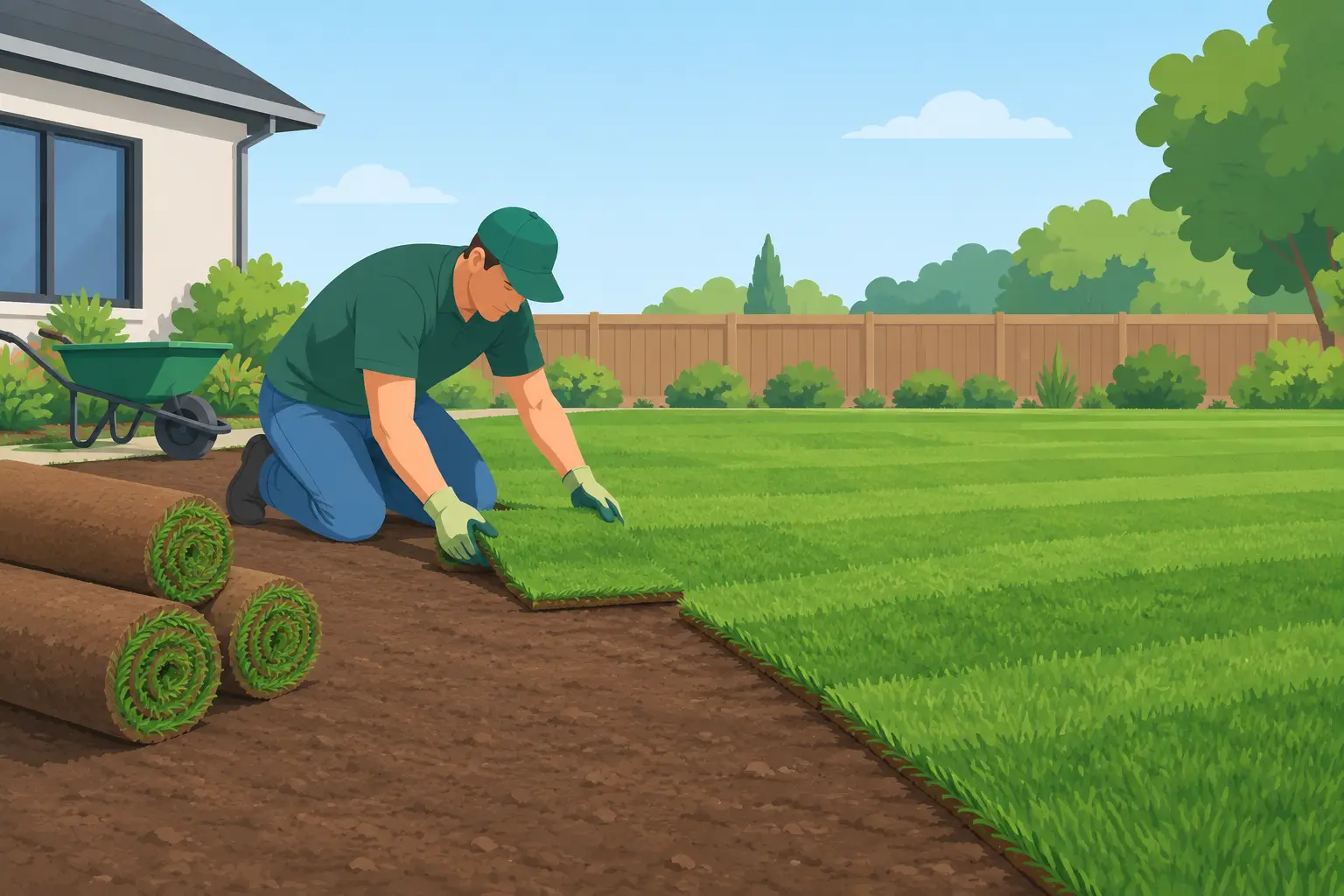
Fresh sod can look perfect on day one and still struggle by day ten if the watering is off. A solid new sod watering schedule is what helps that grass move from “just installed” to fully rooted and ready for normal lawn care, especially in Dallas-Fort Worth heat.
If you just had sod installed, the goal is simple – keep the sod and the soil beneath it consistently moist without turning the yard into mud. Too little water dries out shallow roots before they can take hold. Too much water can suffocate roots, invite fungus, and leave you with weak turf that never really settles in. The right schedule is not complicated, but it does need to be followed closely during the first few weeks.
Why a new sod watering schedule matters so much
New sod is living grass with a cut root system. It does not have the deep root support of an established lawn yet, so it depends on you for every bit of moisture it needs while it reconnects to the soil below. That early window is where a lot of lawns are won or lost.
In North Texas, heat, sun exposure, wind, and clay-heavy soil all affect how fast sod dries out. A shaded side yard may stay damp much longer than a front lawn that gets hammered by afternoon sun. That is why a good new sod watering schedule gives you a starting point, but you still need to pay attention to conditions on your property.
New sod watering schedule: the first 2 weeks
For the first 14 days, newly installed sod should stay consistently moist. In most Texas yards, that means watering two to four times per day depending on temperature, sun, and wind.
Morning watering is the most important. Start early enough that the lawn is wet before the day heats up. A second watering is usually needed by late morning or early afternoon when temperatures climb. On very hot or windy days, a short third watering in mid-afternoon may be necessary. If your sod is installed during peak summer heat, some areas may even need a quick fourth cycle.
The key here is duration. You are not trying to flood the yard. You are trying to wet the sod layer and the top inch or two of soil beneath it. For many sprinkler systems, that means about 10 to 20 minutes per zone per cycle, but exact timing depends on your sprinkler output and soil conditions.
Walk the lawn after watering. The sod should feel moist and slightly soft underfoot, but not squishy. If water is pooling or running off into the street, cut the time back and increase the number of shorter cycles instead.
What the sod should look and feel like
During this stage, lift a corner carefully in a hidden area if you need to check moisture. The underside of the sod should be damp, and the soil below should also be moist. If the top looks green but the bottom feels dry, the watering is not reaching deep enough.
Some homeowners make the mistake of watering lightly and often enough to wet only the blades. That keeps the grass looking shiny for a while, but it does not help the roots attach. You need moisture below the surface.
Week 3: start reducing frequency
By the third week, the sod should begin rooting into the soil. This is when you start backing off the frequency and increasing the depth of each watering.
A common schedule for week three is once per day, with enough water to moisten the soil more deeply. In hotter parts of Dallas-Fort Worth, or in full-sun areas, you may still need a light second cycle if the lawn shows signs of stress. But in general, this is the transition from frequent shallow watering to deeper, less frequent watering.
Try the tug test. Grab a section of sod and gently pull upward. If it resists, roots are starting to anchor. If it lifts easily like it did on installation day, it needs more time and close monitoring.
Weeks 4 to 6: move toward a normal lawn schedule
Once the sod is rooted, you can shift toward watering two to three times per week, longer per session. The goal now is to encourage deeper root growth so the lawn becomes more durable and less dependent on constant irrigation.
At this point, many Texas lawns do well with about 1 inch of water per week, including rainfall, but that number is not one-size-fits-all. Bermuda, St. Augustine, and Zoysia can all respond a little differently. Soil type matters too. Clay holds water longer, while sandy areas dry faster.
This is also the stage where overwatering becomes a bigger risk than underwatering. If the sod has rooted and you are still watering several times a day, you can create shallow roots, disease pressure, and soft ground that never firms up properly.
How long should each watering session be?
There is no single timer setting that works for every lawn, because sprinkler heads, water pressure, slope, shade, and soil all change the result. Still, most homeowners need practical direction.
For the first two weeks, many zones need 10 to 20 minutes per cycle, two to four times daily. In week three, one deeper session of 20 to 30 minutes per zone may be enough. After that, watering two to three times weekly for 25 to 40 minutes per zone may make sense, depending on your system.
Those numbers are starting points, not rules carved in stone. If water runs off before it soaks in, shorten the cycle and split it into two parts. If the soil is dry under the sod, increase the duration. The grass will tell you a lot if you look closely.
Signs your new sod is not getting enough water
A lawn that needs more water usually gives warning signs before serious damage sets in. The edges may curl, the color may shift from healthy green to dull blue-gray, and footprints may remain visible after walking across it. Seams between rolls can also start shrinking or separating if the sod dries out.
Dry spots near pavement, driveways, pool decks, and west-facing edges are common in Texas because those surfaces throw off extra heat. Those areas often need hand watering in addition to the sprinkler schedule.
Signs you are watering too much
Too much water can be just as damaging. If the yard stays soggy, smells musty, feels unstable, or develops yellowing patches, scale the watering back. Mushrooms, fungus, and visible runoff are also red flags.
New sod should be moist, not swampy. Roots need oxygen as much as they need water. When the soil stays saturated, root development slows down and disease problems become more likely.
Best time of day to water new sod
Early morning is the best time to water. It gives the sod moisture before the heat of the day while allowing the blades to dry more quickly than they would with late evening watering.
Midday touch-up watering can be helpful during extreme heat, especially right after installation, but it should be brief and purposeful. Night watering is the least desirable option because it can leave the lawn wet for too long and raise the risk of fungus.
A few Texas-specific factors to watch
Summer installations need the closest attention. In July and August, heat stress can hit fast, especially on new-build lots with little shade and reflected heat from concrete. In those conditions, your new sod watering schedule may need more frequent short cycles at the start.
Spring and fall installations are usually easier to manage because evaporation is lower and the sod has a better environment for rooting. Winter sod still needs water, just not as often. The mistake there is assuming cool weather means no irrigation at all.
If your property has drainage issues, slopes, or compacted soil, watering gets trickier. Water may run off one section while another stays too wet. That is where professional installation and proper grading make a major difference. A good lawn starts with good prep, not just good watering.
When to mow after installing sod
Do not mow just because the grass looks tall. Wait until the sod has started rooting and feels secure underfoot. For many lawns, that is around two to three weeks after installation, but it depends on grass type and growing conditions.
Make sure the mower blade is sharp and avoid cutting off too much at once. A stressed lawn does not need an aggressive first mow.
One practical rule: adjust, do not guess
The best new sod watering schedule is the one that matches your yard, not your neighbor’s. Sun exposure, sprinkler coverage, soil, and season all change the plan. Set a schedule, then check the lawn daily for the first few weeks and make small corrections before problems spread.
That hands-on attention is what turns a fresh install into a lawn that looks clean, full, and established. If you want the kind of yard that upgrades curb appeal right away and stays strong through Texas weather, the watering phase is where you earn it.
A new lawn does not need complicated care. It needs consistency, a little observation, and a schedule that fits real conditions on your property.





Leave A Comment