 Skip to content
A patio in North Texas has to handle more than weekend cookouts. It has to stand up to intense sun, sudden downpours, expansive clay soil, pool traffic, pets, and long stretches of hot weather. That is why choosing the best patio materials for backyards is less about picking the prettiest sample and more about selecting a surface that fits the way your family actually uses the space.
The right patio should feel like a natural extension of your home. It should be comfortable underfoot, drain correctly, hold up over time, and look good beside your lawn, artificial turf, garden beds, pool deck, or outdoor kitchen. Here is how the most common options compare for Dallas-Fort Worth homeowners.
Best Patio Materials for Backyards in North Texas
There is no single material that works best for every backyard. A low-maintenance pool area has different needs than a shaded garden patio or a large entertaining space with a fire pit. Budget, drainage, soil conditions, and the style of your home all matter.
For many DFW properties, concrete, pavers, and natural stone are the strongest starting points. Each can create a polished finished look when installed on a properly prepared base. The installation work underneath the surface is just as important as the material you see every day.
Concrete: Practical, Clean, and Budget-Friendly
Concrete is one of the most common patio choices because it provides a durable, level surface at a manageable price point. A standard broom finish is simple, slip-resistant, and easy to maintain. It works well for outdoor dining areas, furniture pads, grill stations, and larger patios where natural stone or pavers may stretch the budget.
Homeowners who want more character can choose stamped, stained, or textured concrete. These finishes can create the appearance of stone, tile, or wood while maintaining the solid feel of a poured slab. Concrete is also a good option when you want clean lines that match a modern home or a straightforward backyard layout.
The trade-off is cracking. Texas soil expands and contracts, and every concrete slab needs properly placed control joints and a stable base. Even with good installation, hairline cracks can happen over time. The best way to limit problems is to address grading, drainage, base preparation, and reinforcement before the concrete is poured.
Concrete is a strong fit for homeowners who want a dependable patio with minimal upkeep and a clean finished appearance. It is especially practical when the patio will support heavy furniture, an outdoor kitchen, or frequent gatherings.
Pavers: Flexible Design With Easier Repairs
Concrete pavers offer the tailored look many homeowners want without committing to a single solid slab. Available in many colors, sizes, patterns, and edge styles, pavers can work with traditional brick homes, contemporary exteriors, pool areas, and custom hardscape designs.
Their biggest advantage is flexibility. Individual pavers can move slightly with seasonal soil changes, and if one area settles or becomes damaged, installers can lift and reset the affected section. That is often easier and less noticeable than repairing a cracked concrete slab.
Pavers do require a correctly compacted base, edge restraints, and attention to drainage. If the base work is rushed, joints can shift, weeds can appear, and the surface can become uneven. Quality installation is what makes a paver patio look sharp years after the project is complete.
Maintenance is generally simple: sweep the surface, rinse off dirt, and refill joint sand when needed. Sealing is optional but can help protect color and make cleanup easier near grills, dining spaces, and pool decks. For homeowners looking for a high-end finish with practical repair options, pavers are often one of the best patio materials for backyards.
Flagstone: Natural Texas Character
Flagstone brings a natural, substantial look that works especially well with landscaping, retaining walls, water features, and rustic or upscale outdoor living areas. Every piece has its own shape, color variation, and texture, so a flagstone patio never looks manufactured or overly uniform.
In DFW, flagstone is often used to build patios, walkways, poolside spaces, and transitions between a home and a turf or sod lawn. It can be installed in a more formal pattern with consistent joints or in an irregular pattern for a relaxed, natural appearance.
The material is durable, but it is not a shortcut project. Flagstone needs a stable foundation, careful stone selection, and skilled fitting to avoid trip hazards and loose pieces. Some varieties can become hot in direct summer sun, while rougher surfaces may be less comfortable for bare feet around a pool.
Flagstone typically costs more than basic concrete, particularly when the design includes detailed cuts, curved edges, steps, or retaining walls. Still, it is an excellent investment when visual impact matters and you want your patio to feel connected to the rest of the landscape.
Travertine: A Smart Choice Around Pools
Travertine is a natural stone frequently chosen for pool decks and patios because it stays cooler underfoot than many darker, denser materials. Its light color range and subtle texture give outdoor spaces a refined, resort-style appearance without looking out of place in a residential backyard.
This material is naturally porous, which helps water move through the stone rather than puddling on top of it. That can be a real benefit around pools, where wet surfaces and bare feet are part of daily use. Tumbled travertine also provides a more textured finish than polished stone.
Travertine needs professional installation and should be selected carefully for the intended use. Like other natural stone materials, it can stain if spills are ignored, and sealing may be recommended to protect its appearance. It also carries a higher upfront cost than concrete or many paver options.
If your backyard renovation centers on a pool, travertine is worth serious consideration. It delivers comfort, drainage benefits, and a polished look that pairs well with artificial grass, planting beds, and outdoor kitchens.
Gravel and Decomposed Granite: Casual and Cost-Conscious
Gravel and decomposed granite can work well for smaller sitting areas, fire pit zones, side yards, and informal garden spaces. They are less expensive than most hardscape surfaces and allow water to drain naturally through the material.
These options are not ideal for every patio. Furniture can wobble, loose material may track into the house or pool, and the surface will need occasional raking and replenishment. Decomposed granite can be compacted for a firmer feel, but it still does not provide the same stable surface as concrete, pavers, or stone.
For a secondary seating area or a simple backyard refresh, gravel can be a useful choice. For a main entertaining patio with dining furniture and high foot traffic, a more permanent hardscape material is usually the better long-term move.
What Matters Beyond the Patio Surface
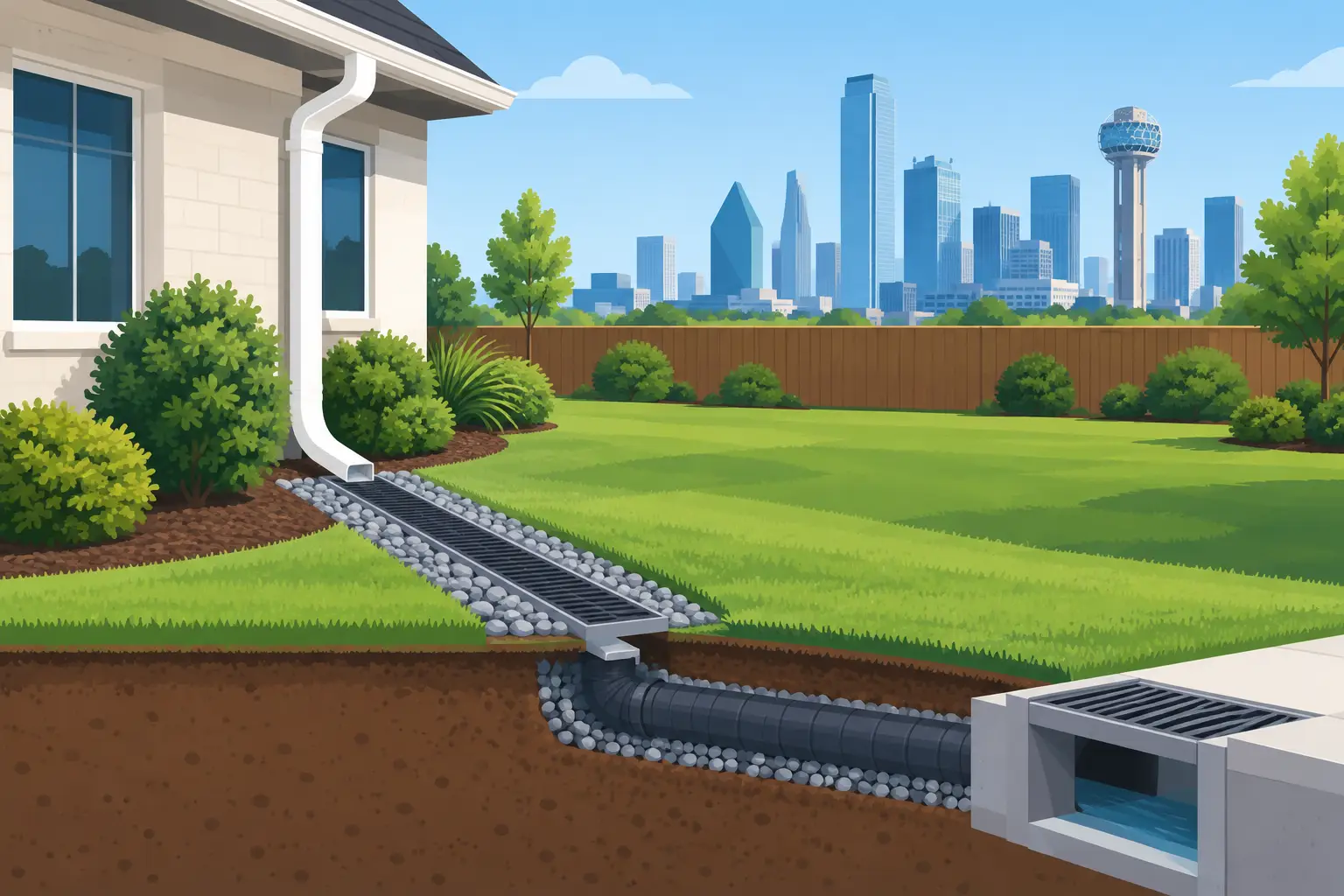
A great patio starts below grade. In North Texas, drainage and soil movement can make or break an outdoor project. Water should move away from the home, not collect against the foundation or run across the patio toward low spots in the yard.
Proper grading, base preparation, compaction, and drainage planning protect your investment. This is also the right time to think about how the patio connects to surrounding features. A clean border between pavers and artificial turf, a stone walkway leading to a putting green, or a retaining wall that creates usable level space can make the whole yard feel planned instead of pieced together.
Heat is another practical consideration. Light-colored pavers, travertine, and certain concrete finishes tend to be more comfortable in direct sun than dark stone. If the space is exposed all afternoon, shade structures, pergolas, and strategic tree placement can matter as much as the patio material itself.
Matching the Material to How You Use Your Yard
If you want the most affordable, low-maintenance option for a large patio, concrete is hard to beat. If you value design flexibility and easier future repairs, pavers are a strong choice. If the goal is a natural, high-end landscape feature, flagstone provides lasting visual character. For pool areas where bare feet and drainage matter, travertine often earns its price.
The best decision comes from looking at the full backyard, not one material sample. Consider where people will walk, where water will drain, how much direct sun the area gets, and whether the patio needs to connect with turf, sod, a pool, a fire feature, or an outdoor kitchen.
A well-built patio should make the backyard easier to enjoy, not create another maintenance headache. When you are ready to plan the surface, layout, and drainage together, Sod Green can help turn an underused yard into a clean, durable outdoor space built for Texas living.


Leave A Comment