 Skip to content
A muddy path by the back door, bare spots along the fence, and urine-burned grass can make a good backyard feel like another chore. This artificial grass for dogs guide covers what Dallas homeowners should look for before replacing a natural lawn with pet-friendly turf. The right system gives dogs a clean place to run and relax while giving homeowners a yard that stays sharp through heat, rain, and heavy use.
Artificial grass is not a shortcut for poor installation. A dog-friendly turf lawn has to drain quickly, resist odors, feel comfortable under paws, and hold up when the same route gets used every day. Those results come from the full system beneath and within the turf, not just from selecting a green roll of synthetic grass.
Why Artificial Grass Works Well for Dogs
Dogs are hard on natural grass in North Texas. Repeated running wears down high-traffic areas, digging leaves holes, and summer heat can turn a once-green lawn thin and patchy. Add water restrictions, muddy spring weather, and urine spots, and maintaining a clean lawn becomes a constant cycle of watering, reseeding, mowing, and cleanup.
Quality artificial grass removes many of those problems. There is no mud tracked across the patio, no need to spray urine spots with the hose to save the grass, and no weekly mowing around a dog run. A properly built surface remains level and usable, even where dogs sprint along the fence or circle the patio before coming inside.
That does not mean every artificial turf product is automatically right for pets. Some options are designed mainly for appearance, putting greens, or low-traffic decorative areas. A pet area needs a turf product and base designed for real daily activity.
Artificial Grass for Dogs Guide: What Matters Most
When homeowners compare turf samples, the blade color and softness usually get the most attention. Both matter, but performance should lead the decision. For a dog-friendly yard, drainage, backing strength, pile height, infill, and installation quality deserve equal attention.
Fast drainage prevents lingering odors
Dog urine moves through the turf only as well as the backing and base allow. Pet-friendly turf should have a fully permeable backing, often called flow-through backing, that lets liquids pass through across the entire surface. This is different from products with only occasional drainage holes, which can slow drainage in heavily used areas.
Under the turf, a compacted aggregate base creates a stable, porous layer that carries water away. In Dallas-Fort Worth clay soils, drainage planning matters even more. Water that cannot move through the base can sit below the turf, contribute to odors, and make the surface feel less clean after rain.
The direction of drainage should be planned before installation begins. A yard may need minor grading, a drain, or a connection to an existing drainage solution depending on the slope and how the space is used. Covering a drainage problem with turf does not solve it. It simply hides it until water begins pooling.
Choose turf built for traffic, not just curb appeal
Dogs need turf with enough resilience to stand back up after paws, play, and repeated use. A medium pile height is often a practical choice because it looks like a lawn without being so dense that cleaning becomes harder. Strong fibers and a durable backing help the turf hold its shape around paths, gates, and play zones.
Very plush, tall turf can look great in a low-traffic front yard, but it may require more brushing in an active dog area. Shorter turf is easier to clean but can feel firmer underfoot. The best choice depends on the size and energy level of your dog, whether children use the yard, and whether the space is primarily a pet run or a full backyard gathering area.
For homes with more than one large dog, it is wise to build the surface for the highest-use conditions rather than the average day. That means choosing durable materials and giving extra attention to seams, edges, and traffic lanes.
Infill affects comfort, stability, and odor control
Infill is the material brushed between turf blades. It helps hold the turf in place, supports the fibers, and adds weight and stability. For pet installations, certain infill options can also help manage moisture and odors.
There is no one infill that fits every yard. Some homeowners prefer a simple, clean approach with minimal infill. Others benefit from a pet-focused infill that helps reduce odor in a designated dog area. The right choice should account for turf style, drainage design, sun exposure, and how often the yard is used.
Avoid assuming that odor-control infill eliminates the need for cleaning. It helps, but dogs still leave waste, dirt, and natural oils on the surface. Regular maintenance is what keeps the yard fresh over time.
Proper Base Preparation Makes the Difference
A clean, long-lasting pet turf installation starts below ground. The existing grass, roots, and loose organic material should be removed so they do not break down beneath the finished surface. The area is then shaped for drainage and built with a compacted base that provides support without trapping water.
The base needs to be smooth and firm. If it is uneven, the finished turf can show dips, wrinkles, or low spots where water collects. If it is not compacted correctly, the surface may shift under active dogs and foot traffic.
Professional installation also includes careful seam work and secure edging. Dogs are naturally curious, and an exposed edge can become an invitation to pull, scratch, or dig. Well-secured turf transitions cleanly against patios, fences, planting beds, and walkways, leaving fewer weak points around the perimeter.
For homeowners adding a patio, flagstone path, retaining wall, or drainage improvement at the same time, it makes sense to plan the entire backyard as one project. Coordinating the grades and surface transitions upfront produces a cleaner result than trying to patch separate projects together later.
Keeping Pet Turf Clean and Comfortable
Artificial grass reduces lawn work, but it is not maintenance-free. The routine is simple and far lighter than caring for a natural lawn, especially with dogs.
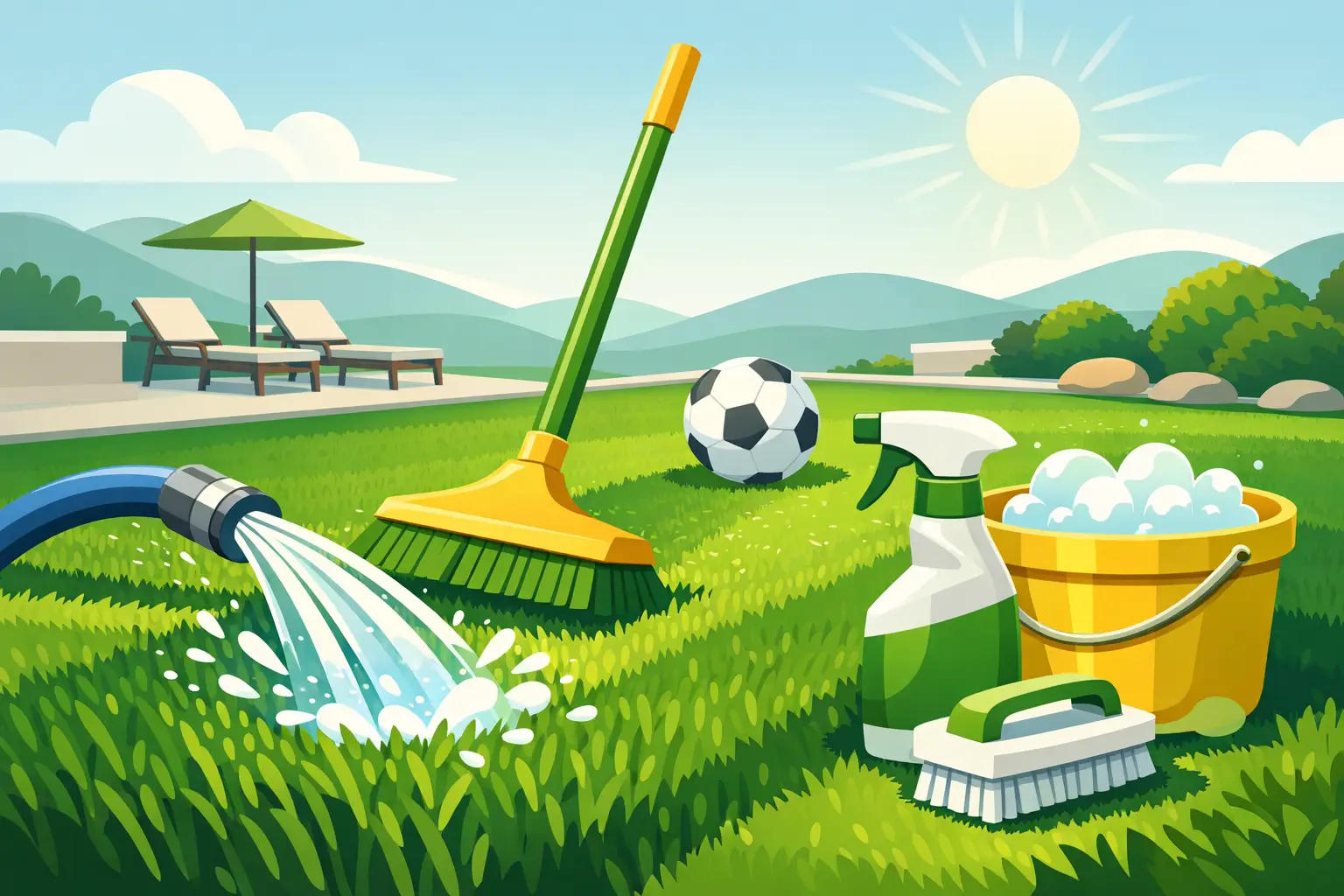
Pick up solid waste promptly. Hose down the turf occasionally, especially in the spots your dog uses most often. In hot, dry stretches, rinsing helps flush salts through the drainage system and refreshes the surface. A turf-safe enzyme cleaner can help with persistent odor issues, particularly in smaller dog runs or homes with several pets.
Brushing the turf every so often keeps blades standing upright and helps redistribute infill in high-traffic areas. Use a stiff synthetic-bristle broom or a power broom designed for turf, not a metal rake that can damage fibers.
Dallas heat is another practical consideration. Artificial turf can get hotter than natural grass in direct summer sun. Most dogs adjust by seeking shade, but homeowners should test the surface with the back of a hand before letting pets out during the hottest part of the day. Shade trees, covered patios, misting systems, and access to fresh water all make a pet-friendly backyard more comfortable.
Common Mistakes to Avoid
The biggest mistake is selecting turf based on price alone. A low-cost product may save money upfront but can disappoint if it has limited drainage, weak backing, or an installation base that does not fit the site. Replacing a failed turf surface costs more than doing the preparation correctly the first time.
Another common issue is skipping drainage evaluation because the existing yard appears flat. Flat yards can still hold water, especially after a Texas downpour. A professional installer should look at runoff paths, soil conditions, downspouts, and the elevation around patios and the foundation before recommending a system.
Finally, do not treat pet turf like indoor carpet. Leaving waste in place, never rinsing the surface, or using harsh household chemicals can create avoidable odor and wear problems. A few minutes of regular care protects the investment and keeps the yard inviting for both people and pets.
Is Pet-Friendly Artificial Grass Right for Your Home?
Artificial grass is an excellent fit for many dog owners, especially families tired of mud, dead grass, and constant lawn repair. It is particularly useful for side yards, dog runs, pool areas, and backyards where pets have worn natural grass down to dirt. It can also create a polished, low-maintenance lawn around outdoor living spaces.
Still, the right answer depends on your property. If your yard has serious standing-water issues, aggressive digging habits, or little shade in full summer sun, those concerns should be addressed in the design. A good installation plan does not ignore the hard parts of the yard. It accounts for them.
A well-built pet turf system should make daily life easier: cleaner paws at the door, fewer bare spots in the yard, and more time enjoying the space instead of repairing it. When you are ready to upgrade a dog-worn lawn, start with a clear look at drainage, traffic, and how your family actually uses the backyard. That is how a great-looking turf lawn stays that way.



Leave A Comment