 Skip to content

A North Texas backyard can look great in April and feel nearly unusable by August. That is why heat resistant turf trends are getting attention from Dallas-Fort Worth homeowners who want a polished lawn without giving up the space when summer arrives. The goal is not to find artificial grass that never gets warm – every outdoor surface absorbs heat in direct sun. The goal is to choose the right turf system, install it correctly, and design the yard so it stays more comfortable and works harder for your family.
Heat Resistant Turf Trends Shaping Texas Backyards
The biggest shift is away from choosing turf based on color alone. Homeowners are asking better questions: Will the grass feel comfortable around the pool? Can the dog use it in the afternoon? How will it drain after a Texas thunderstorm? Does the installation include the base work needed to prevent wrinkles, odors, and uneven spots?
Today’s best artificial grass projects account for all of it. Heat resistance is not one feature you buy off a shelf. It comes from the combination of turf fibers, infill, drainage, shade, and the way the entire landscape is laid out.
Lighter, more natural turf colors
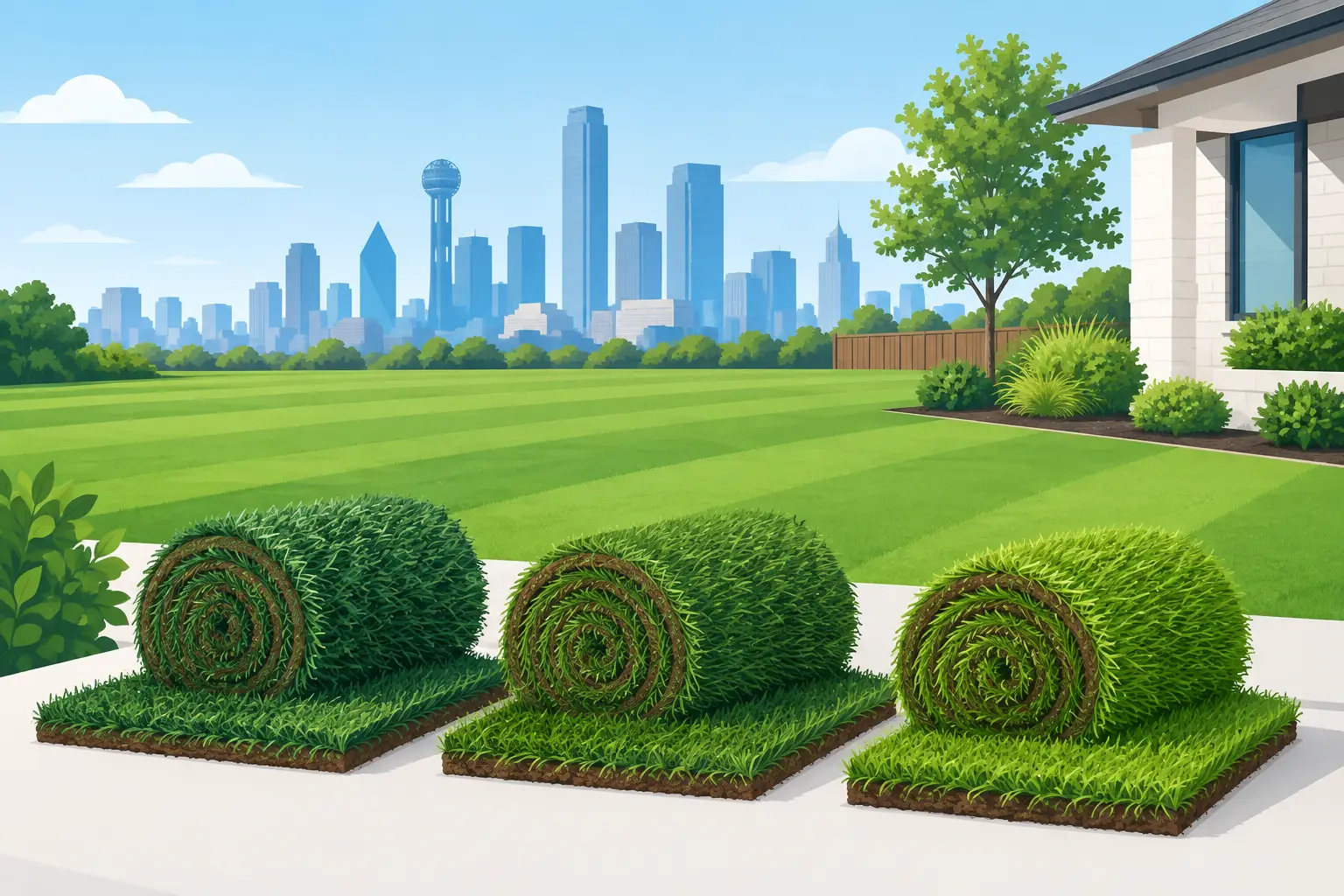
Darker surfaces typically hold more heat, so modern turf selections often use lighter green yarns, tan thatch, and varied blade tones to create a more natural appearance. These color blends can help reduce the harsh, heat-absorbing look of a solid dark-green product while making the lawn look less plastic.
That does not mean the lightest turf is always the best choice. A bright turf can look out of place next to stone, mature trees, or darker sod in neighboring yards. The better approach is to select a realistic color blend that fits the property while avoiding overly dark, dense turf in the areas that receive the strongest afternoon sun.
Cooling infill is becoming a standard upgrade
Infill is the material brushed between turf fibers to add weight, support the blades, and improve how the surface performs. Traditional silica sand remains common, but more homeowners are considering specialty infill products designed to retain moisture or reduce surface heat.
Cooling infill can make a noticeable difference, especially when the lawn is lightly rinsed before children, pets, or guests use it. It is not a magic solution for full sun at 3 p.m. in August. Still, it is a practical upgrade for play areas, pet runs, and poolside sections where comfort matters most.
The trade-off is cost. Specialty infill can increase the price of a project, and some products need occasional rinsing to deliver their best cooling benefit. For a small, heavily used space, that investment may be worthwhile. For a decorative front lawn with limited foot traffic, a quality standard infill may be the smarter use of the budget.
Permeable backing and better drainage systems
Dallas-Fort Worth yards deal with two extremes: long stretches of heat and sudden heavy rain. Heat-resistant turf trends now go hand in hand with drainage-focused installation. Permeable turf backing, compacted aggregate bases, proper grading, and drainage routes help water move through the system instead of pooling on top of it.
Good drainage does more than keep shoes dry. It helps protect the base beneath the turf, reduces standing water, and makes cleanup easier in pet areas. If a yard already has drainage problems, turf alone will not fix them. The grade, base preparation, and drainage plan need to be addressed before the final surface goes down.
The Design Choices That Make Turf Feel Cooler
The best heat-control strategy is often landscape design, not a single turf upgrade. A well-planned backyard uses shade, hardscape, and traffic patterns to keep the most-used areas from taking the full force of the afternoon sun.
Shade belongs where people actually use the yard
A mature tree, pergola, shade structure, or covered patio can change how a turf area performs. Rather than trying to shade every square foot, focus on the places your family uses most: the seating area, the route from the house to the pool, the children’s play zone, or the dog’s favorite resting spot.
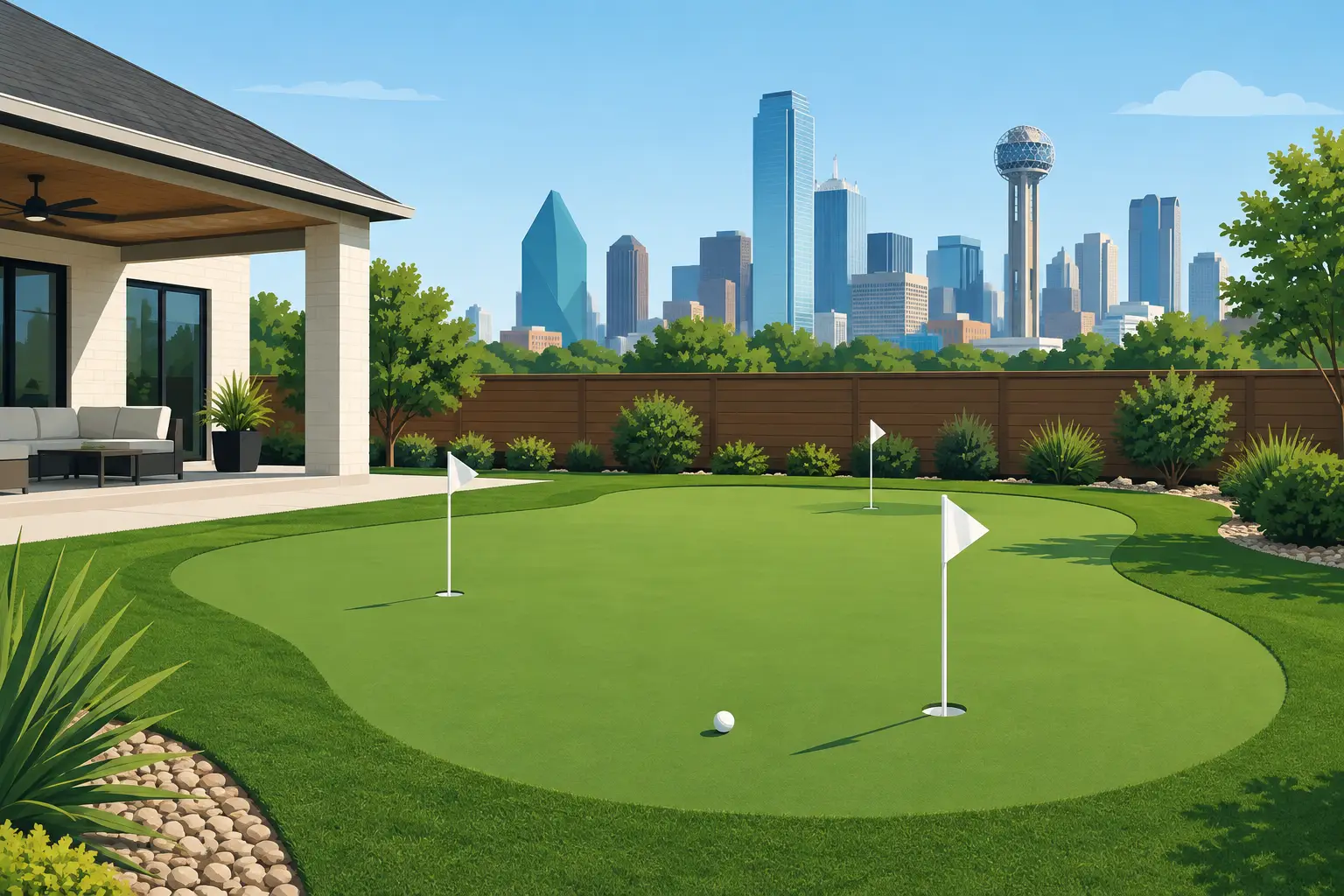
This is especially useful around putting greens. A backyard green needs consistent light and a clean putting surface, but the surrounding fringe, seating area, or practice zone can benefit from shade. Planning those elements together creates a better outdoor space than treating each feature as a separate project.
Break up large fields of exposed turf
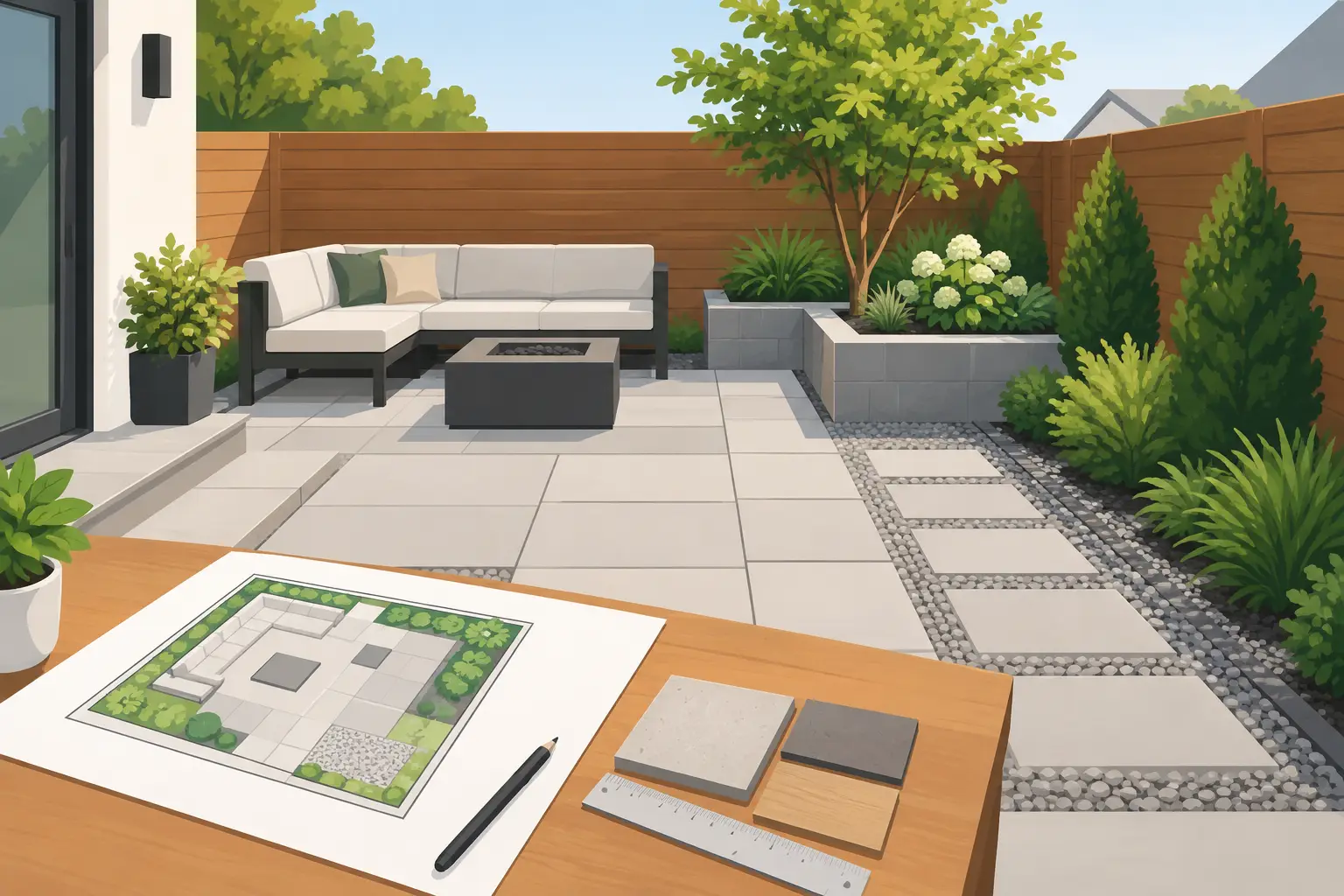
Wall-to-wall turf can look clean, but it is not always the most comfortable design for a wide-open Texas yard. Stone walkways, planting beds, paver patios, decorative rock, and shaded seating zones break up the surface and give people cooler places to step, sit, and gather.
Hardscape materials also get hot, so material selection matters. Light-colored stone and shaded patios may be more comfortable than dark pavers in full sun. A professional design should consider the entire yard’s exposure instead of focusing only on the turf temperature.
Put the right turf in the right zone
One turf style does not fit every part of a property. A front yard may need a dense, polished product that improves curb appeal. A dog run needs strong drainage and easy cleanup. A play area benefits from a softer, durable system, while a putting green requires specialized turf built for ball roll.
Choosing turf by use helps prevent expensive compromises. A beautiful landscape product may not hold up in a high-traffic pet area, and a short putting-green surface is not designed to be a comfortable family lawn. Matching the system to the job is where experienced installation makes a real difference.
What Homeowners Should Ask Before Installing Turf
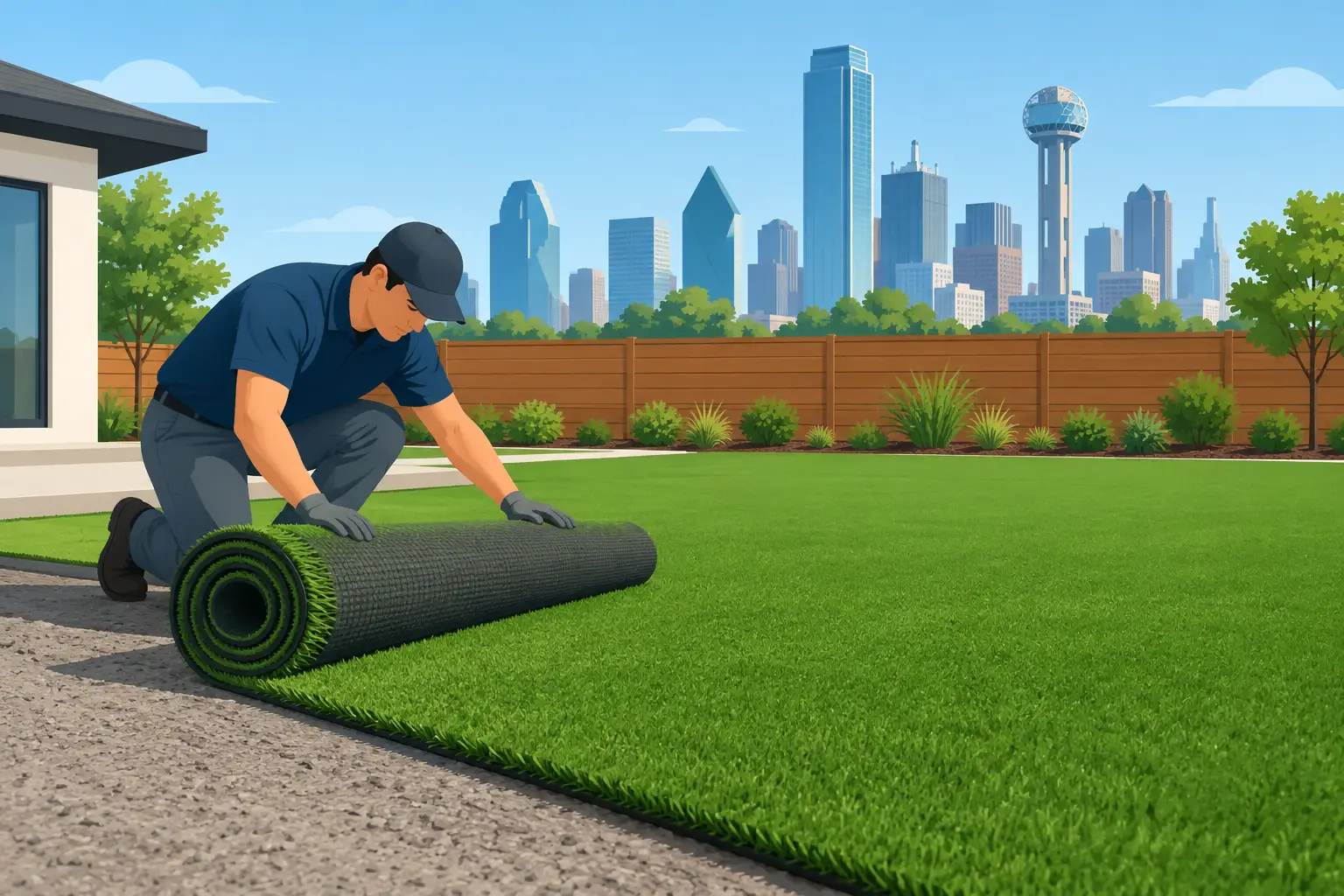
When comparing artificial grass proposals, do not stop at the square-foot price. A low number may leave out base excavation, weed barrier, edging, drainage work, infill, or site cleanup. Those details affect how the turf looks and performs long after installation day.
Ask what base material will be used and how deep it will be. Ask how the installer will handle existing drainage concerns and whether seams, edges, and transitions will be secured for heavy use. If pets will use the area, ask about odor control, drainage, and the easiest cleaning routine. For hot, sunny locations, ask which turf color and infill options make sense for the specific exposure.
It also helps to be realistic about maintenance. Artificial turf eliminates mowing, fertilizing, and regular watering for grass growth, but it is not completely hands-off. Leaves should be removed, high-traffic fibers may need brushing, and pet areas need regular rinsing and cleanup. A quick rinse can also make the surface more comfortable before an afternoon gathering.
A Better Investment Than Replacing Patchy Grass Again
Natural grass can be difficult to maintain in the Texas heat, particularly in bare spots near pools, under heavy foot traffic, or where pets repeatedly run. Replacing sod can be the right answer when a homeowner wants the look and feel of natural grass and has the time for watering and care. But for yards that repeatedly turn patchy, muddy, or worn down, artificial turf offers a dependable alternative.
The strongest projects do not promise an unrealistic maintenance-free miracle. They provide a clean, durable, attractive surface built around how the homeowner lives. That may mean a pet-friendly side yard, a pool border that stays tidy, a putting green for weekend practice, or a complete backyard upgrade with turf, stone, and drainage working together.
For Dallas-Fort Worth homeowners, the right move is to plan for heat before installation begins. A properly selected and professionally installed turf system will not make summer disappear, but it can make your yard easier to enjoy, easier to maintain, and ready when family and friends step outside.


Leave A Comment