
Brown patches in August, muddy spots after a storm, worn-out grass where the dog runs every day – that is usually the moment homeowners start looking at synthetic turf systems. Not because they want a trendy upgrade, but because they are tired of fighting the same lawn problems over and over. A well-built turf system gives you a yard that looks clean, stays usable, and cuts down on the weekly work that natural grass demands in North Texas.
For a lot of Dallas-Fort Worth homeowners, the appeal is simple. You want a lawn that looks finished without constant watering, mowing, edging, fertilizing, or reseeding. You also want an installation that holds up in real life, not just in photos. That is where quality materials and trained installation matter more than most people realize.
What synthetic turf systems actually include
Many people hear the word turf and picture a roll of green material laid on the ground. In practice, synthetic turf systems are more involved than that. The finished surface is only one part of the job. What sits underneath it is what determines whether the lawn drains properly, feels solid underfoot, and keeps its shape over time.
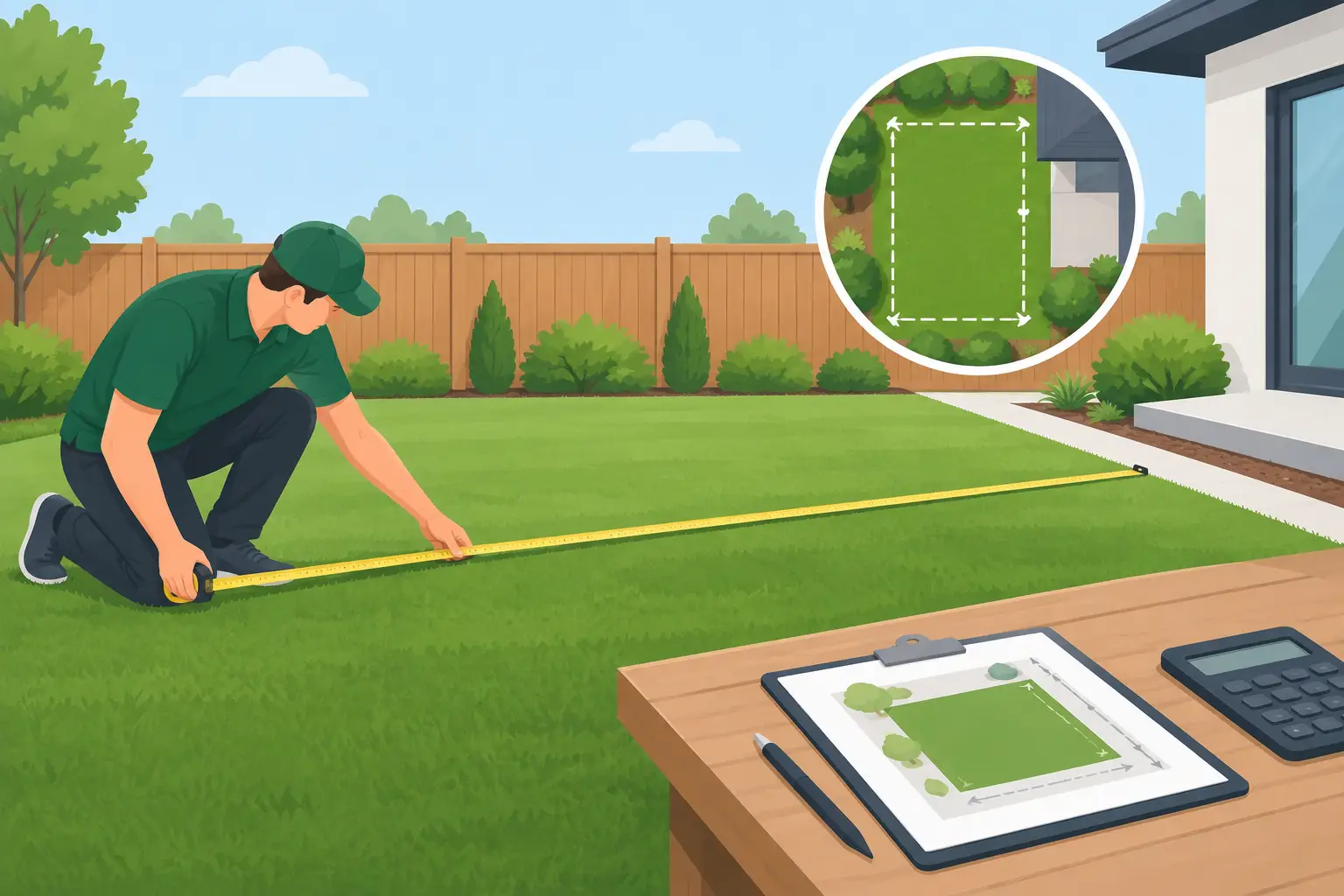
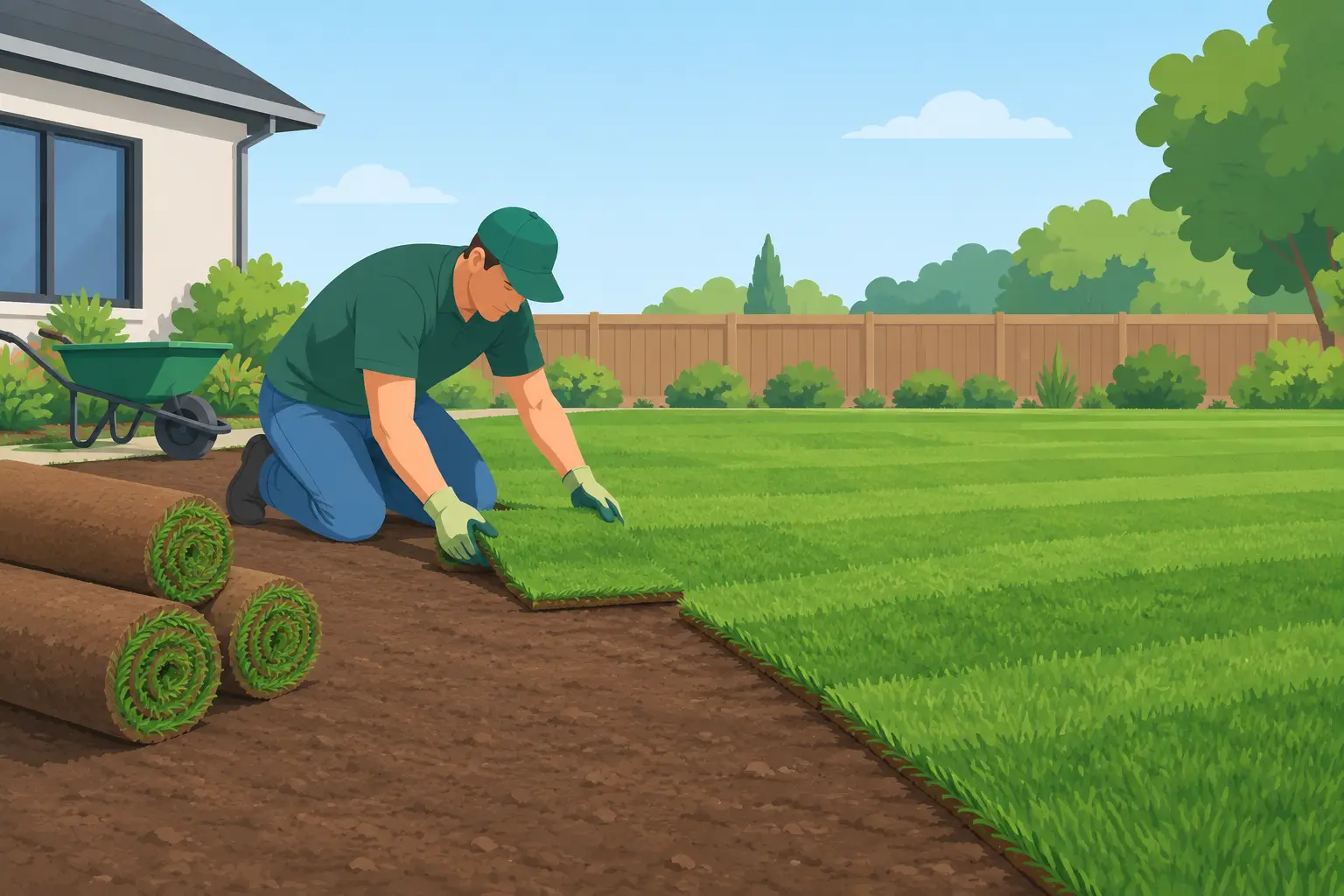
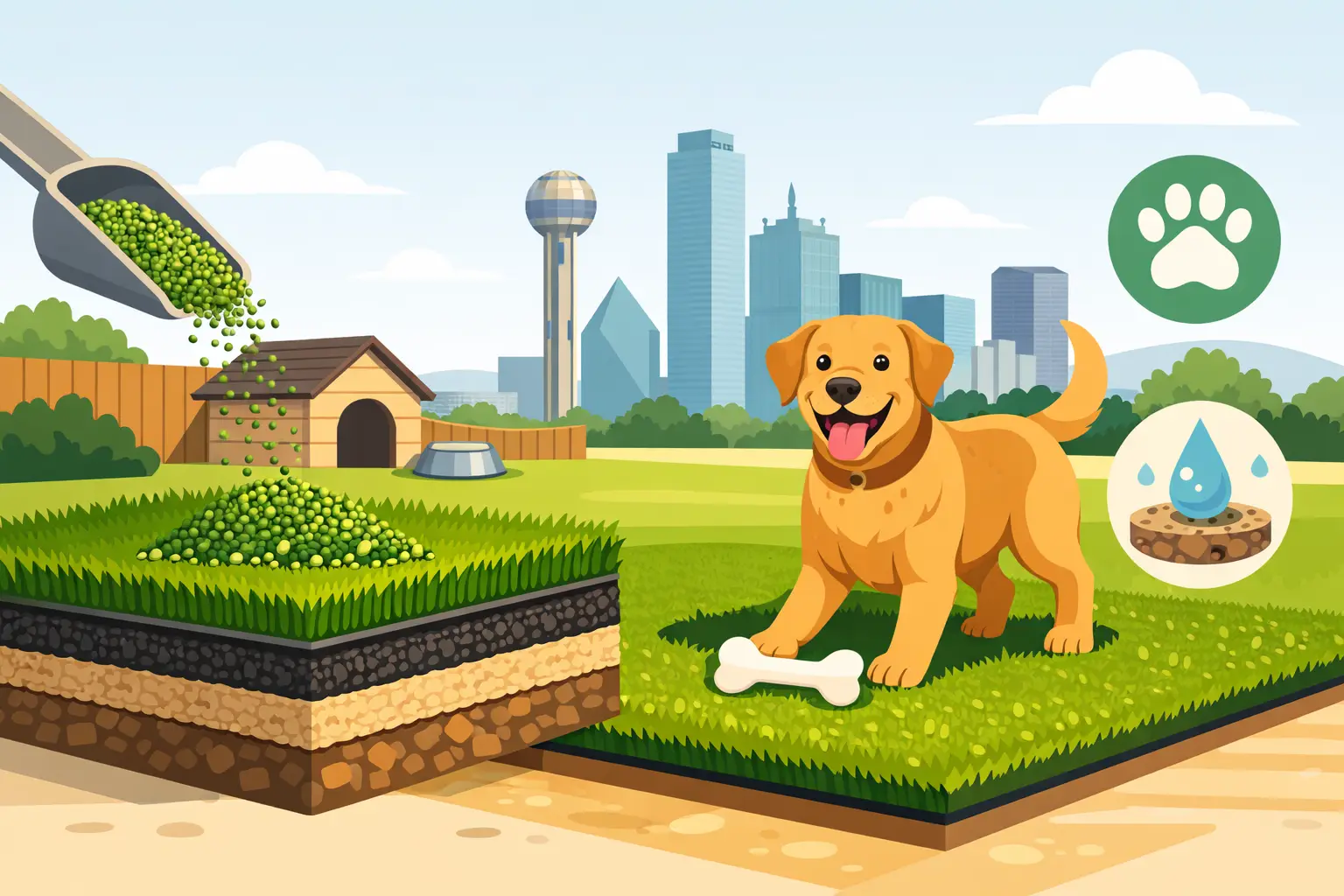
A complete system usually starts with removing existing grass, weeds, and unstable soil. From there, the area is graded and prepared with a compacted base designed to support the turf and move water where it needs to go. Depending on the site, that can also involve drainage correction, edging, or transitions to patios, walkways, flower beds, and pools.
Then comes the turf itself, along with infill, seam work, and final grooming. If you skip steps in that process, you usually see the problems fast. The surface can ripple, puddle, shift, or wear out sooner than it should. That is why homeowners comparing quotes should look past just the square-foot price and ask what is included in the system.
Why synthetic turf systems work well in North Texas
Dallas weather is not easy on natural grass. Heat, drought, heavy foot traffic, shade in some areas, and sudden downpours all create challenges. You can spend a lot of money trying to keep a lawn green through those conditions, and even then, results can be hit or miss.
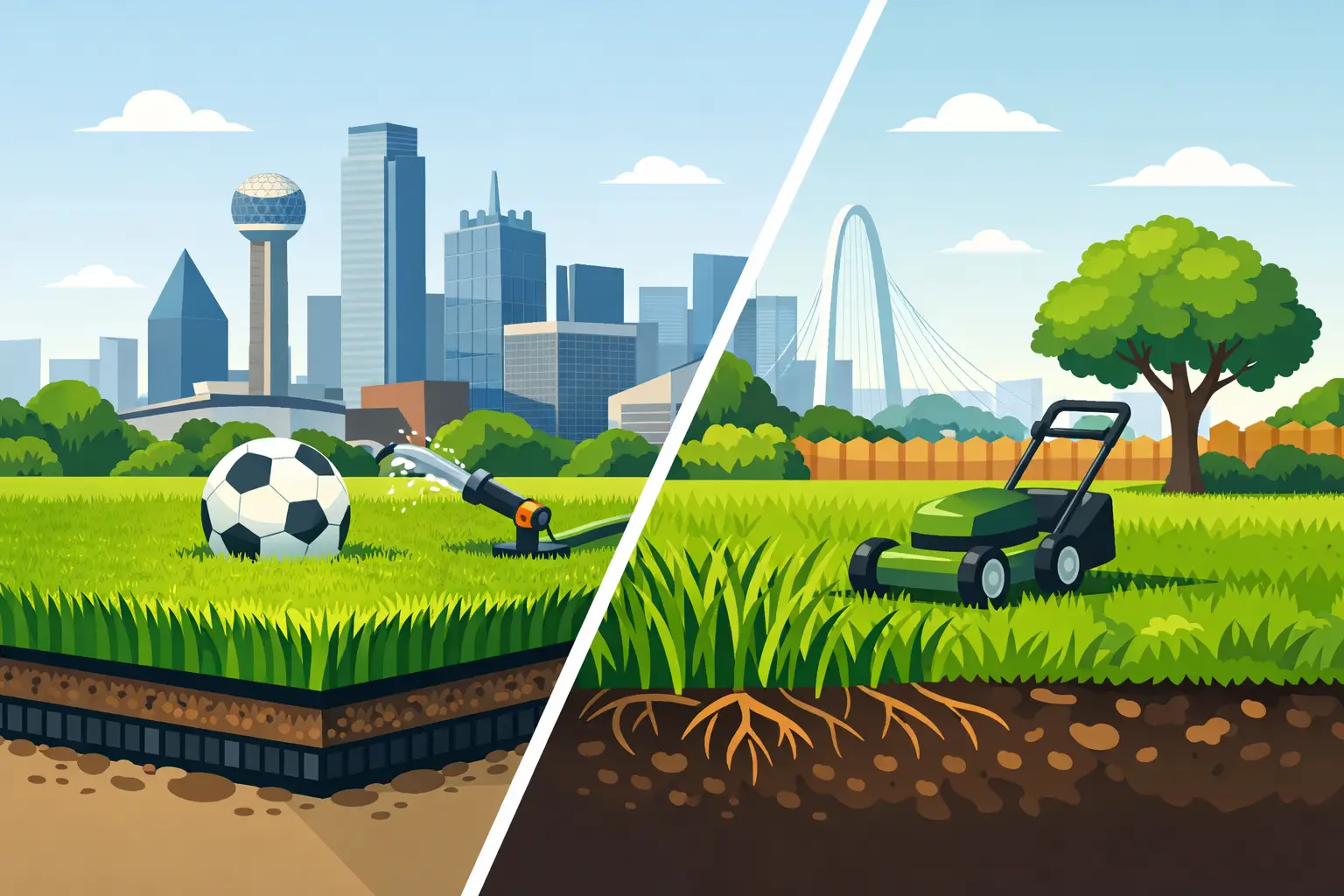
Synthetic turf systems solve a different problem than sod. Sod gives you an instant natural lawn, and in the right setting it is a great choice. But when a yard has recurring trouble spots, ongoing maintenance issues, or heavy use from kids and pets, synthetic turf often makes more sense. It keeps a consistent appearance through the seasons and does not turn into bare dirt when the weather gets rough.
That does not mean turf is right for every property. Some homeowners still prefer the feel and biology of natural grass, especially in larger yards where irrigation is already in place and maintenance is not a concern. But for people who want a polished, low-maintenance surface with strong year-round appearance, turf is hard to beat.
The biggest benefits homeowners care about
The first benefit is lower upkeep. You are not mowing every weekend, dealing with brown spots, or trying to guess why one section of the lawn keeps failing. That saves time, but it also cuts down on the frustration that comes with inconsistent grass.
The second is appearance. A properly installed turf lawn looks clean and finished every day of the year. That matters if you care about curb appeal, backyard entertaining, or simply walking outside and seeing a space that looks taken care of.
The third is usability. Families want surfaces that can handle foot traffic. Pet owners want a space that is easier to clean. Pool owners want to reduce mud and debris around the deck. Golf enthusiasts want custom practice areas that stay consistent. Turf can answer all of those needs, but only when the system is built around how the space will actually be used.
Where synthetic turf systems make the most sense
Front yards are a common choice because they deliver immediate visual impact. If your current lawn is thin, patchy, or hard to maintain, turf can improve the look of the entire home fast. It gives the property a cleaner edge and a more finished appearance from the street.
Backyards are where many homeowners see the biggest lifestyle payoff. This is the area where children play, pets run, and families spend time outdoors. When grass wears down in these spots, the yard becomes less inviting. Turf creates a dependable surface that stays ready to use.
It also works well in side yards, dog runs, around pools, and in custom putting green installations. These are often the areas where natural grass struggles most because of traffic, drainage, or tight access. A tailored turf system can turn those problem spots into functional parts of the property.
Installation quality matters more than the product alone
There is no shortage of turf products on the market, and homeowners can get overwhelmed comparing blade shapes, pile heights, face weights, and color blends. Those details matter, but they are not the whole story. A premium product installed poorly will still disappoint.
The real difference comes from site prep, grading, compaction, drainage, seam placement, and clean finishing around borders and hardscapes. If the crew rushes the base work or ignores water flow, the yard may look fine on day one and start showing issues later. Good installation is what gives a turf lawn a natural appearance and long-term performance.
That is also why working with a specialist helps. A contractor who installs synthetic turf systems regularly is more likely to spot drainage concerns, recommend the right material for the space, and build the lawn to fit the way your household uses it. That is different from hiring someone who treats turf as just another add-on service.
What to consider before choosing turf
The first question is how you plan to use the yard. A front lawn focused on curb appeal has different needs than a backyard built for pets and play. A putting green has different performance requirements than decorative turf around a patio. The right system depends on the purpose.
You should also think about heat. Turf can get warmer than natural grass in direct summer sun, especially during Texas heat waves. For some homeowners, that is a small trade-off compared to the maintenance savings. For others, it makes sense to include shade planning, cooling infill, or design elements like pavers and planting beds to balance the space.
Drainage is another major factor. Turf does not create drainage problems on its own, but it also does not magically fix bad grading if the installer ignores what the site is already doing. If water currently sits near the house, fence line, or patio, that needs to be addressed as part of the overall project.
A yard should work, not just look good
The best outdoor upgrades are not only about appearance. They make the property easier to live with. That is why homeowners often pair turf with other improvements like stone borders, walkways, patios, or drainage solutions. When those pieces are planned together, the yard feels intentional instead of patched together over time.
For Dallas-area homes, that full-service approach usually creates better results. If your lawn is failing because of slope, poor water movement, or high-traffic use, replacing grass alone may not solve much. A better plan is to install a surface that fits the property and build the surrounding features to support it.
That is the kind of work homeowners expect from a company like Sod Green – clear recommendations, trained installers, clean job sites, and a finished product that looks sharp without turning into another maintenance headache.
What homeowners are really buying
When people invest in synthetic turf systems, they are not just buying material. They are buying time back. They are buying a cleaner yard after rain, less weekend maintenance, fewer seasonal lawn headaches, and a more polished outdoor space they can actually enjoy.
That value looks different from one home to the next. For some, it is about boosting curb appeal before years of ownership. For others, it is about building a backyard that can handle kids, dogs, guests, and Texas weather without constant repair. Either way, the goal is the same: a yard that stays attractive and usable without demanding too much in return.
If your lawn has become one more thing on the to-do list that never really gets solved, it may be time to stop treating the symptoms and start looking at a better surface from the ground up.

Leave A Comment