
A yard can look great on a sunny afternoon and still be a drainage problem waiting to happen. If water sits near your patio, pools against the house, or turns sections of lawn into mud after every storm, you do not just have an eyesore. You need drainage solutions for yards that actually fit the way your property is graded, used, and landscaped.
In North Texas, drainage issues show up fast. One heavy rain can wash out mulch, leave standing water near foundations, stain hardscapes, and make grass struggle in the same spots over and over. Homeowners usually notice the symptom first – soggy turf, muddy dog runs, slippery walkways – but the real fix starts with figuring out where the water is coming from and where it has nowhere to go.
Why yard drainage problems keep coming back
A lot of yards have more than one issue at once. The slope may be working against the house, the soil may drain slowly, and a low spot may be collecting runoff from the roof and neighboring areas. That is why quick patch jobs often fail. If you only fill a puddle with soil or add more grass without redirecting water, the problem usually returns with the next good storm.
Drainage also affects more than turf. It can shorten the life of sod, create odors, attract mosquitoes, erode planting beds, and put extra stress on patios, walkways, and retaining walls. For homes with kids, pets, or active backyard use, bad drainage turns a usable space into a mess.
The best drainage solutions for yards depend on the source
There is no single fix that works for every property. The right system depends on grade, soil type, roof runoff, hardscape layout, and how you want to use the yard once the project is done.
Surface drains for low spots and pooling water
If water collects in one predictable area, a surface drain may be the cleanest answer. These drains sit at low points and capture water before it spreads across the yard or backs up near a patio or foundation. They work especially well around pool decks, concrete pads, turf installations, and other finished surfaces where standing water is both ugly and unsafe.
The key is not just the drain itself. It has to connect to a properly designed outlet so water is carried away, not simply moved a few feet over.
French drains for subsurface water movement
French drains are a common choice when water is traveling through the soil and surfacing where it should not. This system uses a perforated pipe set in gravel to collect and redirect water underground. It can help with chronic soggy areas, side-yard runoff, and spaces where surface drains alone are not enough.
That said, French drains are not magic. If they are installed too shallow, too flat, or without a proper exit point, they clog or stop working. Good drainage work is mostly about planning and grade control, not just digging a trench.
Channel drains for patios, driveways, and hardscape edges
When water runs across a flat hard surface, channel drains can intercept it before it reaches the house or spills into planting beds. These are especially useful along patios, walkways, and transition areas between turf and concrete. They create a tidy, finished look and help protect surfaces that would otherwise stay wet and slippery.
For homeowners investing in a backyard upgrade, this matters. A beautiful patio or outdoor living area is only as good as the drainage around it.
Catch basins and downspout tie-ins
Sometimes the biggest source of yard flooding is not the yard. It is the roof. When downspouts dump heavy volumes of water into one area, they can quickly overwhelm soil and create erosion or pooling. Catch basins and connected drain lines help move that water away from the home and into a better discharge area.
This is one of the most overlooked fixes because the problem shows up in the lawn, but starts with the gutter system. If one corner of your yard always seems saturated, roof runoff should be part of the diagnosis.
Grading matters more than most homeowners realize
Many drainage problems start with poor slope. If the yard pitches toward the home, or if one section settles over time, water will follow that path every time it rains. In those cases, no drain system performs well unless the grading is corrected too.
Regrading does not always mean a major excavation. Sometimes a yard needs subtle reshaping so water moves across the property the way it should. Other times, especially after construction, pool installation, or older landscape work, the fix is more involved.
This is also where experience matters. Too much slope can create erosion. Too little slope leaves the water sitting there. The right grading plan has to work with sod, artificial turf, planting beds, patios, and the rest of the landscape as one system.
Drainage and turf should be planned together
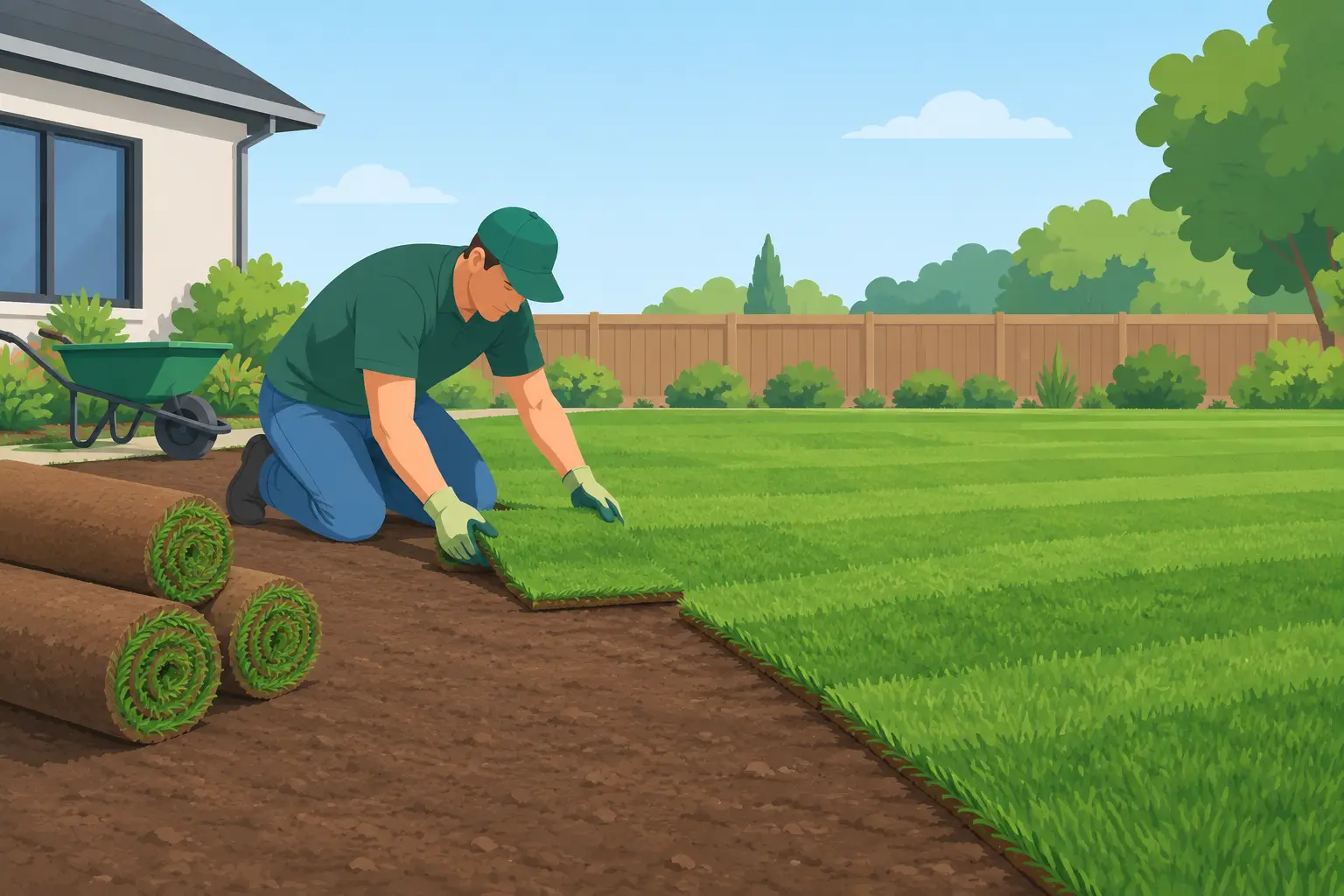
A lot of homeowners replace struggling grass without addressing the reason it keeps failing. If the lawn stays wet, new sod can thin out, discolor, or wash away before it establishes. If artificial turf is installed over a bad base or poor drainage conditions, you can still end up with odor, saturation, and soft spots underfoot.
That is why drainage should be part of the yard plan, not an afterthought. When turf and drainage are installed together, the results last longer and perform better. The base can be built correctly, runoff can be directed where it belongs, and the finished yard is easier to maintain.
For homes with pets or heavy backyard use, this is even more important. A clean, dry surface is not just about appearance. It changes how the space functions day to day.
Signs you need professional yard drainage work
Some drainage problems are obvious, and some build slowly. If water stands for more than a day after rain, if mulch keeps washing out, if grass dies in the same areas, or if you notice muddy edges along patios and walkways, the yard is telling you something.
Cracking near hardscape, water staining, mosquito activity, and damp zones near the foundation are also warning signs. So is a lawn that looks uneven or feels soft in certain spots. Homeowners sometimes get used to these issues because they happen gradually, but that does not make them normal.
What a good drainage plan should include
The best drainage solutions for yards are usually a combination of methods, not a single product. A contractor should look at the full property, identify where the water starts, how it moves, and where it can be discharged safely. That may include regrading, area drains, French drains, downspout collection, or updates to the surrounding landscape.
It should also match the goals for the space. A family yard, a pool area, a putting green, and a front curb appeal project all have different demands. The drainage approach needs to support the finished use, not interfere with it.
Clean installation matters too. Drainage work can be messy by nature, but it should still be handled with care. The finished project should look intentional, not patched together.
Cheap fixes usually cost more later
A lot of homeowners try the small fix first – extra topsoil, a pop-up drain from the hardware store, another round of seed or sod. Sometimes that buys a little time. More often, it delays the real solution while water keeps damaging the yard.
Good drainage is one of those investments that protects everything around it. It helps preserve turf, reduce maintenance, extend the life of hardscape, and keep the yard usable after rain. If you are already upgrading your outdoor space, it makes sense to solve the drainage issue the right way while the project is being built.
For Dallas-Fort Worth homeowners, that usually means working with a contractor who understands both landscape installation and drainage design. Sod Green handles both, which makes it easier to build a yard that looks finished and performs the way it should.
If your yard stays wet longer than it should, do not wait for the next storm to prove the point again. The right drainage plan can turn a problem area into a space you actually enjoy using.



Leave A Comment