 Skip to content
A worn-out backyard can turn into a daily headache when two dogs, Texas heat, and bare dirt all meet in the same place. This artificial turf for pets example shows how a Dallas homeowner can replace a muddy, patchy dog run with a clean, durable surface that looks good and works hard year-round.
The goal is not simply to put green turf over a problem yard. A pet-friendly installation has to account for drainage, odor, traffic patterns, and the way dogs actually use the space. When those details are handled correctly, homeowners get a yard their pets can enjoy without bringing dirt, grass clippings, or mud back into the house.
A Dallas Backyard Built for Two Active Dogs
Picture a typical North Texas backyard: about 650 square feet, mostly sunny, with two medium-to-large dogs that use the yard several times a day. Natural grass once covered the area, but repeated running along the fence line had worn it down to dirt. Summer heat thinned the remaining grass, while rain turned the high-traffic spots into mud.
The homeowner wanted a lawn that looked polished from the patio, stayed usable after rain, and did not require weekly mowing, watering, or patching. They also needed a surface that felt comfortable under paws and could be rinsed clean after pet use.
For this type of project, turf selection matters. A short, dense pet turf with a natural-looking blend of green tones is often a better fit than a tall, decorative product. It holds up well to traffic, does not mat down as easily, and is easier to clean. The finished yard should look like a lawn, but it should perform like an outdoor surface designed for daily use.
The Artificial Turf for Pets Example Starts Below the Surface
The most important work in a pet turf project is often the part nobody sees after installation. A quality system begins with removing the old grass, loose soil, roots, and organic material. Leaving unstable or soft material below the turf can lead to low spots, wrinkles, and poor drainage later.
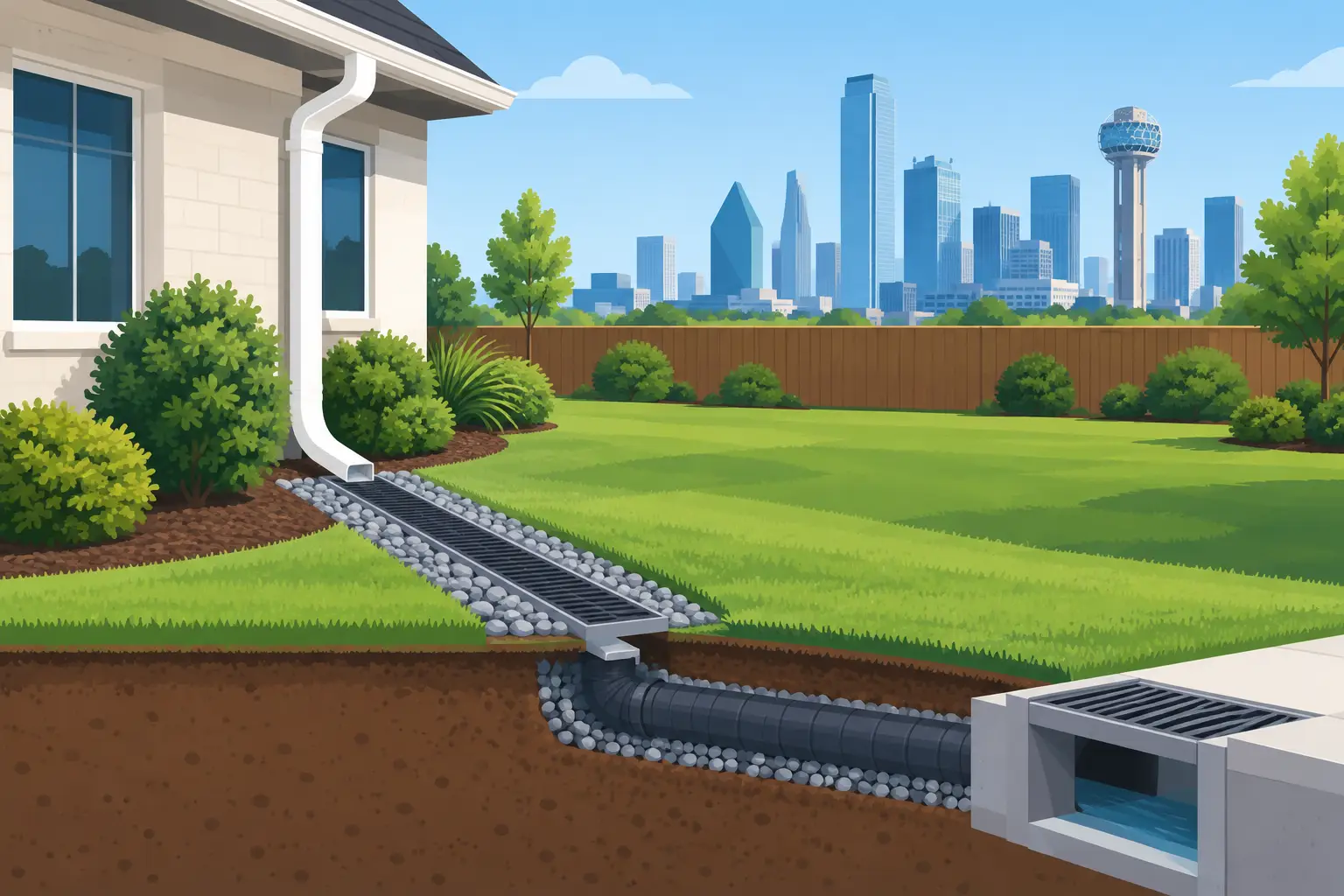
Next, the crew establishes the right grade. In Dallas-Fort Worth, heavy rain can arrive quickly, so water needs a clear path away from the home and out of the turf area. A yard that already has standing-water issues may need additional drainage work before turf goes down. Artificial grass does not solve a drainage problem by itself. It has to be installed over a base that allows water to move through and away as intended.
For this example, the installation includes a compacted crushed-rock base, shaped with a gentle slope toward the back of the yard. The base creates a firm, level foundation while allowing water to drain through the turf. A weed barrier can also be used where appropriate to help reduce growth from below without blocking the drainage system.
The base is then compacted carefully. This step affects how the finished lawn feels underfoot and how well it holds its shape. A rushed installation may look fine on day one, but poor base preparation can show up later as uneven seams, depressions, or areas that feel soft after rain.
Managing Pet Odor Without Overcomplicating It
Pet odor is one of the first questions homeowners ask, and it deserves a direct answer: artificial turf can be a very clean option for dogs, but it needs the right materials and routine care. Urine drains through the turf backing and into the prepared base, while solid waste is picked up just as it would be on natural grass.
In this backyard, a pet-safe deodorizing infill is brushed into the turf after installation. Unlike basic sand infill, pet-focused products are designed to help manage ammonia odors while supporting the turf fibers. This is especially helpful in smaller yards, shaded areas with less natural drying, or homes with multiple dogs.
No infill eliminates the need for maintenance. The homeowner should hose down the high-use potty area regularly, especially during hot weather. A simple rinse helps flush residue through the system. If odors develop, a pet-safe turf cleaner can be applied according to the product instructions. The key is consistency, not an expensive cleaning routine.
It also helps to give dogs a designated relief area when the yard layout allows it. In this example, the installer places the preferred potty zone along one side fence, away from the patio seating area. That makes rinsing easier and keeps the main lawn area looking its best for play and entertaining.
Details That Make the Yard Look Finished
Once the base is ready, the turf is rolled out, positioned, trimmed, and secured. Seams should be placed carefully so they are less noticeable from the patio or main viewing angle. The grain direction of the turf should also face the preferred direction for the most natural appearance.
In this backyard, the turf meets a concrete patio on one side and a stone border on another. Clean, tight edges are not just cosmetic. They keep the material in place and create a finished transition between the lawn, hardscape, and planting beds. A properly secured perimeter also helps prevent dogs from lifting an edge while digging or playing.
The homeowner chooses to keep a narrow mulch bed around two existing trees rather than covering every square foot with turf. That is a practical choice. Trees may need open soil around their root zones, and a mix of turf, stone, and planting areas can add more depth than a wall-to-wall green surface.
A small decomposed granite path is added along the fence where the dogs run most often. This is not required for every pet turf project, but it can be a smart option for households with very active dogs. It gives the yard visual contrast and creates a durable route without asking one area of the turf to absorb all the traffic.
What This Homeowner Can Expect After Installation
The immediate change is easy to see. Instead of looking at thin grass and bare dirt, the homeowner has a consistent green lawn that makes the whole backyard feel more usable. The patio looks cleaner because the dogs are no longer tracking mud inside after rain. The yard is ready for a weekend cookout, a game of fetch, or a quiet evening outside without waiting for grass to recover.
The long-term value comes from reduced upkeep. There is no mowing schedule, no sprinkler system running to keep grass alive through a hot Dallas summer, and no repeated expense for sod repairs in the dog-worn areas. The homeowner will still need to remove pet waste, rinse the turf, and occasionally brush the fibers in high-traffic spots. That is manageable maintenance, not zero responsibility.
Artificial turf is not the right answer for every property. Homeowners who want a large natural lawn for gardening, cooling shade, or a traditional landscape may prefer sod in some areas. Turf can also feel warmer in direct summer sun than natural grass, although quality materials, shade, and a quick rinse can help. The best solution often combines surfaces based on how each part of the yard is used.
For pet owners who are tired of repairing grass every season, the right turf system can turn a problem area into the most dependable part of the property. A well-prepared base, reliable drainage, pet-friendly infill, and clean installation make the difference. Sod Green can help Dallas-Fort Worth homeowners build a backyard that stands up to paws, weather, and everyday life while still looking ready for company.


Leave A Comment