
A cracked patio or bare concrete slab can make the whole backyard feel unfinished. Artificial grass installation on concrete gives that hard, worn surface a cleaner look, a softer feel underfoot, and a lot more usefulness for families, pets, and everyday outdoor living.
For many Dallas-Fort Worth homeowners, concrete is already there. It might be an old patio, a side yard walkway, a pool surround, a balcony, or a small backyard area where natural grass never had a real chance. Instead of tearing everything out and starting over, installing synthetic turf over concrete can be a smart way to upgrade the space quickly. The key is doing it the right way so it looks natural, drains properly, and holds up over time.
When artificial grass installation on concrete makes sense
Concrete is not always the first surface people think of for turf, but it can be a very practical base. If the slab is stable and in decent shape, it can support artificial grass well. This works especially well for courtyards, pet runs, rooftop areas, enclosed patios, daycare play spaces, and around pool areas where homeowners want less mess and less maintenance.
The biggest advantage is convenience. You already have a firm foundation, which can shorten the installation process compared to a full excavation and base build. It also creates a neat, finished appearance in places where plain concrete feels too harsh or too industrial.
That said, concrete is not the right answer in every case. If the slab has major settling, heaving, drainage problems, or widespread cracking, those issues need to be addressed first. Turf can improve the appearance of the surface, but it will not fix structural problems underneath.
What makes this type of installation different
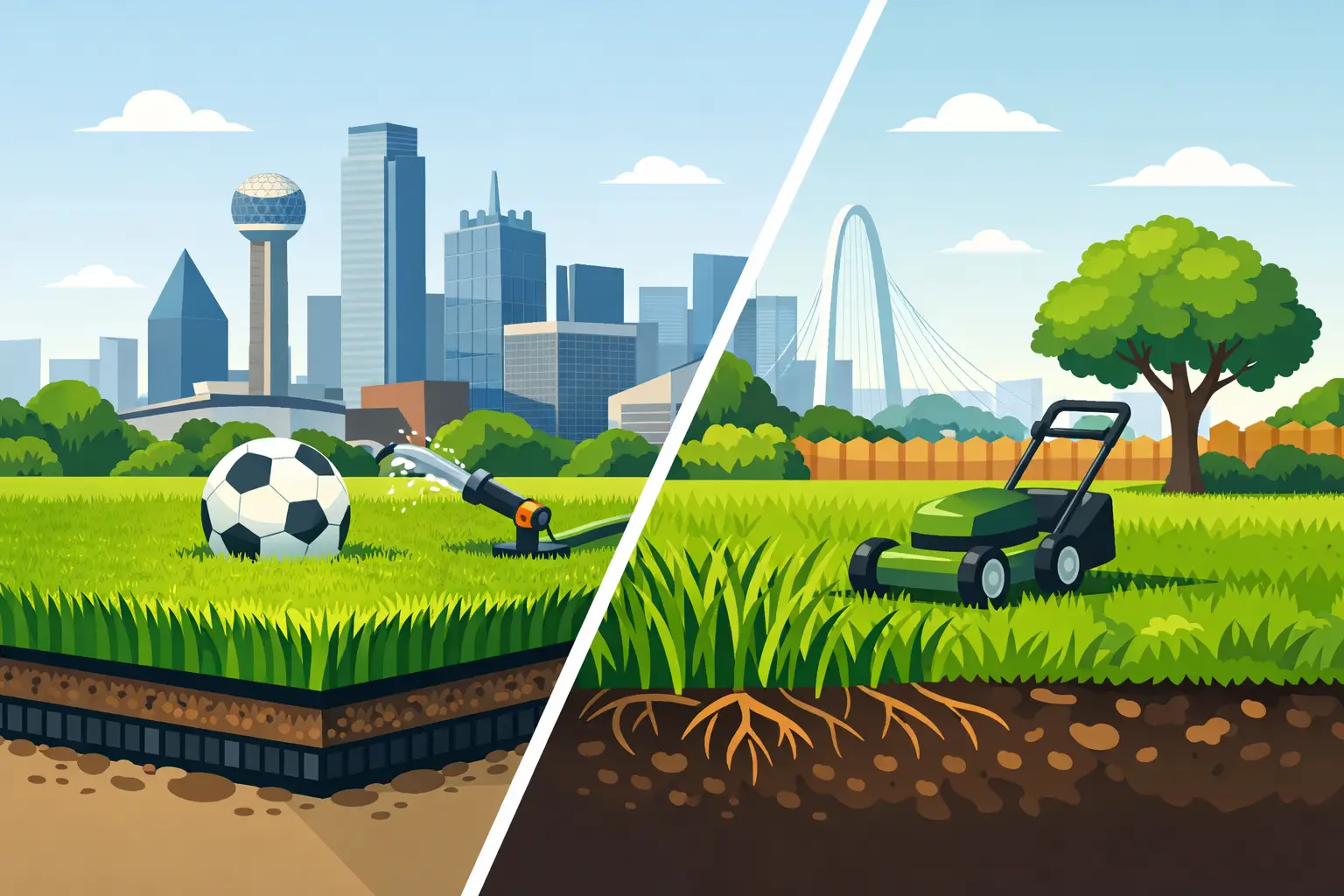
Artificial grass over soil and artificial grass over concrete are not built the same way. On soil, the installer creates a compacted base that helps with drainage, support, and a natural finish. On concrete, the hard surface is already there, so the focus shifts to cushioning, drainage flow, edge security, and surface preparation.
This is where experience matters. A rushed installation can leave the turf looking flat, feeling too hard, or trapping water in the wrong spots. A professional crew will inspect slope, identify low spots, and decide whether the project needs a foam underlayment, drainage mat, adhesive system, or perimeter fastening method. Those details make the difference between a backyard upgrade that looks clean for years and one that starts showing problems early.
The concrete has to be clean and sound
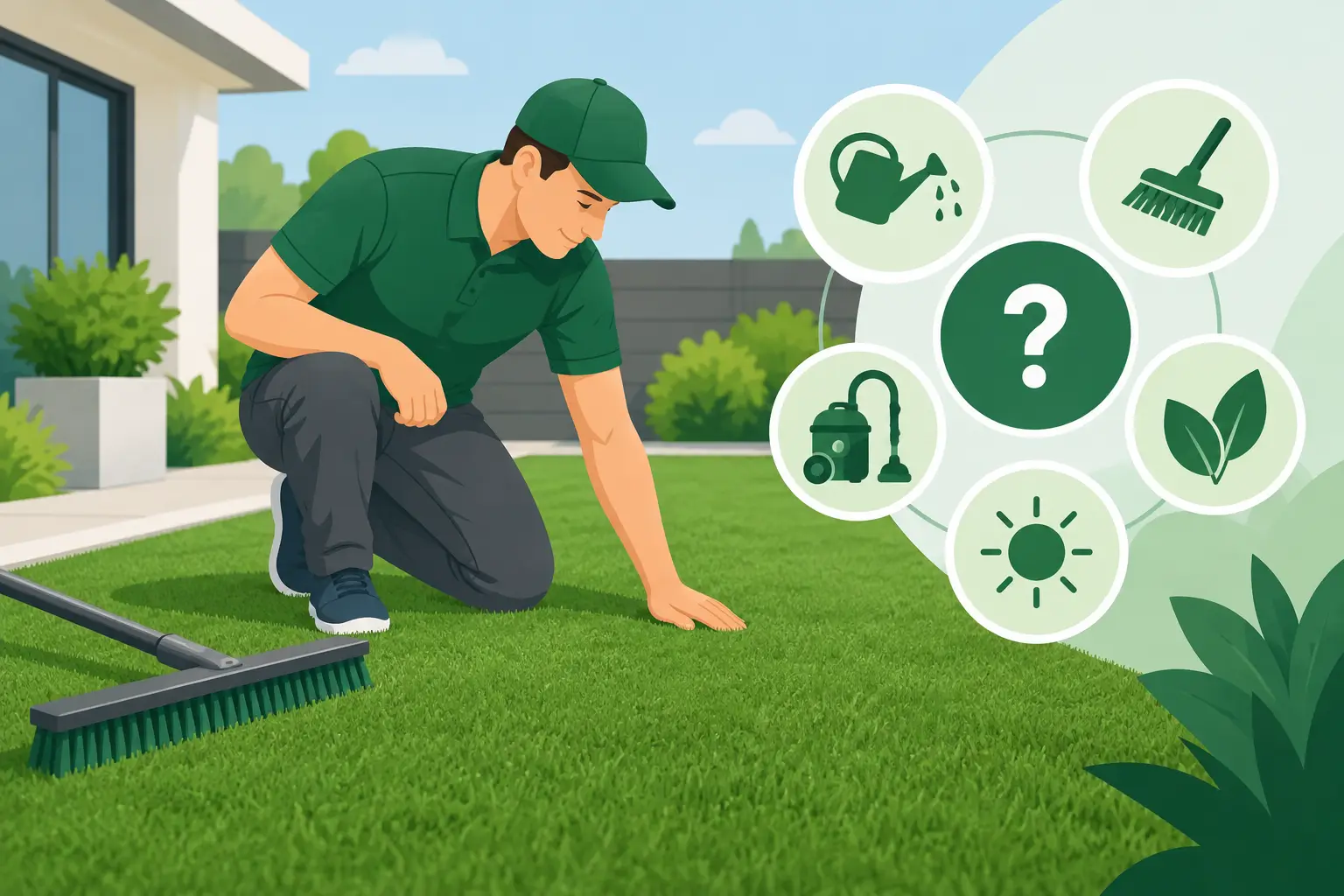
Before any turf goes down, the concrete needs to be prepped. Dirt, loose debris, old glue, grease, and plant growth all have to be removed. If the surface is not clean, adhesives may not bond well and the finished product may not sit properly.
Small cracks are common and not always a dealbreaker, but larger damaged areas may need patching. The goal is a stable, even surface. Turf can hide visual flaws, but it still follows the shape of what is underneath.
Drainage still matters on concrete
One of the biggest misunderstandings about artificial turf on concrete is assuming drainage takes care of itself. Sometimes it does, and sometimes it does not. If the slab already slopes correctly and the turf product has good drainage, water can move through and off the surface effectively. If the slab is flat or has low spots, water can collect.
That is why drainage evaluation matters from the start. In some cases, adding a shock pad or drainage layer helps move water better and improves comfort. In other situations, the installer may recommend correcting problem areas before turf is installed.
The steps in artificial grass installation on concrete
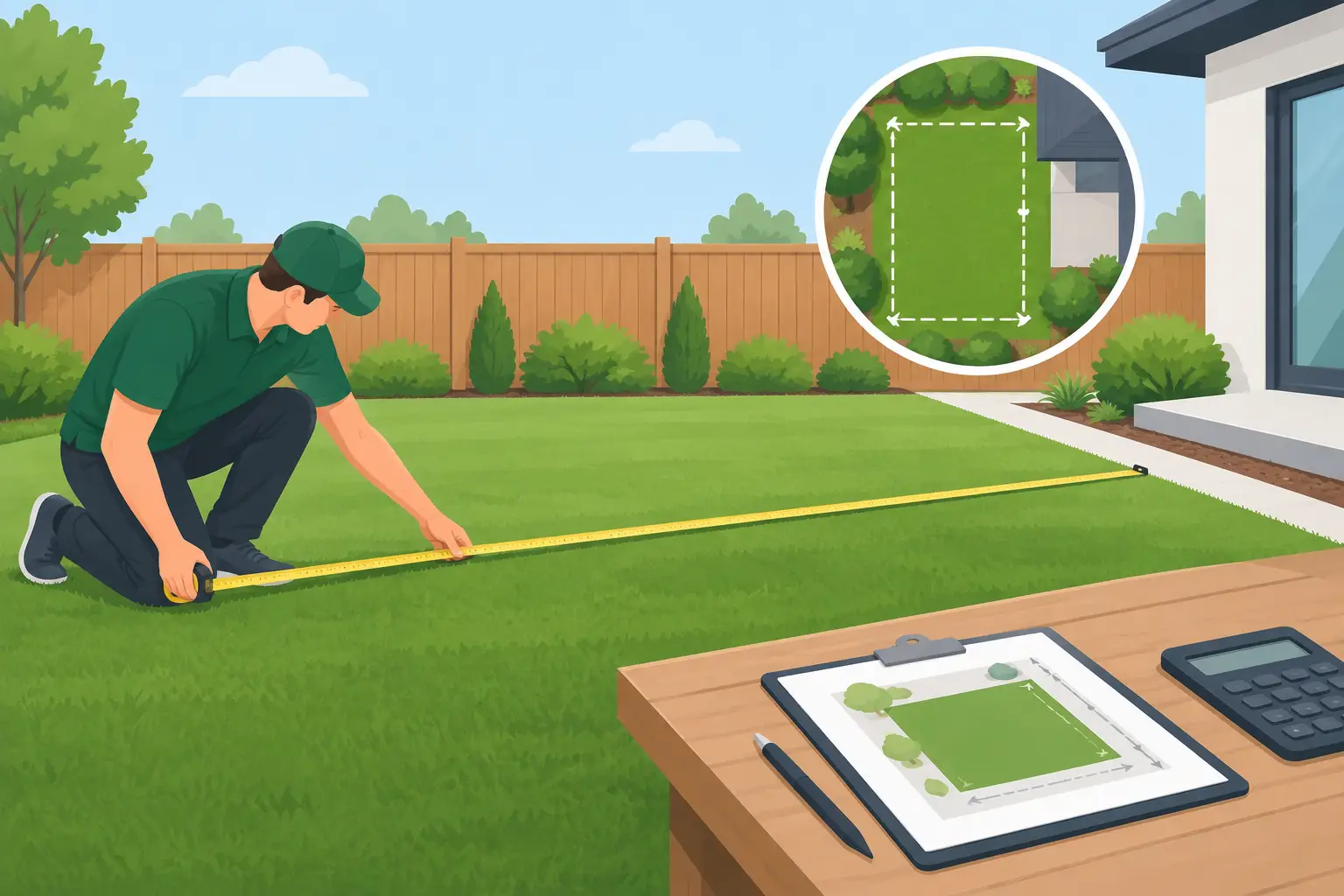
A quality installation usually starts with measuring the area and checking the condition of the slab. The installer will look at the layout, seams, transitions, drains, edges, and how the space will actually be used. A pet area, for example, has different priorities than a putting green or decorative patio section.
Once the surface is prepped, an underlayment may be installed if the project calls for one. This layer can soften the feel, improve comfort for kids and pets, and help the turf sit better over a hard base. Not every project needs the same cushioning, which is why one-size-fits-all installs usually fall short.
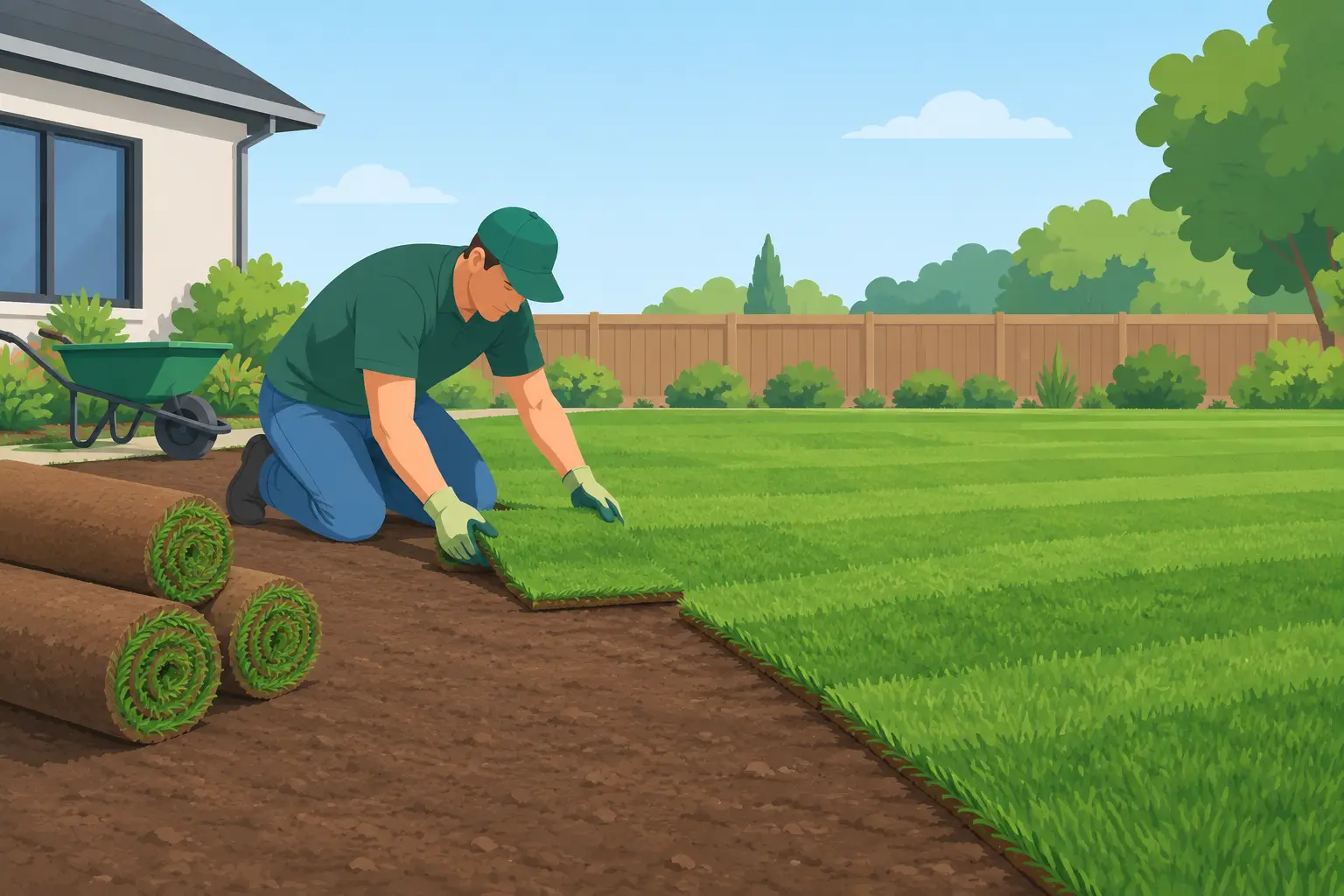
After that, the turf is cut to fit the space. This part takes precision. Good installers pay attention to grain direction, seam placement, and clean edges around walls, columns, planters, and hardscape features. The material is then secured using adhesives, fasteners, or a combination of both depending on the area and surface conditions.
Finally, the seams are joined, the surface is brushed, and infill may be added if the turf system requires it. The end result should look tight, clean, and intentional, not like a loose rug laid over a slab.
Benefits homeowners notice right away
The first thing most homeowners notice is the visual change. Concrete can feel stark and lifeless, especially in outdoor living spaces meant for relaxing or entertaining. Turf warms the space up and gives it a finished look without the constant upkeep of real grass.
Comfort is another big advantage. Artificial grass feels better under bare feet than exposed concrete, especially during hot Texas weather. Around pools, on patios, and in kids’ play areas, that softer surface can make the space much more inviting.
Maintenance is where turf really starts paying off. There is no mowing, muddy patches, or bare spots to fix. A quick rinse, occasional brushing, and general cleanup usually handle most of the upkeep. For busy homeowners, that simplicity matters.
Pet owners also tend to appreciate this type of setup. A small side yard or concrete pad can be turned into a cleaner pet area that is easier to manage than dirt or struggling natural grass. As long as drainage is planned correctly and the turf is suitable for pets, it can be a very practical upgrade.
Where problems usually happen
Most installation problems come from poor prep, not the turf itself. If the concrete is uneven, the seams are sloppy, or the wrong adhesive is used, the project will show it. You may see ripples, edges lifting, water pooling, or a surface that feels harder than expected.
Heat is another factor to think about in Texas. Artificial turf can get warm in direct sun, and concrete underneath can increase surface heat. That does not mean the product should be avoided, but it does mean homeowners should choose the right turf and understand how the space will be used. Some areas benefit from cooling infill, shade planning, or a product selected specifically for heat performance.
There is also the question of realism. Turf over concrete can look excellent, but it has to be installed with care. Cheap materials or poor seam work tend to stand out fast. If your goal is a polished, high-end outdoor space, details matter.
Is DIY worth it?
For a very small, simple area, some homeowners may consider installing turf over concrete themselves. It can look straightforward at first glance, but this kind of work is less forgiving than it seems. Getting the drainage right, cutting cleanly around obstacles, managing seams, and securing the material properly all take skill.
If the installation is in a visible backyard space, around a pool, or anywhere people will walk and gather often, professional installation usually makes more sense. A trained crew can move faster, spot problems before they become expensive, and deliver a cleaner finished product.
That is especially true when the project ties into a larger outdoor improvement plan. Turf over concrete often works best when it is coordinated with stonework, patios, walkways, drainage solutions, or other landscape upgrades. Having one experienced team handle the whole picture usually leads to a better result.
Choosing the right installer
Not every lawn company is built for this kind of work. Artificial grass installation on concrete takes more than basic turf knowledge. You want an installer who understands surface prep, drainage, edge detail, and how to make synthetic turf look like it belongs in the space.
Ask about the process, the materials, and what happens if the slab has issues. Look for a company that shows up on time, communicates clearly, and treats the project like a finished outdoor feature, not just a quick cover-up job. In a market like DFW, homeowners have options, so it pays to choose a contractor that specializes in turf and outdoor surfaces rather than treating it as a side service.
For homeowners who want a fast, clean upgrade without the headaches of natural grass, this can be one of the most practical ways to transform an underused area. A well-installed turf surface over concrete can make a patio softer, a pet area cleaner, and a backyard feel more complete the moment the job is done.

Leave A Comment