
A turf sample can look great in your hand and still be the wrong choice for your yard. That is why an artificial grass buyer guide matters – especially if you are trying to solve real problems like dead spots, muddy pet areas, poolside mess, or a backyard that never seems to stay green in Texas heat.
Artificial grass is not one product. It comes in different pile heights, face weights, colors, backing systems, and infill options. The best turf for a shaded side yard is not always the best fit for dogs, a putting green, or a front lawn where curb appeal matters most. If you are comparing options, the goal is simple: choose a turf system that fits how you actually use the space, not just what looks good in a photo.
What this artificial grass buyer guide should help you answer
Before you compare brands or prices, get clear on what you want the yard to do. Some homeowners want a clean, low-maintenance lawn that looks sharp year-round. Others need a surface that can hold up to kids, large dogs, heavy foot traffic, or furniture around a patio or pool.
That use case should drive every decision. A soft, lush turf with taller blades may look more natural from the street, but it can mat down faster in a high-traffic play area. A shorter, denser turf may not have the same plush feel, but it often performs better where people and pets run over it every day. If you start with appearance alone, you can end up paying for the wrong product.
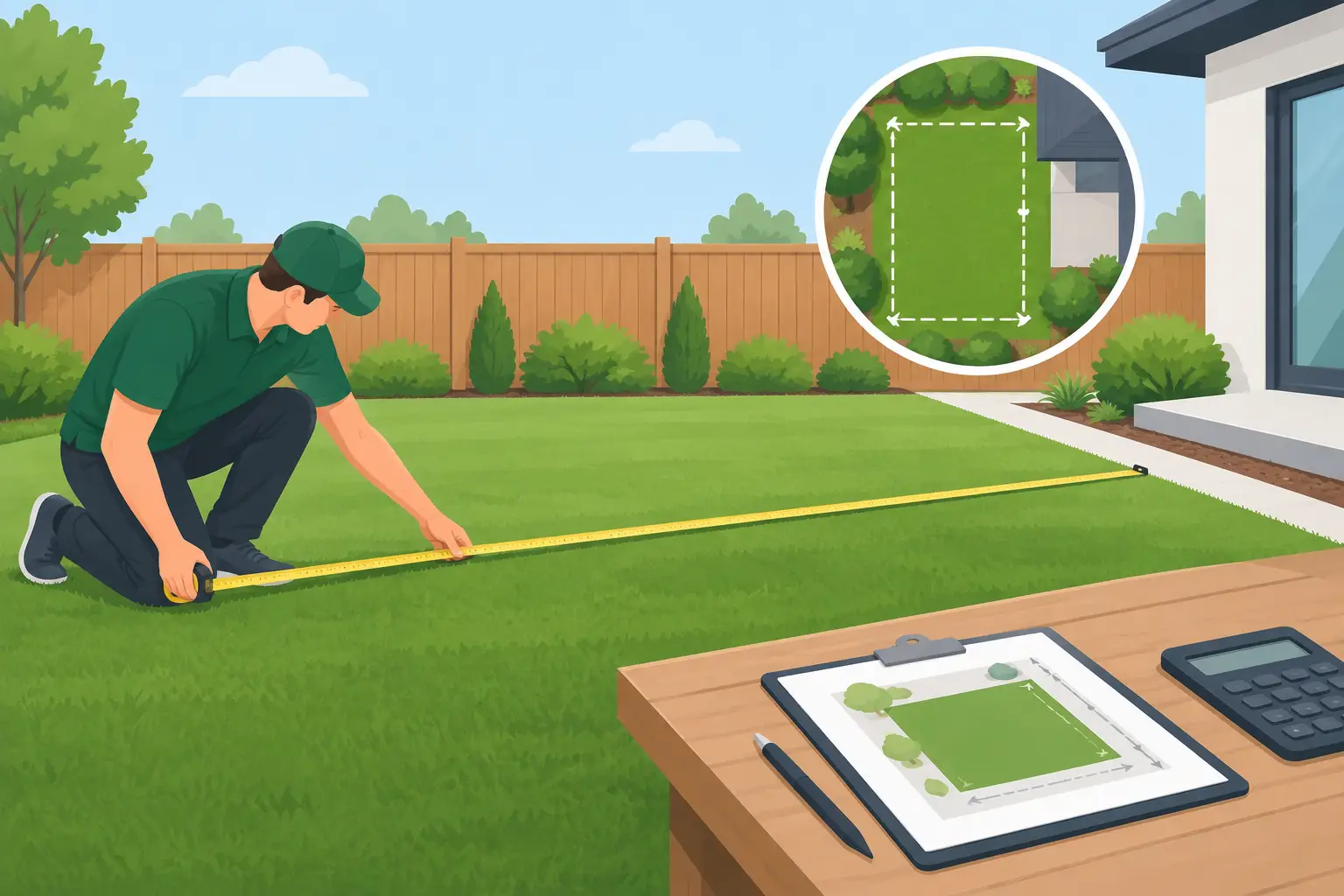
Start with how the yard will be used
The fastest way to narrow your choices is to identify the primary purpose of the space. For front yards, most buyers care about realism, curb appeal, and a tidy finished look. In backyards, comfort and durability tend to matter more because the space gets used harder. Pet owners usually need strong drainage and materials that are easy to rinse clean. Pool owners often want turf that stays neat around splash zones and does not turn into a muddy mess.
There is also a difference between decorative turf and functional turf. Decorative turf works well in accent areas, around pavers, or in spots where natural grass struggles. Functional turf needs to handle daily activity without flattening, shifting, or developing odor issues. If your project includes multiple zones, it may make sense to use different products in different areas.
What to look for in the turf itself
At first glance, many artificial grass products look similar. The differences show up once you understand what affects performance.
Pile height
Pile height is the length of the grass blades. Taller turf can look lush and high-end, but that does not always mean better. Very tall blades may bend over more easily, especially in active areas. Mid-range pile heights often give homeowners the best balance of natural appearance and durability.
Face weight and density
Face weight refers to how much yarn is used in the turf. In simple terms, more material usually means a fuller look and better wear. Density matters too. A dense turf tends to recover better after foot traffic and can feel more substantial underfoot. Still, heavier is not automatically smarter if the product is being installed in a low-use space where appearance matters more than toughness.
Color blend
The most convincing artificial grass usually has more than one shade of green, along with some brown thatch built in near the base. That color variation helps it look like real grass instead of a flat green carpet. If a sample looks too perfect or too bright, it may not look natural once installed across a larger area.
Blade shape
Different blade shapes affect both feel and resilience. Some hold their structure better and bounce back more easily. Others feel softer but may show wear sooner. This is one of those areas where touching samples in person helps. What looks great online can feel stiff in real life, and what feels soft may not be the best long-term fit for high traffic.
Drainage is not optional
A good-looking turf product can still fail if the drainage underneath is wrong. This is one of the biggest points homeowners miss when shopping on price alone.
Artificial grass is a system, not just a surface. The base preparation underneath the turf has a major impact on drainage, stability, and lifespan. If the area already holds water, replacing natural grass with synthetic turf will not magically fix that. The grading, base materials, and drainage plan need to be addressed during installation.
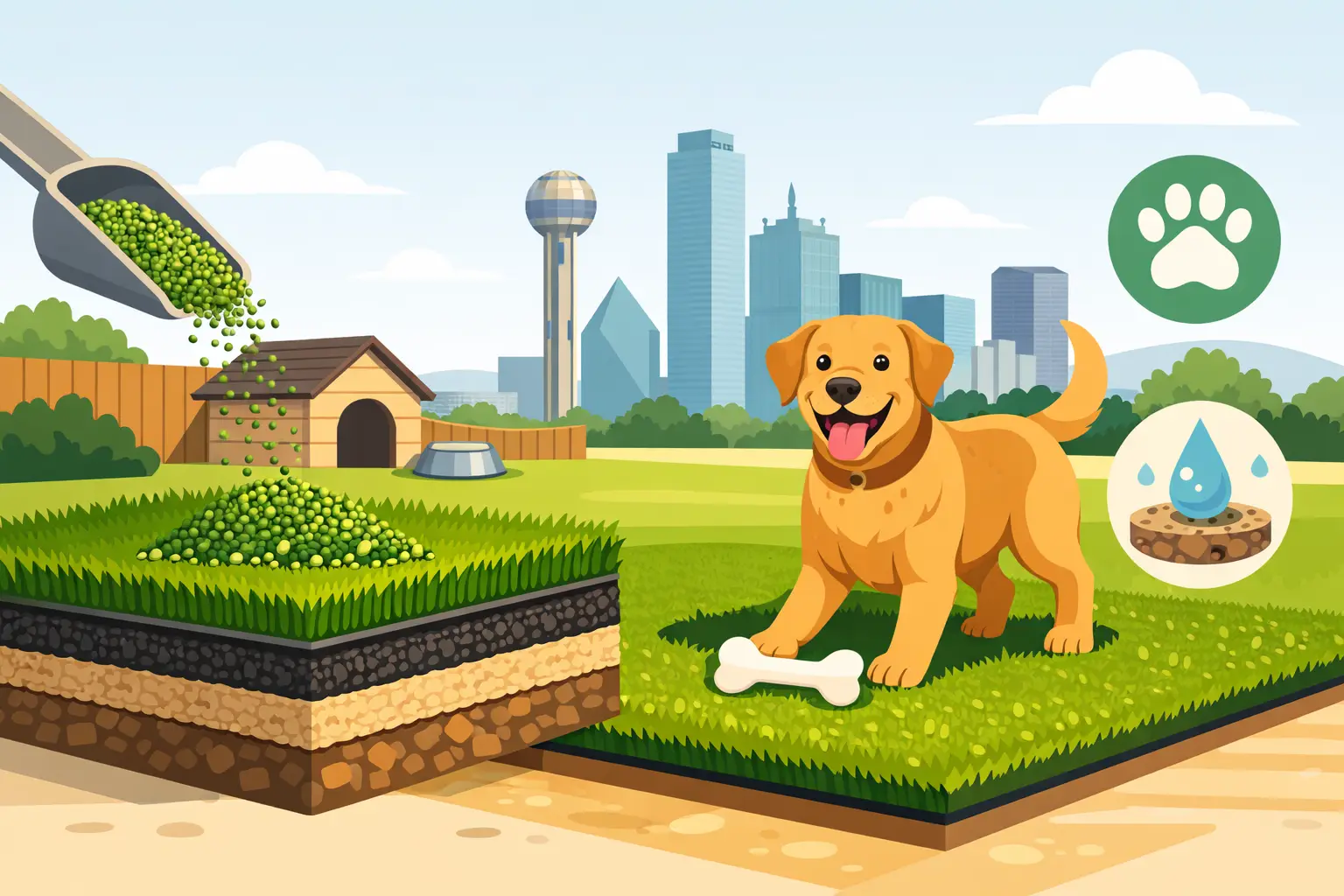
This matters even more for pet owners. A turf system should allow liquids to move through quickly so the area stays cleaner and easier to maintain. If drainage is poor, odor and bacteria become much harder to control. In the Dallas-Fort Worth area, where sudden storms and heavy rain can hit hard, proper drainage work is part of a quality installation, not an add-on.
Infill matters more than most buyers expect
Infill is the material placed between the blades to help support the turf. It affects stability, feel, heat, and maintenance. Some infill options are better for pet use, while others are chosen for general lawn applications or sports performance.
This is not a one-size-fits-all decision. If your main priority is a soft backyard for children, you may lean one way. If odor control for pets is the bigger issue, you may lean another. The key is to ask what infill is being used, why it is being recommended, and how it will affect maintenance over time.
Ask about the installation, not just the product
A strong product installed poorly will not perform the way it should. Seams, edges, weed barrier choices, compaction, and finishing details all affect the final result.
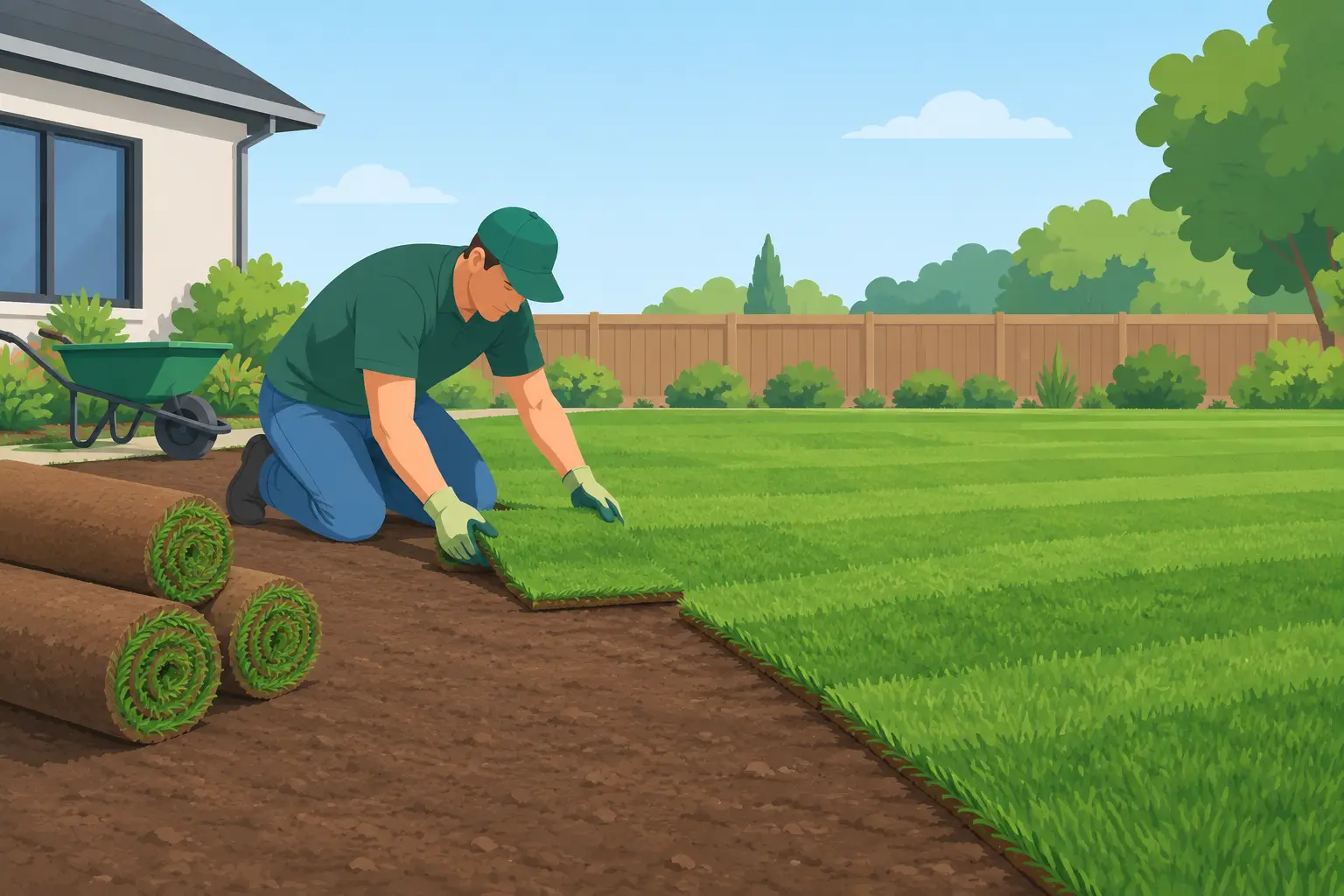
Look closely at how the installer handles the base. A rushed crew can leave soft spots, uneven grading, or visible edges that make the turf look fake and wear out faster. A trained team should excavate correctly, build a stable compacted base, create clean transitions around hardscape, and secure the turf so it stays in place.
This is where working with a specialist makes a difference. A company that regularly installs turf, sod, drainage, patios, and related landscape features is more likely to spot issues before they become expensive problems. If your yard has slope, runoff, pets, or a mix of turf and hardscape, that experience matters.
The cheapest quote is rarely the best value
Price matters, but it should not be the only filter. Two quotes can look similar on the surface while including very different scopes of work.
One installer may price a basic turf swap with minimal prep. Another may include better base work, improved drainage, stronger seam construction, and a higher-grade product that holds up longer. The second quote may cost more up front and still save money over time if it avoids repair work, drainage issues, or early replacement.
Ask what is included. Ask about excavation depth, base materials, infill, edging, cleanup, and warranty coverage. If a price seems much lower than the rest, there is usually a reason.
Match the turf to Texas conditions
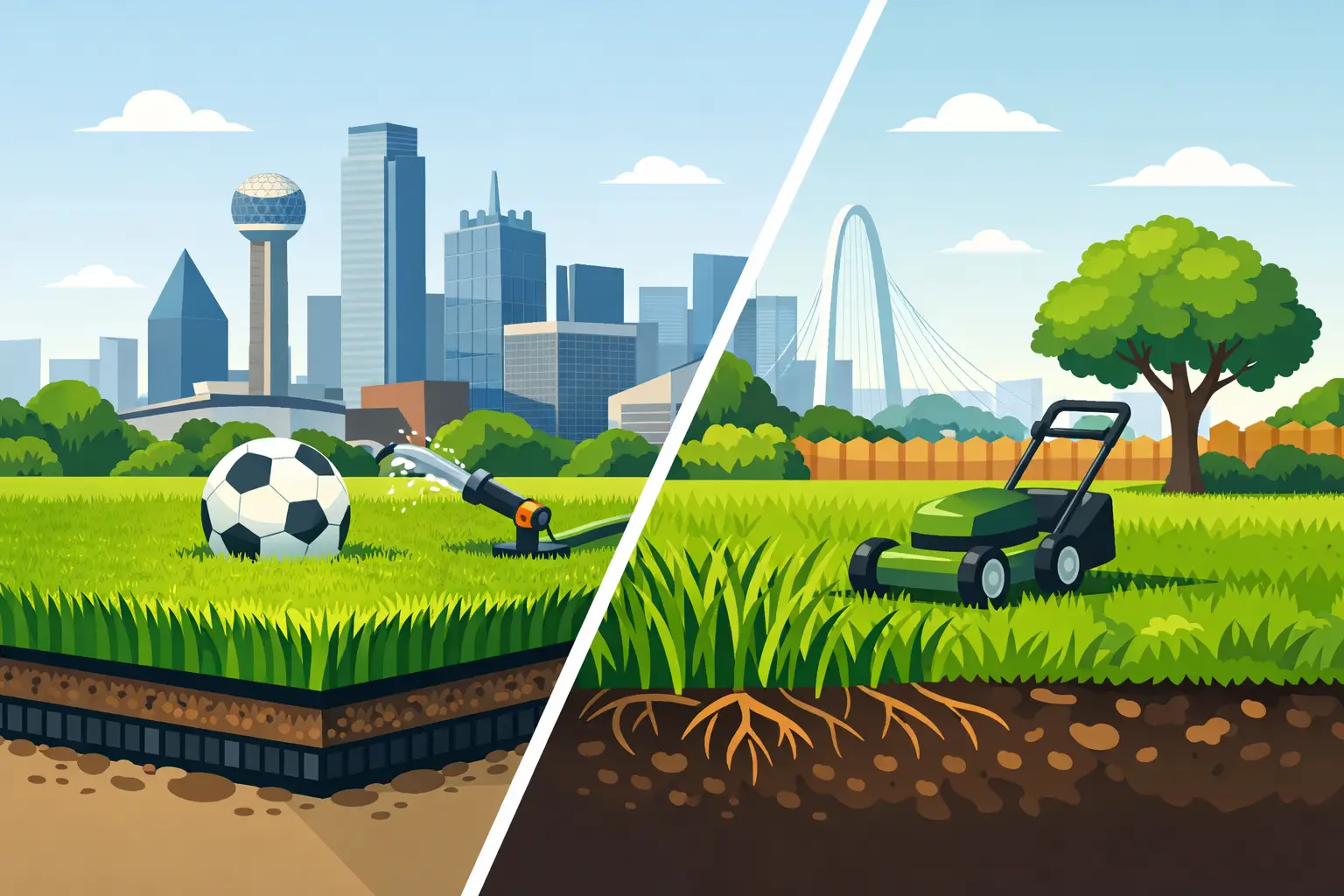
Heat, sun exposure, and soil conditions can all affect performance. In North Texas, homeowners need materials that can handle long hot summers and shifting weather. Some yards also have clay-heavy soils, which can complicate drainage and surface stability if the base is not prepared correctly.
That is why local experience matters. A contractor who understands the region can recommend turf and installation methods that hold up better in real conditions, not just showroom conditions. For many homeowners, that peace of mind is worth more than chasing the lowest bid.
Questions worth asking before you buy
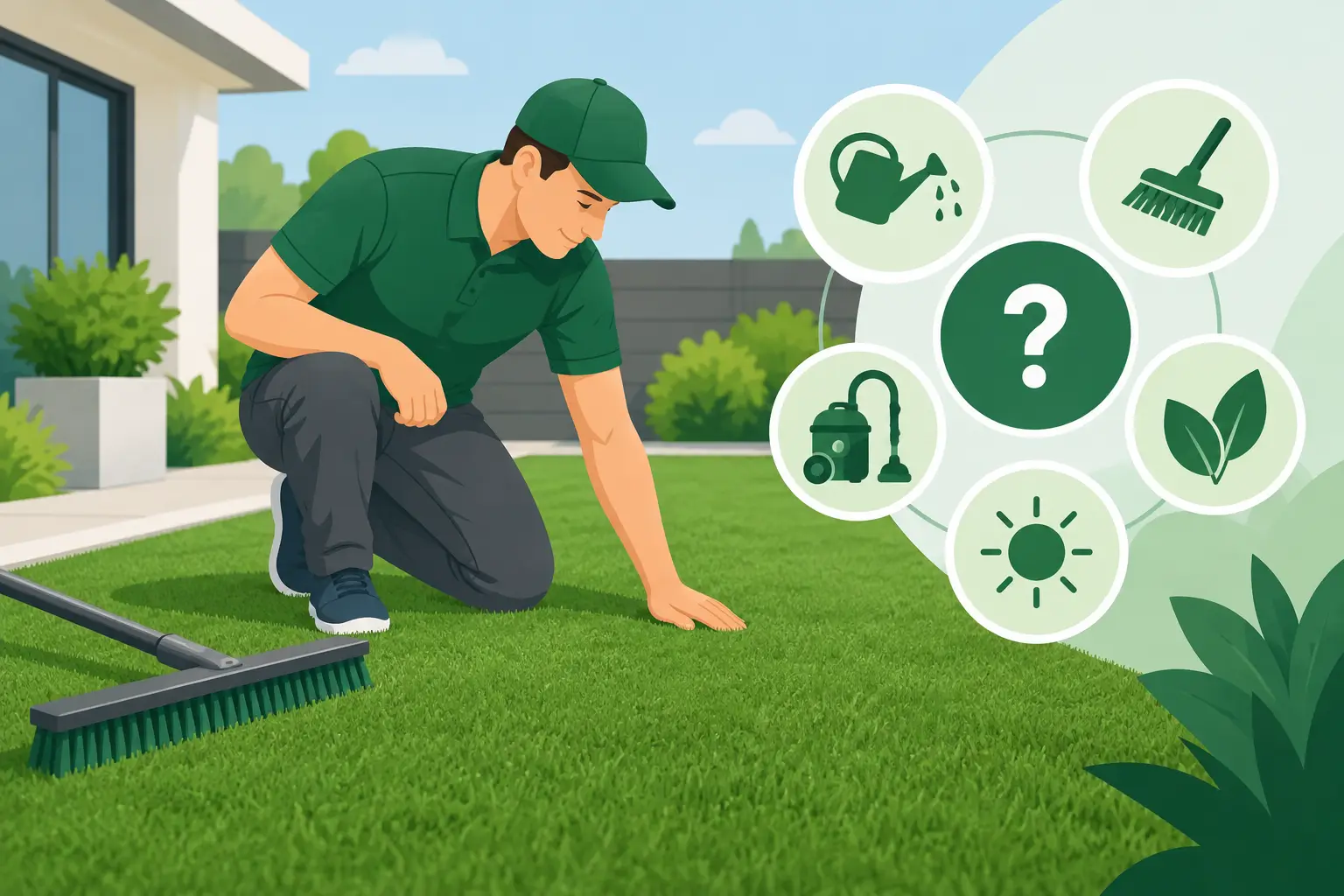
When you are comparing options, keep the conversation practical. Ask how the turf will look after a year of regular use. Ask how it handles pets, standing water, and direct sun. Ask what maintenance is still required, because even low-maintenance does not mean no maintenance.
You should also ask who is doing the work. Some companies sell the job and then hand it off. Others manage the project with trained crews who know how to prep, install, and finish the space properly. If you are investing in a lawn transformation, you want a team that treats the yard like a finished outdoor project, not just a product drop.
For homeowners who want a clean, durable, low-maintenance yard, artificial grass can be a smart investment. The right choice comes down to honest priorities, quality materials, and installation done right the first time. If you take one thing from this artificial grass buyer guide, let it be this: buy for performance in your yard, not promises on a sample board.

Leave A Comment