 Skip to content

A Dallas downpour can expose a yard problem in minutes. Water pools beside the patio, mulch washes into the lawn, and the same low spot stays muddy long after the sun comes back out. The best ways to improve drainage start with finding out where the water begins, where it needs to go, and what is stopping it from getting there.
For North Texas homeowners, drainage is not just about keeping shoes clean. Standing water can soften a lawn, stain hardscapes, stress plant roots, invite mosquitoes, and push moisture toward the foundation. A good drainage plan protects the investment you have made in your yard while making the space more usable after rain.
Start by Finding the Source of the Water
Do not assume the lowest puddle is the entire problem. It is often only the final stop for water coming from a roof valley, compacted soil, a neighboring slope, or an improperly pitched patio. Watch the yard during a steady rain if possible. If not, run water from a hose near suspected trouble spots and follow the flow.
Look for these common warning signs:
- Water standing for more than a day after normal rainfall
- Bare, muddy, or thinning grass in one repeated area
- Mulch, gravel, or soil washing across walkways and patios
- Damp foundation edges, erosion, or water collecting near downspouts
Dallas-area clay soil makes this work especially important. Heavy clay can hold water near the surface instead of allowing it to soak in quickly. That does not mean every yard needs a major drain system, but it does mean surface shape and drainage outlets must be planned carefully.
Before adding a drain, consider how much water you are managing. A single overflowing gutter may need an extension or buried downspout line. Water coming from several parts of the yard may call for regrading, a collection basin, and a French drain working together.
Best Ways to Improve Drainage Without Guesswork
The right solution depends on the water source, the yard layout, soil conditions, and where water can legally and safely discharge. Throwing gravel into a wet spot may hide mud for a while, but it rarely fixes the reason water collects there.
Correct the Grade First
Grading is the foundation of many successful drainage projects. The ground should generally slope away from the home so rainfall moves toward a designated drainage area rather than against the foundation. Even a subtle slope can make a major difference when it is consistent.
Low areas can often be built up with properly compacted soil and reshaped to guide water across the lawn. The key is not creating a new problem for a fence line, patio, pool deck, or neighboring property. Water should never be redirected in a way that causes runoff damage next door.
For small lawn depressions, adding and blending soil may be enough. For broad, flat yards or serious foundation-side pooling, professional grading is worth considering. The work needs to account for existing elevations, hardscape edges, irrigation heads, and drainage paths that may not be obvious from the surface.
Move Roof Runoff Away From the House
Roof runoff is one of the most concentrated water sources around a home. A large roof can send a surprising amount of water through one downspout during a Texas storm. If that downspout ends beside the foundation, it can saturate the same area over and over.
A downspout extension may solve a simple issue when there is room to direct water across a sloped lawn. Where visible extensions are inconvenient or not effective, a buried solid pipe can carry roof water to a pop-up emitter, curb outlet where permitted, or another suitable release point away from the house.
Use solid pipe for roof runoff when the goal is to transport water, not collect groundwater along the route. It is a cleaner, more direct approach than installing perforated pipe where it does not belong.
Install a French Drain for Saturated Ground
A French drain is designed to collect water from wet soil and move it away through a perforated pipe surrounded by clean drainage rock. It is a strong option for a consistently soggy lawn section, water collecting along a retaining wall, or runoff reaching the bottom of a slope.
A French drain is not a shortcut. It needs the right trench depth, fabric, gravel, pipe slope, and discharge location. Without a place for the water to exit, the system cannot perform as intended. Poor installation can also lead to clogs, crushed pipe, or a drain that simply fills up and stays full.
In a Dallas yard with expansive clay soil, drainage fabric and proper aggregate matter. They help separate the soil from the rock so fine particles do not quickly clog the system. Access points or cleanouts can also make maintenance easier over the long term.
Use Catch Basins Where Water Collects Fast
Catch basins are useful when water rushes across a surface and needs to be collected at a specific point. They are often installed at the bottom of a driveway slope, beside a patio, near a landscape border, or at a low point where several runoff paths meet.
The basin captures surface water and sends it into a solid drain line. This makes it different from a French drain, which collects moisture filtering through the soil. In many well-designed systems, both are used: a basin handles fast surface runoff, while a French drain handles chronic wet ground.
The grate must sit at the correct finished elevation. If it is installed too high, water will still pond around it. If it is too low, surrounding soil or mulch can wash in and block the opening. Regularly clearing leaves and debris keeps a basin working when heavy rain arrives.
Build Drainage Into Patios, Turf, and Hardscape
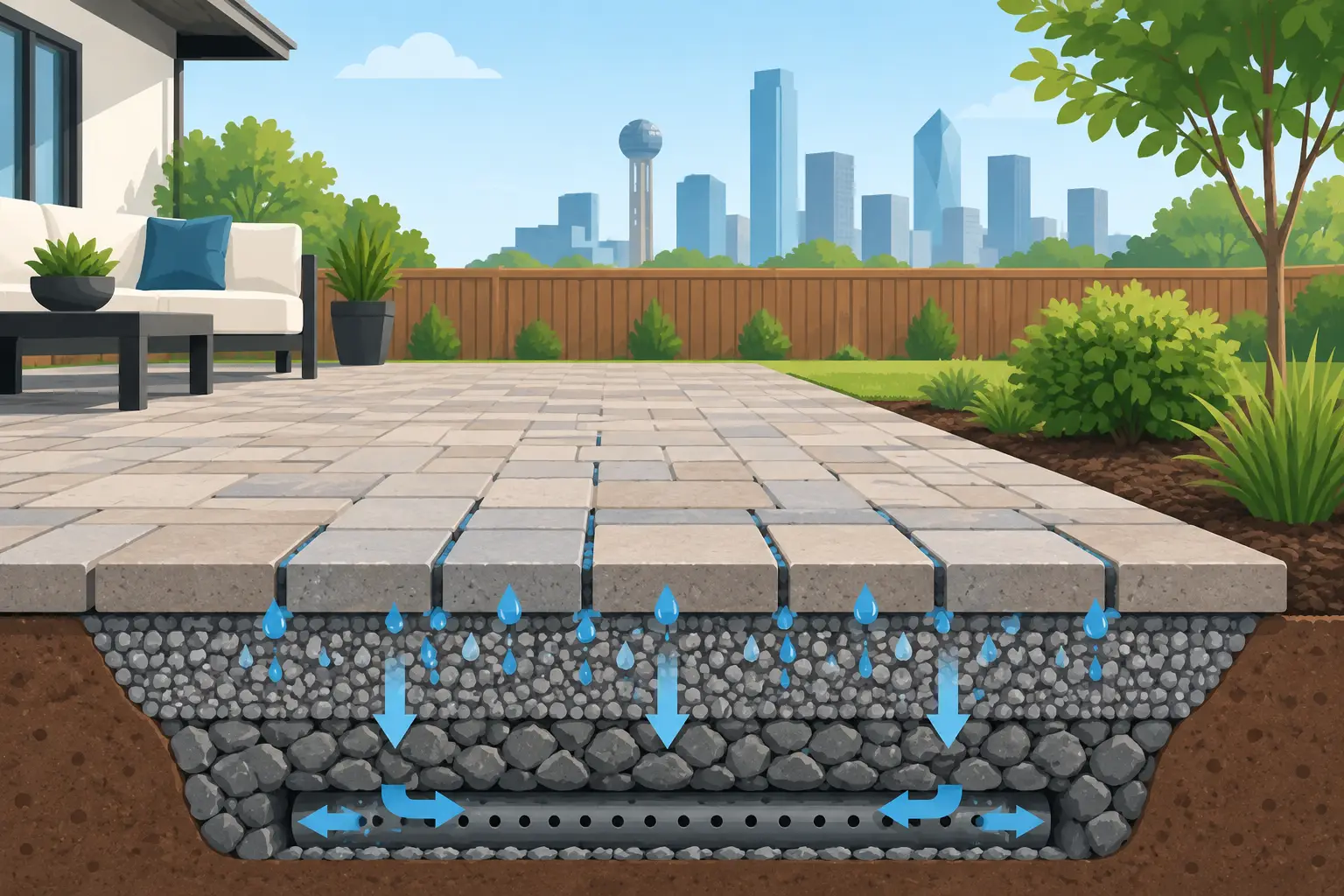
Drainage should be planned before a new patio, walkway, putting green, or artificial grass installation begins. Once a surface is finished, correcting the base underneath becomes more disruptive and expensive.
Patios and flagstone areas need a deliberate pitch that directs water away from the home and toward an approved outlet. The slope should be functional without making the surface feel noticeably uneven. In some layouts, channel drains or catch basins are needed at the edge of a hardscape to keep water from running back toward the house or pooling against a wall.
Artificial turf also requires a properly prepared base. Turf drains through the backing and base materials, but it still needs a stable, graded foundation and a clear plan for runoff. A well-built synthetic turf system can help eliminate muddy lawn areas, especially in high-traffic zones used by kids and pets. It is not a substitute for correcting severe grade problems underneath it.
Do Not Overlook Soil Compaction and Landscaping
Compacted soil can make a yard act like a hardpan surface. Water runs off instead of soaking in, which can send it toward the wrong place. Aeration, compost, and appropriate planting can improve the top layer of a natural lawn over time, but they will not replace structural drainage where water has no exit route.
Landscape beds can help or hurt drainage depending on their design. Raised beds, edging, boulders, and retaining walls can redirect water. A retaining wall without drainage provisions may hold moisture behind it, creating pressure and staining. When installing a wall, include proper gravel backfill, drain pipe where needed, and a path for collected water to leave the area.
Choose plants that match the conditions instead of fighting them. In a section that stays slightly damp but does not flood, moisture-tolerant plantings can be a practical finishing touch. In a true drainage failure zone, solve the water movement first. Plants alone will not protect a foundation or stop erosion.
Know When a Simple Fix Is Not Enough
A shallow puddle in an open lawn is different from recurring water against a foundation, patio movement, washed-out soil, or drainage that crosses a neighbor’s property. Those situations deserve a full site evaluation before work begins.
A dependable drainage contractor should look at the entire property, not sell the same drain for every problem. Ask where the water will discharge, how pipe will be protected from clogs, whether hardscape elevations will be adjusted, and how the finished yard will be restored. The best installation looks clean after the crew leaves and continues working when the next storm hits.
Sod Green helps Dallas-Fort Worth homeowners combine drainage corrections with sod, artificial turf, patios, stonework, and landscape upgrades, so the finished yard looks as good as it performs. If your lawn has become the collection point for every storm, address the water path before investing in the next outdoor improvement.



Leave A Comment