 Skip to content
A Dallas backyard can look great on installation day, but homeowners want to know what it will look like after a hot summer, a muddy dog, pool parties, and months of everyday use. The most common artificial turf maintenance questions come down to a simple concern: how much work does a low-maintenance lawn really require? The good news is that quality synthetic grass is far easier to care for than natural grass. It still needs occasional attention to stay clean, upright, odor-free, and ready for your family to enjoy.
Artificial Turf Maintenance Questions Dallas Homeowners Ask
Artificial turf does not require mowing, watering for growth, fertilizing, or weekly weed treatment. That is a major advantage for homeowners who are tired of fighting thin grass, bare spots, and high water bills. However, artificial grass is an outdoor surface, not a maintenance-free surface.
Most residential lawns only need a quick cleanup as needed and a more thorough check every few weeks. Leaves, pollen, dust, pet waste, and foot traffic are the main issues. A simple routine prevents small messes from settling into the turf and keeps the fibers looking natural.
How often you maintain it depends on where it is installed. A quiet front yard may need very little attention. A backyard used by children, large dogs, and frequent guests will need more regular rinsing and brushing. Turf around a pool may also collect sunscreen residue, leaves, and splashed water.
What is the basic maintenance routine?
Start by removing leaves, twigs, and loose debris with a leaf blower, plastic rake, or broom with synthetic bristles. Avoid sharp metal rakes that can damage turf fibers or pull at seams. For most properties, a quick blow-off once a week or every other week is enough.
Next, brush high-traffic areas when the fibers begin to lean or flatten. Use a stiff synthetic-bristle broom or a power broom designed for artificial grass. Brush against the grain of the fibers to help them stand back up. This is especially helpful around patio doors, play areas, putting greens, and the paths your dog uses most often.
Rinse the surface with a regular garden hose when it looks dusty or after a busy weekend outdoors. Rinsing helps wash away pollen, light spills, and fine debris. It is not watering in the traditional lawn-care sense, so you only need enough water to clean the surface.
Do You Need to Water Artificial Grass?
Artificial grass does not need water to stay green, but rinsing has a purpose. In North Texas, windblown dust and spring pollen can build up quickly. A light hose rinse restores the clean appearance of the blades and helps move residue through the drainage system.
During extreme Dallas heat, homeowners sometimes spray turf to cool the surface before children or pets use it. This can make the turf more comfortable for a short time, but it is temporary. Like other outdoor surfaces, synthetic grass can become hot in direct sun. Shade structures, trees, light-colored hardscapes, and planning playtime outside peak afternoon heat all make a difference.
If your turf has a proper base and drainage system, normal rinsing should drain efficiently. Standing water is not something to ignore. It can point to a clogged drainage area, compacted base material, or an installation issue that should be inspected.
How Do You Keep Artificial Turf Clean With Dogs?
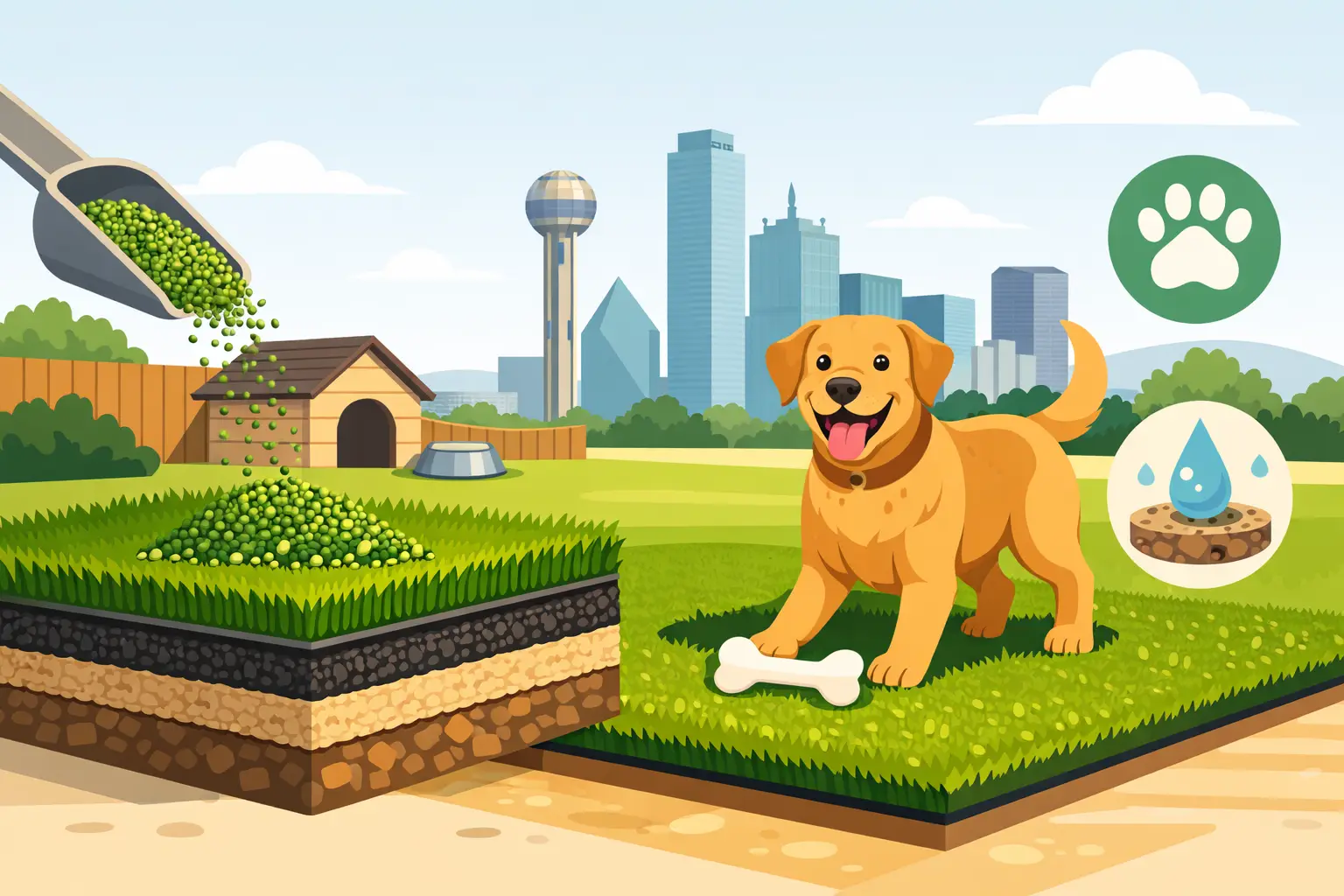
Artificial grass is a strong option for pet owners because it eliminates muddy paws and worn-out grass patches. Still, pet areas need a consistent cleanup routine. Pick up solid waste promptly, then rinse the spot with a hose. This keeps residue from drying into the turf and gives urine a path through the backing and base.
Urine odor is the bigger concern, particularly in small yards where several pets use the same spot. Regular rinsing helps, but it may not solve odors on its own if urine has built up over time. A turf-safe enzyme cleaner is usually the right choice because it breaks down odor-causing organic material instead of covering it with fragrance.
Avoid bleach, harsh household cleaners, or products with strong solvents. They can damage turf materials, affect infill, and create a less safe area for pets and children. If odor continues after proper cleaning, a professional may need to inspect the infill and drainage beneath the surface.
Will Weeds Grow Through Artificial Turf?
A professionally installed artificial lawn includes a prepared base and weed barrier to reduce weed growth. That does not mean a stray weed can never appear. Seeds can blow in from nearby landscaping and germinate in debris sitting on top of the turf. Weeds can also emerge along edges where turf meets flower beds, fences, or hardscape.
The best defense is keeping the surface clear of leaves and soil. If a weed appears, pull it by hand before it spreads. For persistent growth around the perimeter, use a turf-safe weed treatment carefully and follow the product instructions. There is no reason to treat the whole lawn with chemicals when one or two spots are the actual problem.
How Often Should Artificial Turf Be Brushed?
Brushing is one of the easiest ways to protect the finished look of your investment. In low-traffic areas, brushing every month or two may be plenty. In a backyard with active kids, pets, or frequent entertaining, check the turf every two to four weeks.
Pay attention to the areas that receive repeated pressure. Furniture legs, outdoor kitchens, grill stations, pool exits, and gates can all flatten fibers. Move portable furniture occasionally and brush those areas as needed. If an area stays matted after brushing, it may need an infill adjustment or professional service.
Not every turf system uses the same amount or type of infill. Some installations are designed with sand, while pet systems may use specialized odor-control infill. That is why the right maintenance approach depends partly on the product and installation method, not just the visible grass blades.
Can You Pressure Wash Artificial Turf?
A garden hose is the safer choice for routine cleaning. Pressure washers can be too aggressive, especially at close range. High pressure may disturb infill, damage seams, or force debris deeper into the surface.
For a tough stain, start with mild soap, warm water, and a soft cloth or sponge. Most food spills, drinks, and muddy footprints come up easily when cleaned soon after they happen. Blot spills instead of grinding them into the fibers.
For sticky materials such as gum, let ice harden the material first, then lift it out carefully. Paint, grease, tree sap, and other stubborn stains may require a turf-compatible cleaner. Test any product in a hidden area before applying it broadly, and avoid products that contain petroleum or harsh solvents.
What Causes Artificial Turf to Smell?
Odor almost always comes from trapped organic material, pet urine, standing water, or poor airflow in a heavily used area. It is not a normal part of owning artificial grass, and it should not be treated as something you simply have to live with.
Start with a thorough rinse and an enzyme-based turf cleaner. Clear leaves and debris that may be blocking drainage. If the odor returns quickly, look for concentrated pet-use areas or low spots where water is not moving through the base as it should.
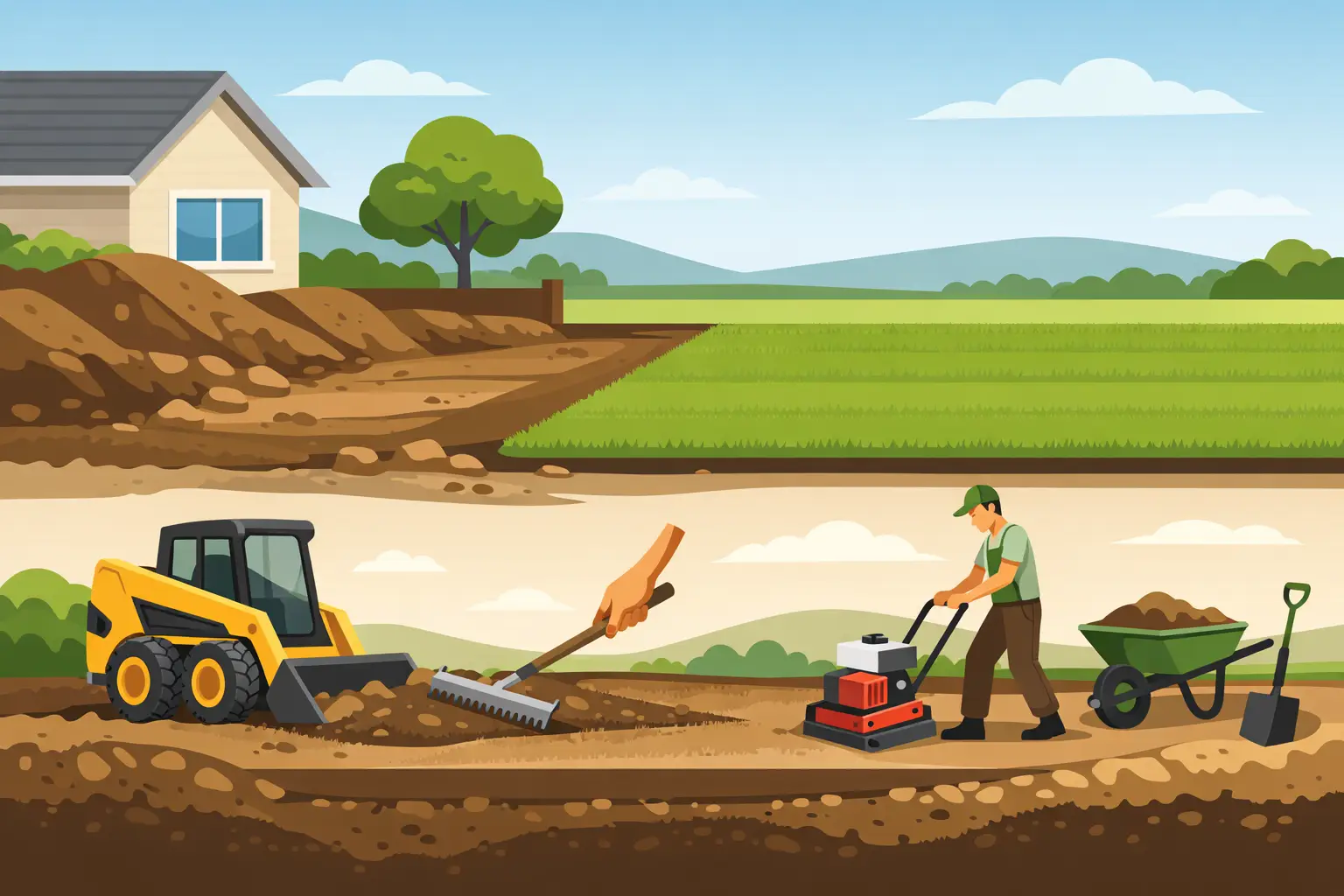
This is where a properly built turf system matters. Good installation includes more than rolling out green material. The base must be graded, compacted, and designed to direct water away from the home and through the system. Sod Green plans those details before installation, which helps homeowners avoid the drainage and odor problems that come with shortcuts.
When Should You Call a Turf Professional?
Most artificial turf maintenance is simple homeowner care. Call a professional when you see lifting edges, separated seams, significant wrinkles, repeated pooling water, damaged backing, or sections that remain flat after brushing. These are usually repair issues, not routine cleaning issues.
A professional inspection is also smart if pet odor persists despite cleaning. The solution may involve refreshing infill, treating the system more deeply, or correcting a drainage concern. Taking care of it early protects the appearance and lifespan of the turf.
A quality artificial lawn should make your outdoor space easier to enjoy, not give you another demanding weekend chore. Keep it clear, rinse it when needed, brush the high-traffic spots, and address drainage or odor concerns before they grow. With that simple care, your yard can stay clean, polished, and ready for Texas life year-round.



Leave A Comment