 Skip to content
A Dallas lawn can look great in April and struggle by August. That is why turf versus natural grass is not just a style decision. It is a decision about watering, weekend chores, kids, pets, shade, drainage, and how much effort you want to put into keeping your yard looking finished.
Both surfaces can improve curb appeal and make a backyard more usable. The right answer depends on your property and priorities. A healthy sod lawn brings a natural look and cooler feel. Quality artificial turf provides dependable green color with far less routine maintenance. The best projects start with an honest look at how you live outdoors.
Turf Versus Natural Grass: Start With How You Use the Yard
Before comparing prices or colors, think about what happens in the space every week. A front yard meant to create curb appeal has different needs than a backyard that handles two dogs, a playset, a pool, and frequent gatherings.
Natural grass is a strong choice for homeowners who enjoy a living lawn and are willing to maintain it. Fresh sod delivers an immediate transformation, but it needs proper watering during establishment and regular mowing, feeding, and weed control afterward. In North Texas, grass also has to contend with hot summers, compacted soil, inconsistent rainfall, and shaded areas that may never receive enough sunlight to thrive.
Artificial turf is built for homeowners who want a consistently clean, green surface without the mowing schedule. It works especially well in narrow side yards, dog runs, shaded spaces, pool surrounds, putting areas, and backyard sections that get worn down by heavy use. It does not need irrigation to stay green, but it still needs occasional care, including rinsing, brushing, and cleaning pet areas as needed.
The goal is not to force one material across the whole property. Many of the best Dallas landscapes use both. Natural sod can soften a larger open yard, while synthetic turf solves the high-traffic or hard-to-grow sections around it.
Water and Ongoing Maintenance
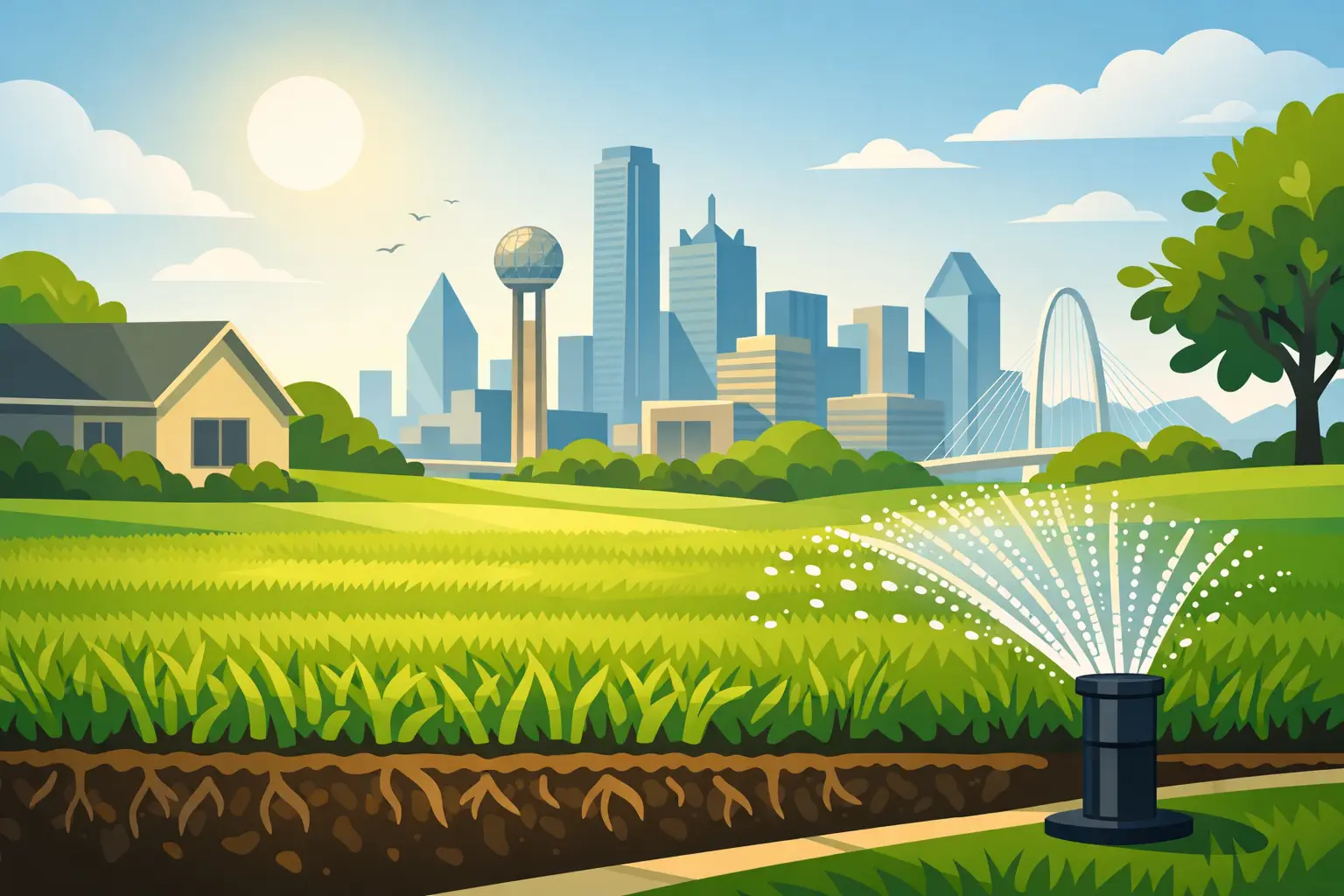
Water is one of the biggest differences between turf and natural grass. A sod lawn needs regular irrigation to establish roots, and it needs consistent watering during dry stretches to stay healthy. Water needs vary by grass type, soil, sun exposure, and season, but a Texas summer can quickly expose weak coverage or neglected lawn care.
That does not mean natural grass is always wasteful. A well-designed irrigation system, the right sod variety, healthy soil, and smart watering habits can keep water use under control. Bermuda grass, for example, handles full sun and traffic well, while St. Augustine is often chosen for yards with more shade. Each comes with its own maintenance expectations.
Artificial turf removes the need for routine lawn irrigation and mowing. That is a major advantage for busy households, frequent travelers, rental properties, and homeowners who are tired of paying for lawn treatments that do not fix thin or patchy grass. Turf also avoids fertilizers, grass clippings, and the constant cleanup that comes with mowing.
Still, low maintenance is not the same as no maintenance. Leaves, dirt, and debris should be blown off or removed. Infill may need occasional grooming in heavily used areas. Pet owners should rinse the surface and use odor-control products when needed. A professional installation with the right base, drainage plan, and materials makes that maintenance much easier.
Heat, Comfort, and Texas Weather
Dallas heat deserves a practical conversation. Natural grass is generally cooler under bare feet than artificial turf because living grass releases moisture as it grows. On a sunny 100-degree day, synthetic turf can feel hot, particularly darker products or areas with no shade. Homeowners with children, pets, or barefoot pool traffic should plan for that reality.
There are ways to make a turf installation more comfortable. Selecting a quality product, using proper infill, adding shade, and rinsing the surface before use can help lower surface temperature. Turf is often ideal near patios and pools when the space is used with shoes, sandals, or furniture rather than as a barefoot play field during peak afternoon heat.
Natural grass has its own weather challenges. Extended heat and watering restrictions can lead to brown spots, thinning, and weed pressure. Heavy rain can create muddy areas or standing water if the grading and drainage are wrong. Neither turf nor sod should be installed as a shortcut around drainage problems. Water needs a clear path away from the home and across the yard before any finished surface goes down.
Pets, Kids, and Heavy Traffic
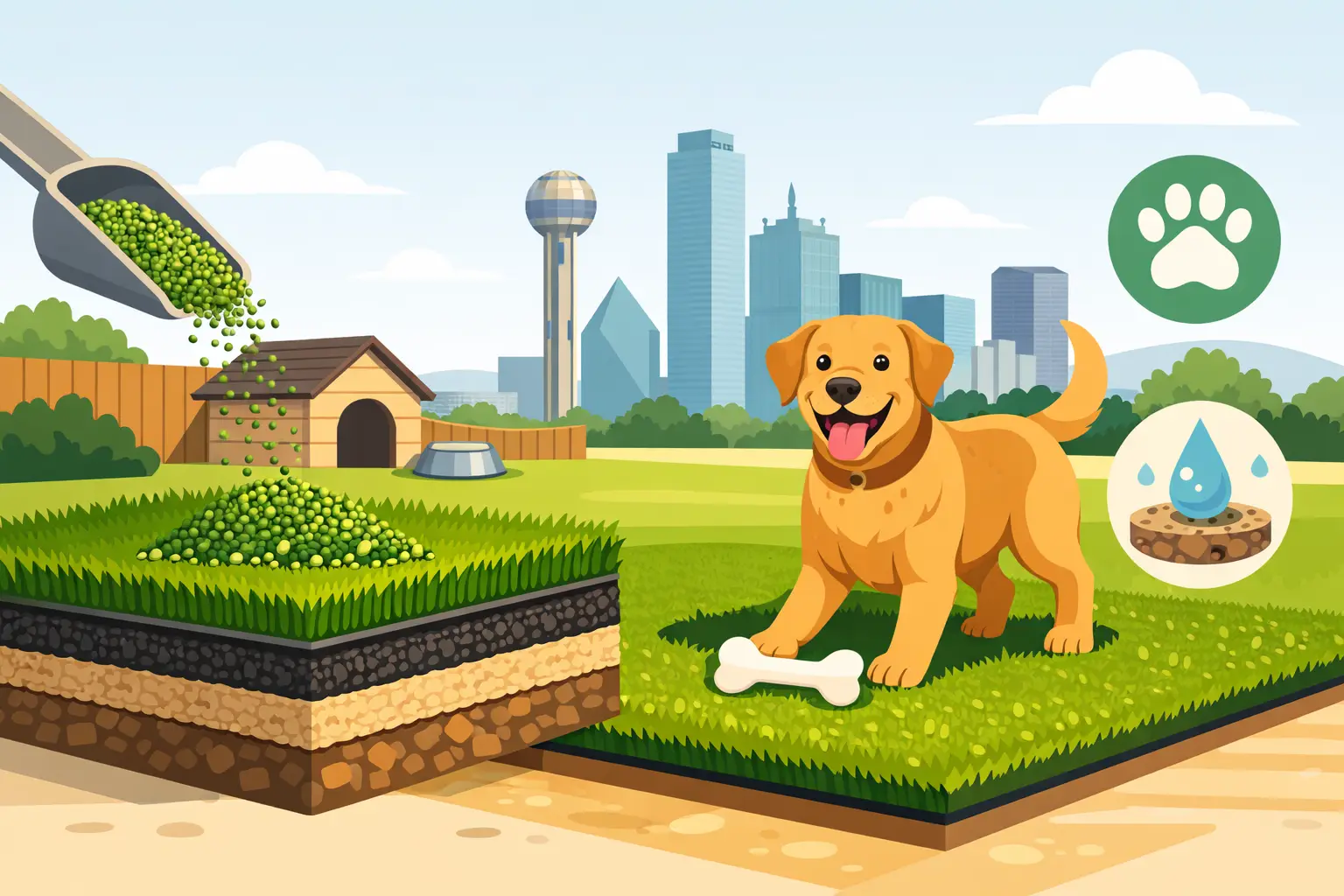
For families with pets, the choice often becomes clear once they look at the wear pattern in the yard. Dog urine, digging, muddy paws, and repeated running paths can make natural grass hard to maintain. Even a healthy sod lawn may develop bare areas around gates, fence lines, and favorite play zones.
Pet-friendly artificial turf is a reliable option when installed correctly. The base must drain well, and the turf system should be selected for pet use rather than treated as a basic carpet installation. A cleanable surface, proper infill, and drainage beneath the turf help prevent odors and standing water. This is where experienced installers matter. The visible grass is only one part of the system.
Natural grass remains a good fit for families who want a softer, living play surface and have enough open space for the lawn to recover between uses. If children play sports in the backyard every day or multiple dogs use the same small area, turf usually holds its appearance better. If the yard gets moderate use and you enjoy lawn care, sod can be a satisfying long-term choice.
The Practical Cost of Turf Versus Natural Grass
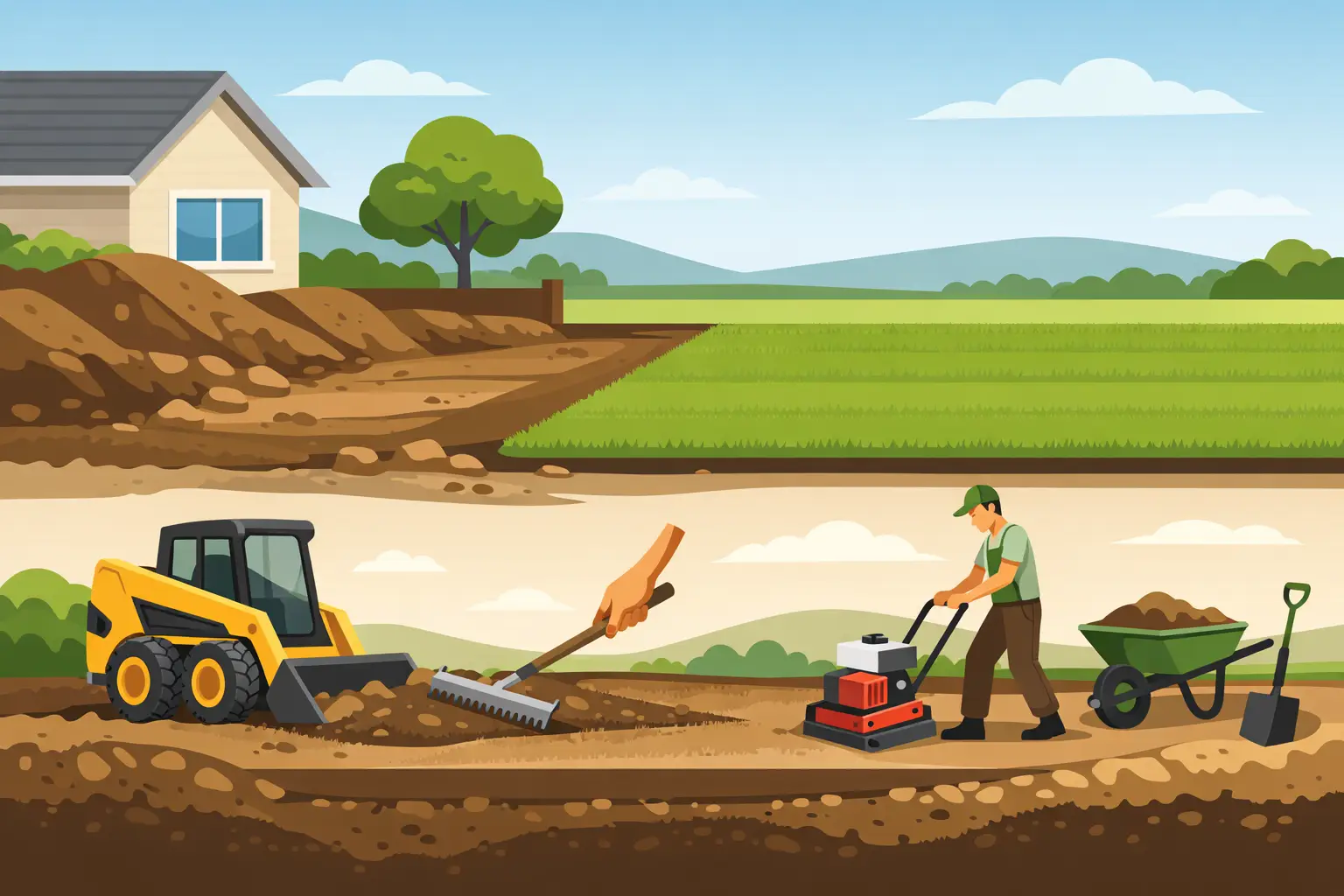
The upfront cost of artificial turf is usually higher than sod. Quality turf installation involves excavation, base preparation, compaction, drainage considerations, weed barrier, turf material, infill, seams, and edge work. Cutting corners below the surface can lead to uneven areas, poor drainage, lifting edges, and an installation that does not last.
Sod generally costs less to install at the beginning, especially across a large area. But the long-term cost includes water, mowing equipment or lawn service, fertilizer, weed control, pest treatment, seasonal repairs, and potential replacement of damaged sections. The actual value depends on how long you plan to stay in the home and how much maintenance you are currently paying for.
For a homeowner replacing a small problem area that never grows well, turf can make strong financial sense because it removes repeated repair costs. For a large, sunny yard with workable irrigation and room to grow healthy grass, sod may offer a more budget-friendly path to a natural landscape. A project consultation should account for square footage, access, existing conditions, drainage, and how the area will be used, not just price per square foot.
Appearance and Property Appeal
Fresh sod has a look that cannot be copied exactly. It changes with the seasons, feels natural underfoot, and adds softness to a landscape with trees, garden beds, and mature planting. When it is healthy and professionally installed, a natural lawn makes a home feel established and cared for.
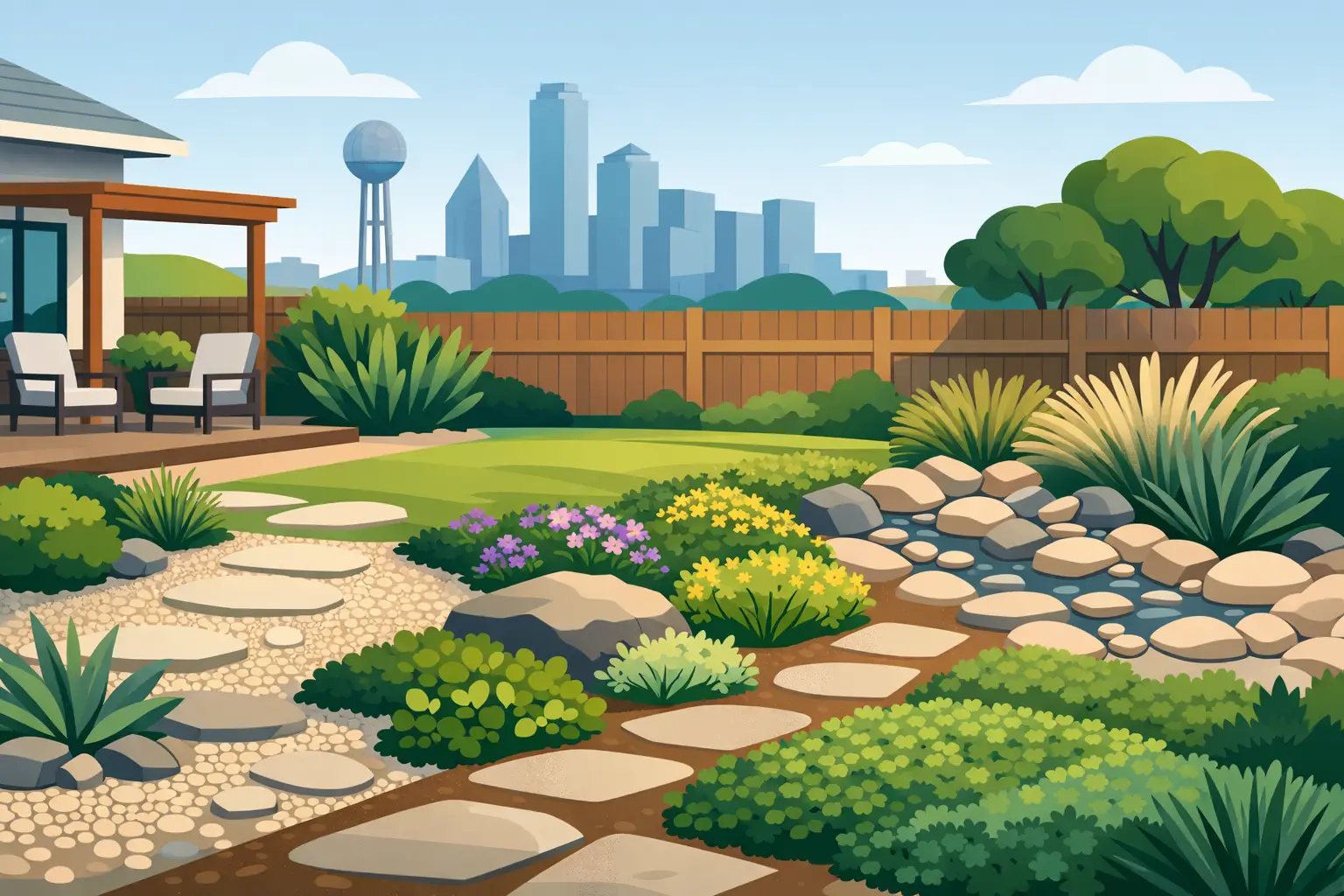
Modern artificial turf has come a long way from the flat, plastic-looking products many homeowners remember. Better blade shapes, color variation, thatch layers, and installation methods can create a realistic finish from the street and up close. Turf is especially effective when paired with clean edging, stone walkways, patios, landscape beds, or a custom putting green.
The finished appearance comes down to workmanship. Uneven grading, visible seams, poor transitions, and bad drainage can make either option look cheap. A clean installation should fit the shape of the yard, drain correctly, and leave the property neat when the work is done.
Choose the Surface That Solves the Real Problem
If you want a living lawn, have the time or service budget to care for it, and can provide proper water and sunlight, natural sod is a dependable choice. If you are worn out by mud, bare spots, mowing, pet damage, or a small yard that receives heavy use, artificial turf can give you a cleaner and more consistent result.
For many Dallas homeowners, the answer is a tailored combination rather than an all-or-nothing decision. Sod Green can evaluate the condition of your yard, recommend the right surface for each area, and build a finished outdoor space that works as hard as your family does. Start with the part of the yard causing the most frustration, and let that problem point you toward the right solution.


Leave A Comment