 Skip to content
If your lawn looks tired no matter how much water, mowing, or fertilizer you throw at it, patching the problem usually stops working after a while. A real residential sod replacement guide starts with that simple truth: some lawns are past the point of quick fixes, and full replacement is the cleaner, faster path to a yard that actually looks finished.
In Dallas-Fort Worth, lawns take a beating. Long heat stretches, compacted soil, drainage trouble, pet wear, shade patterns, and inconsistent irrigation can leave even established grass thin, uneven, and hard to recover. When large sections are dead or the lawn has become a mix of weeds, bare dirt, and struggling turf, replacing the sod can save time and produce a better result than spending another season trying to revive what is already failing.
When a Full Sod Replacement Makes Sense
Not every bad-looking lawn needs to be stripped out. If the issue is limited to a few spots, targeted repair may be enough. But when more than a third of the yard is weak, patchy, or infested with weeds, a full replacement often makes more financial sense than repeated treatments and spot installs.
The same goes for lawns with poor grading or drainage. If water stands near the home, rushes across the yard, or keeps certain areas soggy, new sod alone will not fix the root problem. The lawn may look good for a short time, then fail again. In those cases, replacement should be paired with proper prep work, and sometimes drainage correction, so the new grass has a fair chance to establish.
There is also the curb appeal factor. Homeowners who are getting ready to sell, upgrading outdoor living space, or simply tired of looking at a rough yard often choose replacement because it delivers immediate visual impact. Seed takes time and leaves too much to chance. Sod gives you a finished lawn right away.
Residential Sod Replacement Guide: What Happens First
The quality of a new lawn is decided long before the first roll of sod goes down. This is where many projects go sideways. If the old grass is removed poorly, the soil is left compacted, or the grade is uneven, the finished product may look good for a few weeks but struggle after that.
A proper installation starts with evaluating the existing site. That means checking sun exposure, drainage, sprinkler coverage, soil condition, and traffic patterns. A front yard with full sun has different needs than a backyard with pets, heavy shade, or a pool area. Choosing the right sod matters just as much as installing it correctly.
Next comes removal of the old lawn. That includes dead turf, weeds, and debris. In some cases, there may also be roots, rocks, or leftover construction material under the surface. If those stay in place, they can interfere with rooting and create low spots.
After removal, the soil should be loosened and graded. This step helps with water movement, root penetration, and a smooth final appearance. If the yard has known drainage issues, this is the time to address them. Skipping that work to save money usually costs more later.
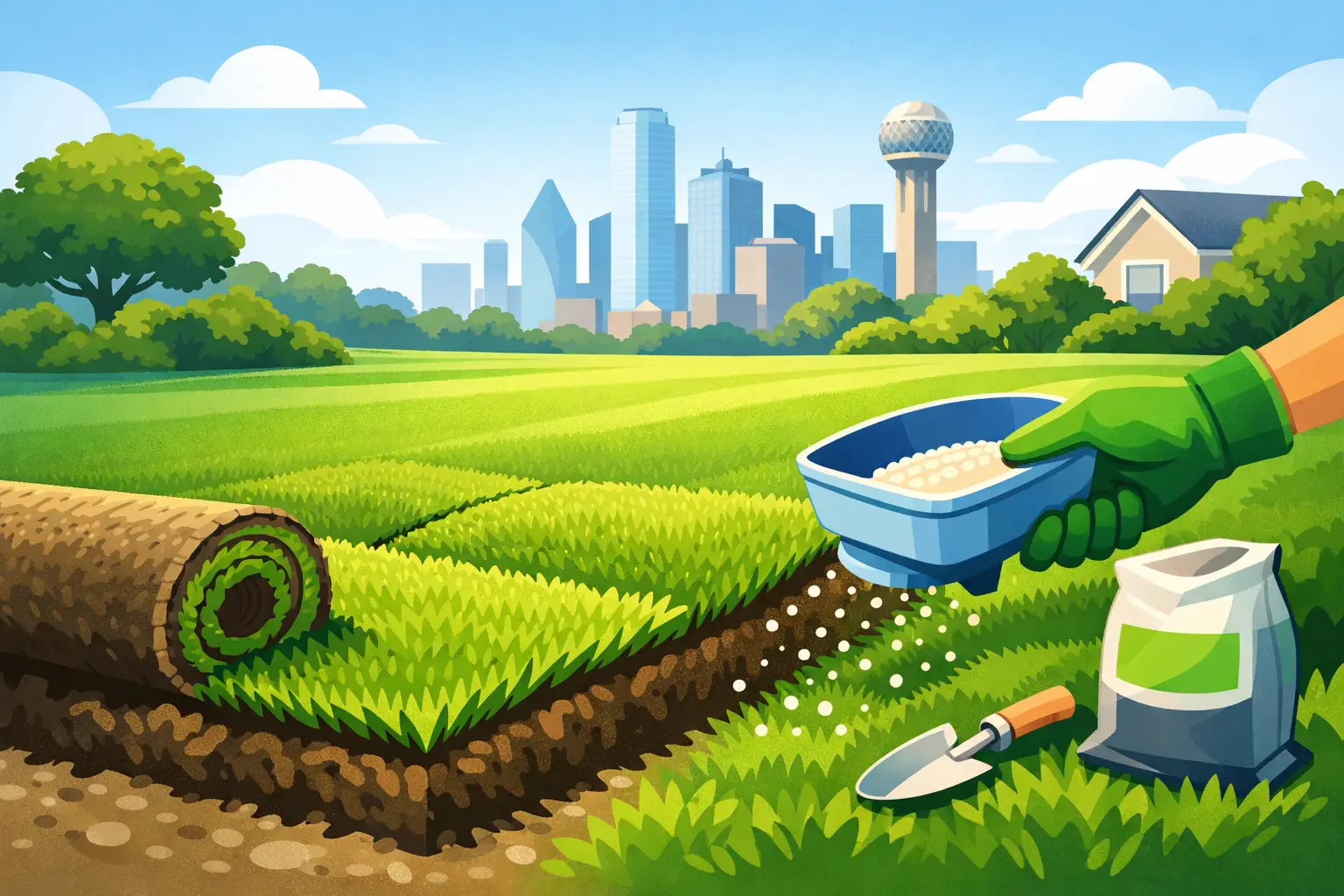
Then the soil is prepared for sod. Depending on the yard, that may include adding fresh topsoil or soil amendments to improve structure and create a better base for establishment. Finally, the sod is laid tight, rolled for contact, and watered thoroughly.
Choosing the Right Sod for a Texas Lawn
North Texas is not forgiving to the wrong grass type. Homeowners usually care most about appearance, but durability and climate fit matter just as much. A grass that looks great in one part of the country may struggle badly here.
Bermuda is a common choice for sunny yards because it handles heat well and recovers from traffic. It is a strong option for families, dogs, and active backyards, but it needs plenty of sun. In shaded areas, it can thin out fast.
St. Augustine is often selected for its fuller look and better shade tolerance, though shade tolerance does not mean deep-shade survival. It still needs enough light to stay healthy, and it can be more sensitive to certain lawn stressors if drainage and watering are not managed well.
Zoysia can offer a dense, attractive finish and good wear tolerance, but it tends to come at a higher upfront cost. For some homeowners, that trade-off is worth it for the look and feel. For others, a more budget-conscious option makes better sense.
This is where an experienced installer matters. The best sod is not the most expensive one. It is the one that matches your yard conditions and how you actually use the space.
The Biggest Mistakes Homeowners Make
The most common mistake is assuming sod replacement is just a delivery job. It is not. Good sod installed over bad prep is still a bad lawn project.
Another mistake is underestimating irrigation. New sod needs consistent watering early on, and uneven sprinkler coverage can cause sections to fail even when the rest of the yard looks fine. Before installation, it is smart to confirm the system is working properly and covering the full area.
Timing can also trip people up. Sod can be installed during much of the year in Texas, but extreme heat raises the stakes. Summer installs are possible, though they require disciplined watering and close attention during establishment. If a homeowner knows they will be traveling or unable to monitor the lawn, waiting for a better window may be the smarter move.
Then there is the temptation to walk on it too soon. Fresh sod needs time to root. Heavy use from kids, pets, furniture, or backyard gatherings can pull seams apart and slow establishment. A new lawn looks ready right away, but it is still in a vulnerable stage.
What to Expect After Installation
A new sod lawn gives immediate curb appeal, but the first few weeks are about establishment, not heavy use. The sod needs moisture and root contact with the soil beneath it. That usually means frequent watering at first, then gradually reducing frequency as the roots take hold.
The exact watering schedule depends on weather, sod variety, and site conditions. Hot, windy days dry out new sod faster. Shady spots may hold moisture longer. The point is not to follow a generic schedule blindly. The lawn should be monitored and adjusted based on real conditions.
Mowing should wait until the sod has begun rooting and the grass height justifies a cut. Cutting too early can shift the sod or stress it before it is established. Fertilizer timing also depends on the grass type and installation conditions. Done correctly, these steps help the lawn transition from a fresh install to a stable, healthy surface.
A good contractor should explain what to watch for after install, including seam separation, dry edges, soggy zones, or signs that sprinkler coverage needs adjustment. Homeowners do not need a complicated lawn science lesson, but they do need clear expectations.
Why Professional Installation Pays Off
This part is simple. Sod replacement looks straightforward from the street, but the details are what decide whether the lawn lasts. Grade, soil prep, drainage, cutting around edges, tight seams, cleanup, and follow-through all matter.
Professional installation also saves time. A trained crew can remove the old lawn, prep the site, install the sod, and leave the property clean without dragging the project out. For homeowners who want the yard transformed quickly and done right, that matters.
It also creates room to solve more than one issue at a time. If the yard needs drainage improvement, edging, hardscape tie-ins, or a larger outdoor upgrade, it is often more efficient to handle those items together instead of fixing them in pieces. That is one reason many homeowners prefer working with a specialist like Sod Green instead of trying to coordinate multiple contractors.
A Smarter Way to Use This Residential Sod Replacement Guide
The best use of this residential sod replacement guide is not to treat every lawn the same. It is to recognize that replacement works best when it is tied to the actual conditions of the property. A flat sunny yard, a shaded side yard, and a backyard with dogs all call for different decisions.
If your current lawn is costing you time, money, and frustration without giving you the look you want, replacing it may be the better move. Done properly, new sod can give your home a cleaner appearance, stronger curb appeal, and a yard that feels ready to enjoy instead of constantly manage.
A good lawn should not feel like a weekly battle. If yours does, it may be time to stop patching and start fresh with a solution built to last.





Leave A Comment