 Skip to content
A lawn usually does not turn patchy for no reason. One section thins out near the patio, another browns around the dog run, and before long the whole yard looks tired. If you are wondering how to fix patchy lawn areas, the real answer starts with the cause. Throwing down seed without addressing traffic, shade, drainage, or poor soil usually leads to the same problem a few weeks later.
In North Texas, patchy grass is especially common because lawns take a beating from heat, compacted clay soil, uneven watering, pets, and heavy foot traffic. Some spots can be repaired with better lawn care. Others are a sign that the existing grass is the wrong fit for the yard or that the lawn needs a more complete reset. The key is knowing which situation you are dealing with before you spend money and time on a temporary fix.
How to fix patchy lawn by finding the cause
The fastest way to waste money is to treat every bare spot the same. Patchy lawns come from different problems, and each one needs a different fix.
If the thin areas are showing up in high-traffic zones, the grass may be getting crushed faster than it can recover. That is common along walkways, near gates, around pools, and in backyards where kids and pets run the same path every day. If the lawn is patchy under trees or beside fences, shade is often part of the issue. Most warm-season grasses used in Texas need strong sunlight to stay dense.
Sometimes the issue is under the surface. Compacted soil makes it hard for roots to spread, water to soak in, and nutrients to do their job. In other yards, the opposite problem happens – water sits too long, roots stay wet, and grass starts dying off in irregular sections. Pet urine, grub activity, mower damage, poor irrigation coverage, and low-quality original installation can also leave the lawn looking uneven.
Before you do anything else, walk the yard and look for patterns. Are the spots always dry first? Are they soggy after rain? Do they line up with sprinkler gaps or shaded areas? A patchy lawn almost always leaves clues.
Start with the lawn repair method that matches the damage
Once you know why the lawn is thinning, you can choose the right repair. Small weak sections need a different approach than large dead areas.
For minor patchiness, the fix may be as simple as loosening compacted soil, improving watering, and encouraging the surrounding grass to spread. Warm-season grasses like Bermuda and St. Augustine can fill in on their own if conditions improve and the damaged area is not too large. That works best when the roots are still alive and the problem has been caught early.
If the grass is dead and the bare spots are obvious, you will usually get better results by replacing those sections with fresh sod instead of hoping seed or runners catch up. Sod gives you immediate coverage, a cleaner finished look, and a more predictable result. That matters when curb appeal is important and you do not want to stare at muddy patches for months.
For yards with widespread thinning, repeating dead spots, or major drainage and soil problems, patching may not be enough. In that case, a partial or full lawn replacement can be the smarter investment. It costs more upfront, but it often saves money compared to constant repair work that never fully solves the issue.
Prep matters more than most homeowners think
A lot of lawn repairs fail because the prep work gets rushed. New grass will not establish well in hard, uneven, or unhealthy soil.
Start by removing dead grass, weeds, and debris from the patchy area. If the soil is compacted, loosen the top few inches so roots can move through it. If the area sits low and collects water, grade it properly before adding anything new. If the soil is poor, bringing in quality topsoil or a soil blend can make a big difference.
This is also the time to address irrigation. A repaired patch will not survive if it gets half the water the rest of the lawn receives. Sprinkler heads may need to be adjusted, coverage may need to be improved, or watering times may need to be changed to fit the season and grass type.
This part is not glamorous, but it is what separates a quick patch job from a repair that actually holds.
How to fix patchy lawn with seed, sod, or turf
There is no single best material for every yard. It depends on your timeline, your expectations, and the conditions on the property.
Seed is usually the lowest-cost option, but it is also the slowest and least predictable, especially in hot Texas conditions. It needs consistent watering, good timing, and patience. It can work for certain situations, but if you want fast visual improvement, seed is rarely the strongest answer.
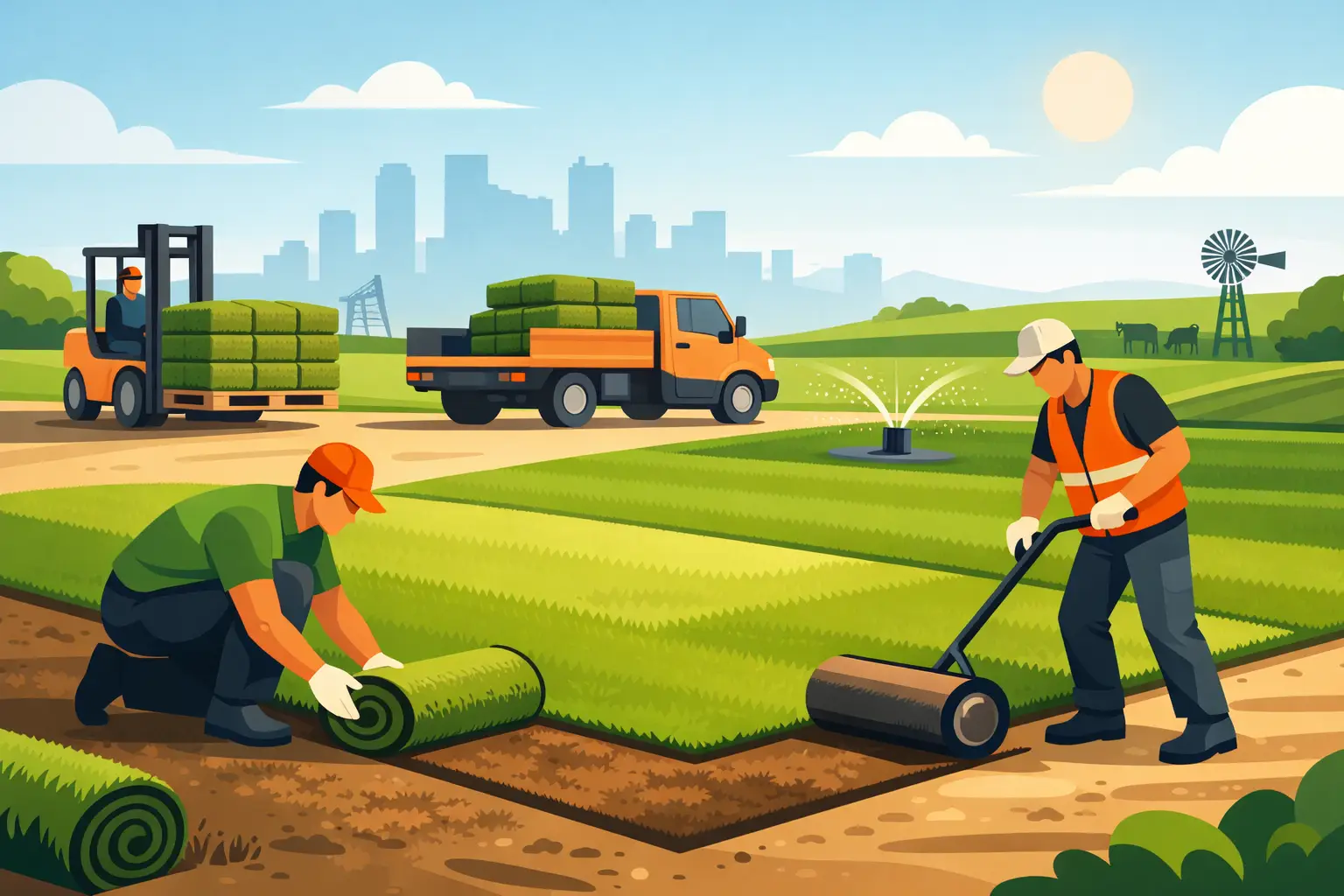
Sod is the better fit when you want immediate transformation and more reliable coverage. It works well for repairing larger dead sections or rebuilding a lawn that has lost density across multiple areas. Good sod installation is not just about laying grass down. The base has to be right, the seams need to be tight, and the watering plan after installation has to be handled correctly.
Artificial turf is worth considering when the same lawn areas keep failing because of heavy traffic, pet use, poor sunlight, or a desire for lower maintenance. That is not the right answer for every homeowner, but for some properties it is the cleanest long-term fix. If the goal is a green, polished yard without weekly upkeep or recurring bare spots, synthetic turf can solve problems natural grass keeps losing to.
Common mistakes that keep lawns patchy
Many homeowners try to repair the visible spot while ignoring the reason it happened. That is why the same thin area keeps coming back.
One common mistake is overwatering. People see brown or weak grass and assume it needs more water, but too much water can be just as damaging as too little. Another mistake is mowing too short. Scalped grass struggles in summer heat and loses the density that helps crowd out weeds and protect the soil.
Using the wrong grass type is another issue. A sunny front yard and a shaded side yard may not perform the same way with the same material. Then there is timing. Trying to repair a lawn at the wrong point in the growing season can slow establishment and leave the area vulnerable.
The biggest mistake, though, is settling for repeated patchwork when the whole lawn system is failing. If the yard has grading issues, drainage trouble, poor soil, and weak grass, the smartest fix may be to rebuild it properly instead of nursing it along.
When a professional fix makes more sense
There is a point where do-it-yourself lawn repair stops being cost-effective. If you have a few isolated spots and the cause is obvious, you may be able to handle it yourself. But if the lawn is patchy across multiple zones, the drainage is uneven, or the yard needs both grass work and surface correction, bringing in a specialist usually leads to a better result.
Professional installation matters because lawn repair is rarely just lawn repair. The soil may need grading. Water may need to be directed away from the area. Existing sod may need to be removed and replaced cleanly. The finished surface needs to look even, not like a collection of mismatched patches.
For homeowners in Dallas-Fort Worth, that matters even more because weather extremes expose weak installation fast. A rushed repair might look fine for a few weeks, then fail under heat stress, foot traffic, or the next hard rain. A properly installed sod or turf solution gives you a stronger base, a better finish, and a yard that is built to last.
What a healthy lawn should look like after repair
A successful repair should blend into the rest of the yard, not stand out as a different texture or color. The surface should be level, the grass should establish evenly, and the problem area should stop spreading.
You should also notice a practical difference. Less mud after rain. Fewer dead spots around traffic zones. Better drainage. Cleaner edges. A lawn that looks intentional instead of constantly in recovery mode.
That is the standard worth aiming for. Not just greener patches, but a lawn that performs better and adds value to the whole property.
If you are tired of guessing how to fix patchy lawn areas and want a result that actually lasts, it helps to treat the yard like a full outdoor surface – not just a few bad spots. Sometimes the right move is a targeted sod repair. Sometimes it is a full lawn upgrade. Either way, the goal is the same: a clean, durable lawn you can enjoy without fighting the same problem every season.




Leave A Comment