 Skip to content
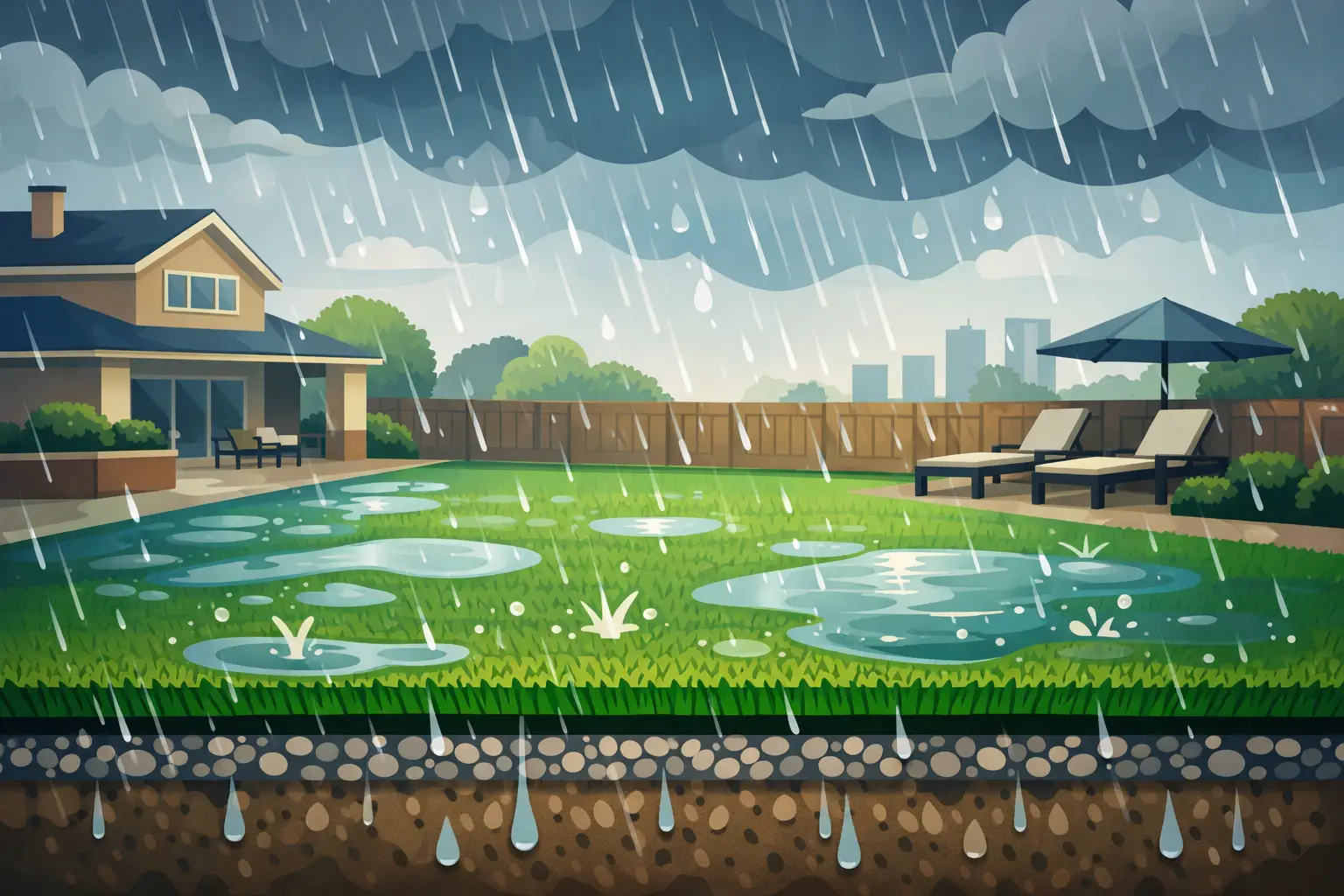
If your backyard stays muddy days after a storm, the problem is not just annoying – it is costing you usable space, stressing your lawn, and setting you up for bigger repairs later. Homeowners searching for how to fix backyard drainage usually want one thing: a yard that dries out properly and stays clean, safe, and functional.
In North Texas, drainage issues show up fast. One heavy rain can leave puddles near the patio, soft spots along the fence line, or runoff washing straight toward the house. Clay-heavy soil, flat lots, compacted ground, and older grading all make the problem worse. The good news is that most drainage issues can be corrected. The key is matching the fix to the real cause.
What causes backyard drainage problems?
Backyard drainage usually fails for one of three reasons. First, the yard may not have enough slope to move water away. Second, the soil may be too compacted or too dense to absorb rainfall. Third, hard surfaces like patios, pool decks, walkways, and neighboring lots may be pushing more water into the space than the yard can handle.
Sometimes it is a single issue. More often, it is a combination. A low spot in the lawn might collect water because the grade is off by just a few inches. A side yard may stay wet because two downspouts empty into the same area. Artificial turf or sod can also struggle if the base underneath was not built with proper drainage in mind.
That is why guessing can get expensive. If you install the wrong solution, water simply finds another place to sit.
How to fix backyard drainage by identifying the water pattern
Before you choose a drain, pipe, or new grading plan, watch what the water does during and after rain. That tells you where the real failure starts.
Look for standing water that remains more than 24 to 48 hours, channels where runoff cuts through mulch or grass, muddy areas near downspouts, and pooling along patios or foundations. Pay attention to whether the entire yard stays wet or only one section. A localized puddle may need a catch basin or regrading. A yard-wide soggy condition often points to poor soil permeability or overall slope problems.
It also matters where the water can safely go. A drainage system is only as good as its discharge point. If there is no outlet, a drain line alone will not solve much.
The best backyard drainage fixes for common problems
The right repair depends on the layout of your yard, the amount of runoff, and how finished the space already is. Here are the solutions that actually work when they are installed properly.
Regrading the yard
If water sits in broad low areas, grading is often the first and best fix. This means reshaping the soil so water moves away from the home and toward a proper collection or exit point.
For many properties, small grading adjustments make a big difference. You do not always need a major excavation. But the slope has to be intentional. Too little pitch and the water stalls. Too much and you create erosion or expose roots. Around patios, turf, and sod, clean transitions matter because drainage and appearance have to work together.
French drains
A French drain works well when water moves through the soil and needs a path to escape. It typically includes a gravel-filled trench with perforated pipe that collects subsurface water and redirects it.
This is a strong option for soggy lawn edges, low side yards, and areas between homes where water has nowhere to go. It is less effective if the system is installed too shallow, wrapped poorly, or discharged into another wet area. A bad French drain can clog and become a buried problem you cannot see.
Surface drains and catch basins
When water rushes across the top of the yard and pools quickly, surface drains can help. These drains capture water at the surface level and connect to solid drain pipe that moves it away.
This approach is common near patios, pool decks, downspouts, and hardscape areas where runoff concentrates fast. It is especially useful when a yard has a finished look and you want drainage that does the job without turning the space into a construction zone.
Downspout extensions and drainage tie-ins
Sometimes the biggest drainage issue is coming straight off the roof. If downspouts dump water next to the house or into a narrow section of yard, you are loading one area with far more water than it can absorb.
Extending downspouts or tying them into a larger drainage system is often one of the simplest fixes. It is also one of the most overlooked. Homeowners spend money treating muddy grass while hundreds of gallons keep pouring into the same spot every storm.
Dry creek beds and drainage swales
If your property needs a visible path for water, a swale or dry creek bed can move runoff while improving the look of the yard. A swale is a shallow graded channel. A dry creek bed is a decorative stone-lined version that blends better into landscaped spaces.
These are useful when you need to guide water across a wider area without installing everything underground. They can work especially well on larger backyards, properties with natural slope, or spaces being redesigned as part of a larger landscape project.
Soil improvement and lawn replacement
Sometimes drainage is poor because the soil is packed tight and water cannot infiltrate. In those cases, aeration and soil amendment may help, but they only go so far in heavy clay conditions.
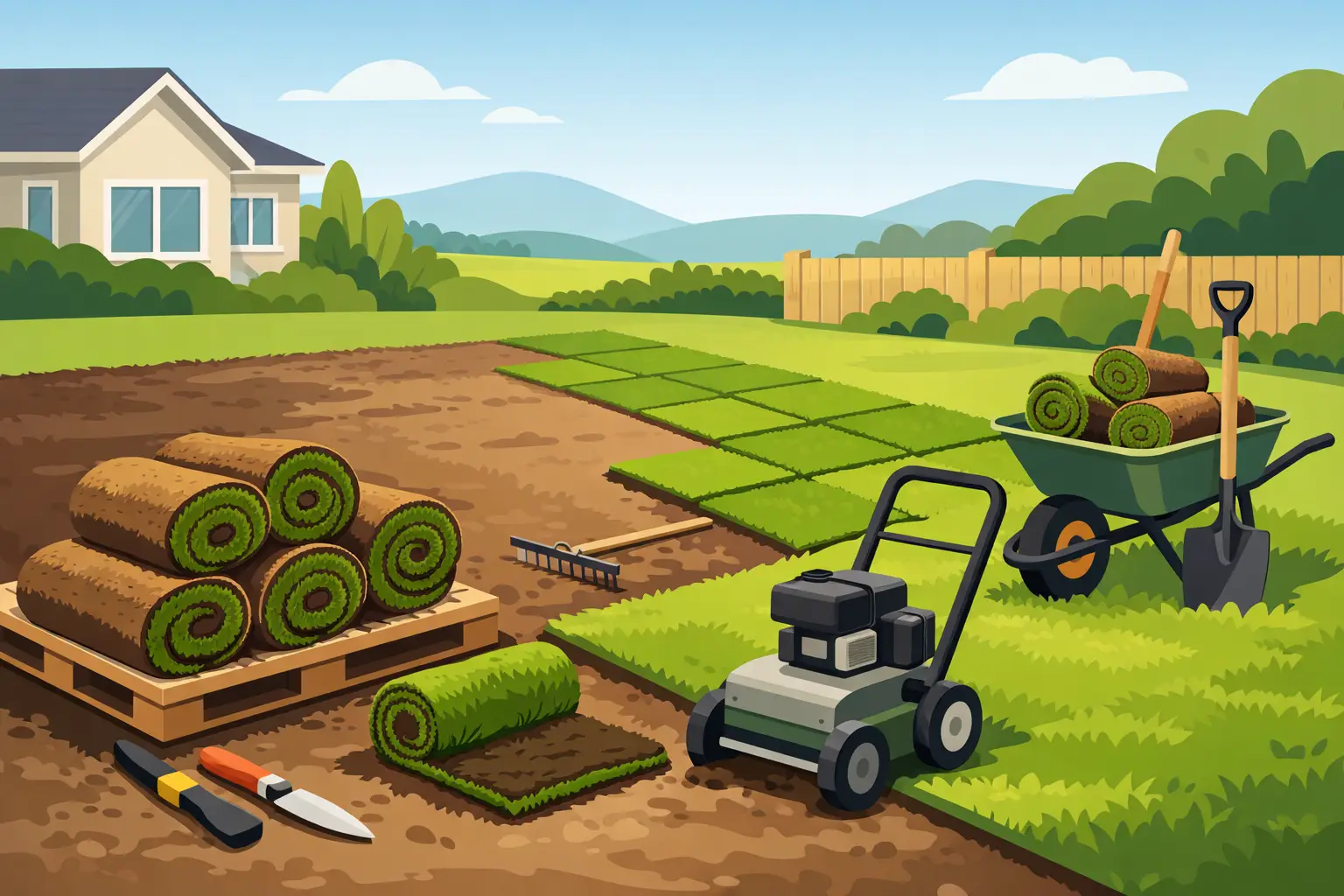
If the yard is constantly failing, it may make sense to rebuild the surface properly with new sod, a corrected base, or synthetic turf designed with drainage in mind. This is where drainage and lawn installation need to be planned together. A beautiful lawn over a bad base will still be a wet lawn.
When a simple fix is enough and when it is not
Not every backyard needs a full drainage system. If the issue is minor and isolated, you may get good results from regrading a low pocket, extending a downspout, or adding one surface drain.
But if water is reaching your foundation, standing near a patio, killing grass in multiple sections, or creating a muddy mess every time it rains, piecemeal repairs usually fall short. That is when a full evaluation matters. Drainage problems tend to travel. The puddle you see may be caused by runoff starting 30 feet away.
This is also where homeowners can lose money by fixing the symptom instead of the source. New sod, fresh mulch, or a patio extension will not hold up if water management is still wrong underneath.
How to fix backyard drainage without ruining the yard
A lot of homeowners put off drainage work because they picture trenches everywhere and a backyard torn apart for weeks. The reality depends on the plan and the contractor.
Good drainage work should be clean, efficient, and tied into the final look of the yard. If you are already considering sod replacement, artificial grass, stone borders, or a patio upgrade, it often makes sense to handle drainage first or bundle it into the larger project. That way the finished yard looks intentional instead of patched together.
At Sod Green, this is often where homeowners get the best result. Drainage is addressed as part of the full outdoor surface plan, so the lawn, turf, and hardscape are built on a foundation that actually performs.
Signs you should call a professional
If your backyard floods more than once or twice a year, if water drains toward your home, or if previous fixes have not worked, it is time to bring in a specialist. The same goes for yards with multiple elevation changes, pool areas, retaining walls, or a mix of turf, sod, and hardscape.
A professional should look at slope, soil, runoff volume, discharge options, and how the drainage solution will affect the finished appearance of the space. That matters because the best drainage system is not just functional. It should protect your property without making the backyard look like an afterthought.
In Dallas-Fort Worth, that balance matters even more. Storms can be intense, and many yards need solutions that handle both heavy rain and everyday usability. Kids, pets, guests, and outdoor living do not mix well with standing water and mud.
The real goal is a backyard you can use
Learning how to fix backyard drainage is really about getting your yard back. You want grass that lasts, turf that drains, patios that stay dry, and a backyard that works after a storm instead of turning into a cleanup job. The right fix is not always the biggest one. It is the one that moves water where it should go and supports the way you actually use the space.
If your yard has been staying wet too long, trust what it is telling you. Water problems rarely fix themselves, but with the right plan, they can be solved in a way that looks clean and lasts.


Leave A Comment