 Skip to content

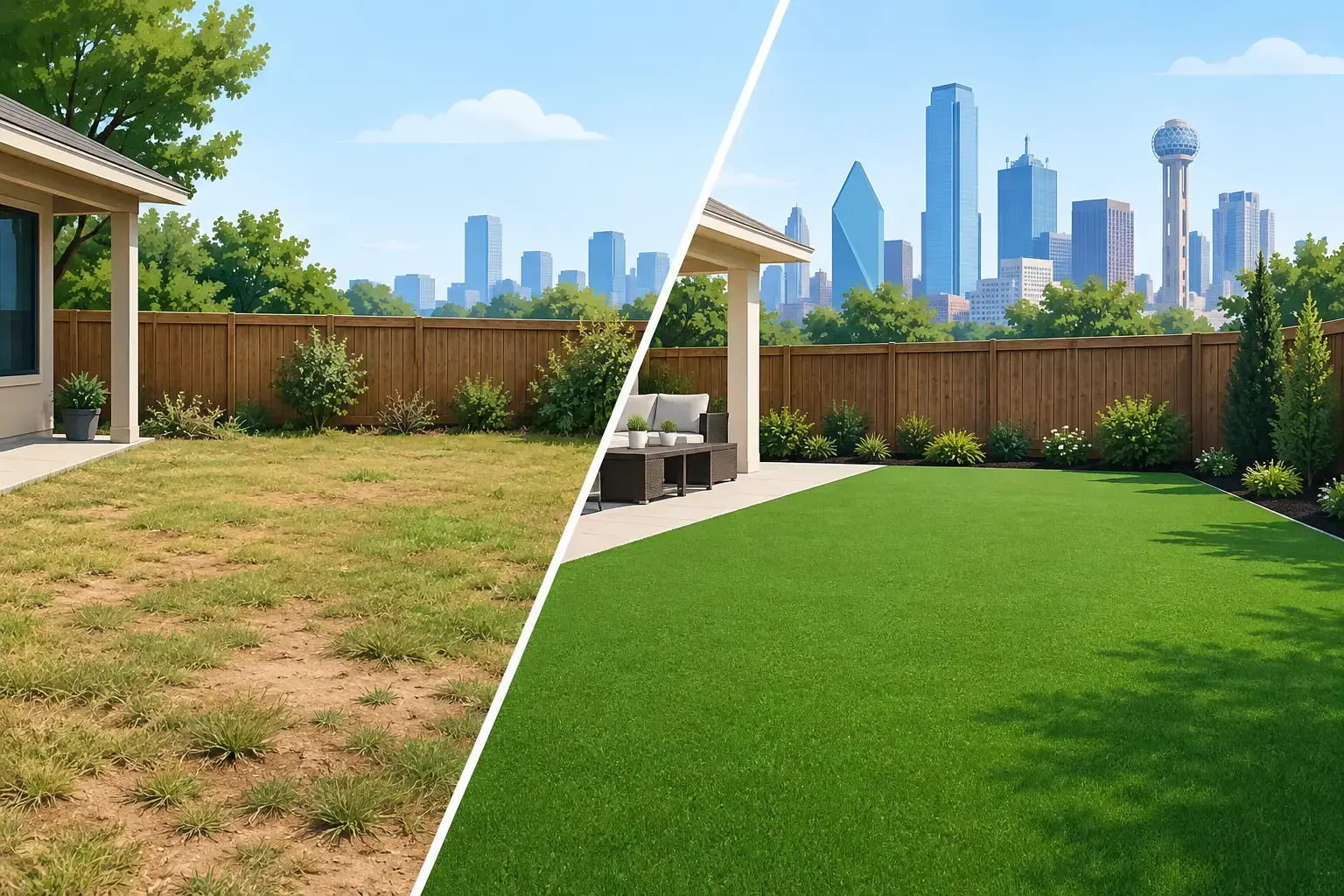
A turf sample can look great on a showroom wall and disappoint quickly under Dallas heat, active kids, a large dog, or heavy patio traffic. That is why synthetic turf material reviews should go beyond comments about color and softness. The right material has to fit how you actually use your yard, while the installation underneath it has to handle water, wear, and Texas weather.
Artificial grass is not one product. It is a system of fibers, backing, drainage, infill, base material, and installation work. A lower-priced option may be a smart choice for a small side yard that gets little use. The same turf could be a poor fit for a full backyard where children play, pets run, and friends gather around the pool.
How to Read Synthetic Turf Material Reviews
Start by looking for reviews that explain where the turf was installed and how it has performed over time. A homeowner with two dogs in a sunny backyard is giving you more useful information than a reviewer who simply says the grass looks nice on day one. Pay attention to comments about flattening, heat, odor, drainage, fading, and how easily the surface cleans up.
Be careful with reviews that focus only on the first impression. Nearly every new artificial lawn looks neat immediately after installation. The better question is whether it still drains well, stands up after foot traffic, and stays presentable after a Texas summer.
Material reviews are helpful, but they do not tell the whole story. Even premium turf can look uneven or develop drainage trouble when the base is rushed, the seams are visible, or the edges are not secured correctly. When comparing options, ask what material is being proposed and how the complete turf system will be built beneath it.
Fiber Type Changes How Turf Feels and Wears
Most residential synthetic grass uses polyethylene fibers. Polyethylene gives a soft, natural-looking finish and works well for lawns, pet areas, and family backyards. It is usually the best all-around choice when appearance and comfort matter as much as durability.
Polypropylene is often used in lower-cost turf or as part of the thatch layer that gives grass a fuller look. It can serve a purpose, but it generally does not hold up as well under intense heat and frequent use. If a product seems dramatically cheaper than comparable turf, ask whether its fiber blend is the reason.
Nylon is exceptionally durable and resilient. It is common in putting greens and commercial applications where the surface needs to recover from repeated traffic. It can also be stiffer and more expensive than a residential lawn needs. There is no advantage in paying for nylon throughout a quiet front yard if a quality polyethylene turf will perform better for the budget.
Look closely at the blade shape as well. Fibers with a structured shape, such as a W, C, or diamond profile, are designed to help the blades stand upright. That can improve appearance over time, especially in areas where people walk regularly. A soft, flat blade may feel pleasant at first but can show traffic patterns sooner.
Pile Height Is Not a Quality Score
Taller grass is not automatically better. A pile height around 1.5 to 1.75 inches often creates a natural residential lawn appearance without becoming difficult to maintain. Longer fibers can look lush, but they may bend over more easily and require brushing to keep the surface standing tall.
Shorter turf works well for putting greens, pathways, balconies, and high-traffic spaces. The best choice depends on the job. For a polished front lawn, homeowners often prefer a realistic medium-height turf. For a backyard putting green, a short, dense surface is the better fit.
Face Weight and Density Tell You More Than Color
Face weight measures the amount of yarn used in the turf, usually stated in ounces per square yard. A higher face weight can indicate a fuller, more durable product, but it should not be judged alone. Fiber shape, stitch rate, pile height, backing strength, and intended use all affect performance.
Density is what keeps a lawn from looking thin when the fibers move. Dense turf typically feels more substantial underfoot and hides the backing better. It is especially valuable around pool decks, outdoor kitchens, play areas, and other spaces that see frequent traffic.
Ask to see a full sample instead of choosing from a small color swatch. Separate the blades with your fingers. If you can easily see large gaps in the backing, the turf may not have the fullness you expect once it is installed across an entire yard. Also view the sample outdoors. Sunlight can change the color significantly compared with indoor lighting.
Backing and Drainage Matter in North Texas
Dallas-Fort Worth properties can see long dry stretches followed by fast, heavy rain. Good drainage is not an optional upgrade. A turf product needs a backing that allows water to move through it, and the installation needs a properly prepared aggregate base that carries water away from the surface.
Perforated backing uses drainage holes, while fully permeable backing lets water pass through more broadly across the material. Both can work, but the best choice depends on the turf design, soil conditions, and how the yard is graded. A fully permeable product is often a strong option for pet areas and locations where fast drainage is a priority.
Review the backing material itself. Polyurethane backing is known for resisting moisture and can perform well in hot, humid conditions. Latex-backed turf is common and can be reliable when it is high quality, but product quality varies. Rather than choosing based on a label alone, ask about the manufacturer’s warranty, drainage rating, and recommended use.
If water already collects near your home, fence line, patio, or pool, turf alone will not solve the issue. Drainage correction, grading, or a French drain may need to be part of the project. A dependable installer addresses that before the grass goes down, not after puddles appear.
Pet Turf Needs More Than an Odor Claim
Pet-friendly turf should drain quickly, clean easily, and hold up to repeated use. The material needs enough durability to resist traffic paths, but the installation details matter just as much. Pet waste must be removed promptly, and the area should be rinsed regularly to keep it fresh.
Many pet systems use odor-control infill or a deodorizing treatment. These can help, but no infill makes cleaning unnecessary. If a review says a turf never smells, consider how many pets are using the space, how often it is cleaned, and whether the homeowner has a shaded or sunny yard. Heat and poor drainage can make odor problems worse.
For dog runs, the best material choice is often a durable, medium-height polyethylene turf with strong drainage and an appropriate infill. Avoid choosing an overly tall, decorative lawn product just because it looks luxurious in a sample book. A practical surface that drains and cleans well will deliver a better daily experience.
Do Not Skip Infill and Heat Questions
Infill adds weight, supports the fibers, and affects how turf feels underfoot. Sand is a common choice for residential lawns because it helps blades stand up naturally. Specialty infill may be used for pet odor management, cooling, or sports performance, depending on the application.
Artificial grass can get hot in direct sunlight, particularly during North Texas summers. Lighter turf colors, shade, rinsing the surface, and cooling infill can reduce the effect, but none of them make a sun-exposed turf lawn feel like cool natural grass at midafternoon. Families planning a play area should discuss this honestly before selecting a material.
Compare Warranties and Installation Scope
A long warranty sounds reassuring, but read what it covers. Many manufacturer warranties address fading or manufacturing defects, not damage from pets, improper maintenance, standing water, heavy furniture, or poor installation. Ask whether the installer provides a separate workmanship warranty for seams, edging, base preparation, and overall installation quality.
Compare proposals based on the whole scope of work, not just the turf name or square-foot price. A clear estimate should identify the turf product, base depth, weed barrier if used, edging, infill, drainage work, removal of existing grass, and cleanup. If two quotes are far apart, there is usually a difference in material quality, preparation, or what is included.
The smartest choice is not always the most expensive roll of turf. It is the material and installation plan that match your property, your household, and your expectations five years from now. For homeowners who want straight answers, Sod Green can help evaluate samples, drainage needs, and use patterns before a new lawn is installed.


Leave A Comment