
Types of Artificial Turf: 8 Types Explained + How to Choose the Best One (2026)
The artificial turf market is now worth $6.5 billion globally. More homeowners, sports facility managers, and businesses are ditching natural grass for good reasons. Picking the wrong type wastes thousands of dollars and causes headaches for years. This guide covers all 8 types of artificial turf, what makes each unique, and exactly which one fits your project.
Whether you manage a backyard lawn, a dog run, a playground, or a professional artificial turf field, the right choice depends on material, fiber shape, and application. By the end, you will know every key difference and how to choose with confidence.
What Is Artificial Turf?
Synthetic grass is a man-made surface built to look and perform like natural grass. Every artificial turf product has three core parts: the fiber blades on top, the backing system underneath, and the infill material between the blades.
Artificial turf has come a long way since the original AstroTurf installed in the Houston Astrodome in 1966 (Gen-1). Gen-2 turf in the 1990s added sand infill for a softer feel. Today’s Gen-3 synthetic grass uses advanced polymer blends, multi-tone blades, and performance-tuned infill systems. Modern turf is designed to handle heavy foot traffic, extreme weather, and years of wear and tear without losing its look.
Types of Artificial Turf by Material
This is the most important classification. The fiber material controls softness, durability, heat, and price.
Polyethylene (PE) Turf: Most Popular
Polyethylene artificial turf holds about 52% of the global market. It is soft underfoot, looks close to real grass, and works well for residential and commercial applications.
- Lifespan: 10–15 years
- Best for: Front yards, backyard lawns, commercial landscaping, landscape turf around pools
- Cost: $2–$8 per sq ft (materials only)
Polyethylene artificial turf is the top pick for homeowners who want a realistic, lush lawn with minimal upkeep. It is also the most common choice for fake grass carpet installations in outdoor entertainment spaces.
Nylon Artificial Turf: Most Durable
Nylon artificial turf is the strongest option available. It resists heat, holds its shape under pressure, and bounces back even after intense use.
- Lifespan: 15–20 years
- Best for: Putting greens, rooftop installations, high-traffic commercial landscaping
- Cost: $5–$12 per sq ft
- Downside: Stiffer feel, higher price point
If your project demands long-lasting performance, nylon artificial turf is worth the investment. It is the only material that delivers consistent ball roll for putting green turf.
Polypropylene Turf: Budget Option
Polypropylene turf is the most affordable option but comes with trade-offs. It is less durable and struggles in hot climates or areas with heavy foot traffic.
- Lifespan: 5–8 years
- Best for: Indoor use, decorative balconies, low-traffic areas
- Cost: $1–$4 per sq ft
Polypropylene turf suits decorative applications where budget matters more than long-term performance. It is not recommended for outdoor lawns in Texas or other hot climates.
Material Comparison Table
| Material | Softness | Durability | Best Use Case | Cost/sq ft |
| Polyethylene (PE) | Very Soft | 10–15 yrs | Residential Lawns | $2–$8 |
| Nylon | Medium | 15–20 yrs | Putting Greens, Sports | $5–$12 |
| Polypropylene (PP) | Stiff | 5–8 yrs | Indoor / Decorative | $1–$4 |
Types of Artificial Turf by Fiber Shape
No competitor covers this topic in depth. Fiber shape affects how the turf looks, how it holds infill, and how it performs under load.
Monofilament Fibers
Single solid blades that mimic individual grass leaves. Used in high-end residential lawns and FIFA-certified soccer fields. Delivers the most natural look and best ball movement on playing surface applications.
Slit-Film / Fibrillated Fibers
A wide blade split into thin strips. Extremely tough and cost effective for school fields, municipal pitches, and high-traffic athletic fields. Lower cost than monofilament.
Texturized / Curled Fibers
Wavy or curled blades that grip infill material tightly. Provides excellent cushioning and rebound. Often blended with straight fibers for a hybrid playing surface.
Advanced Cross-Section Fibers (W, S, C, Diamond)
These are modern engineering improvements. W-shape blades resist UV damage and stand upright longer. Diamond-shaped fibers are FIFA-approved and provide superior elasticity for professional artificial turf for sports fields. C-shape and S-shape fibers add specific spring and drainage characteristics.
Types of Artificial Turf by Application
This is where most buyers make their decision. Each application has specific requirements for pile height, face weight, and infill.
1. Residential / Landscape Turf
Landscape turf for homes uses polyethylene artificial turf with multi-tone blades and a thatch layer to mimic real grass. Pile height runs 1.5–2.5 inches. Face weight ranges from 40–90 oz per square yard.
Average installed cost for 500 sq ft: $3,000–$10,000.
If you are also considering natural lawn alternatives, resources on Bermuda grass seed to grow or knowing how big is a roll of sod? help you compare the true cost and effort of maintaining real grass versus going synthetic.
2. Sports Turf
Artificial turf for sports fields needs 2–3 inch pile height for shock absorption. Infill is typically crumb rubber or TPE granules. Professional fields carry FIFA, World Rugby, or FIH certification.
Modern types of artificial grass used in sports can reduce the risk of injuries by up to 32% compared to older synthetic surfaces. Nylon artificial turf is often blended into the playing surface as a thatch layer for added strength.
3. Putting Green Turf
Putting green turf uses nylon artificial turf exclusively. Pile height is very short at 0.5–0.75 inches. Fine-mesh specialty sand is the preferred infill material. The firmness of nylon creates the consistent ball roll that polyethylene or polypropylene cannot match.
4. Pet Turf / Dog Turf
Pet turf is designed with antimicrobial coating, like Microban, to control odor. Pile height of 1–1.25 inches makes cleanup easy. The backing drains at 30+ inches per hour to handle pet waste quickly. Zeolite is the best infill material for odor control in pet areas.
Dog owners who have dealt with muddy lawns and constant reseeding know that pet-friendly synthetic grass solves multiple problems at once.
5. Playground / Kids Turf
Playground types of artificial grass must meet ASTM F1292 fall safety standards. Pile height ranges from 1–3 inches with a foam or rubber pad underneath. The turf must be lead-free, non-toxic, and antimicrobial. Face weight should be heavy to absorb impact from falls.
6. Commercial / Rooftop Turf
Commercial landscaping projects on rooftops need UV-stabilized fibers and lightweight backing to meet structural weight limits. Full permeability is critical. Nylon artificial turf handles the extreme heat that builds on rooftop surfaces better than other materials.
7. Pool Surround Turf
Pool areas require fully permeable backing to prevent water pooling. An antimicrobial additive prevents mold growth. Lower face weight is preferred since wet turf adds significant weight to pool decks.
8. Indoor / Gym Turf
Training facilities use short-pile nylon artificial turf with a 0.5–1.25 inch height. Some versions use no infill, which keeps the surface clean and free of loose material. This type of artificial turf handles sled pushes, agility drills, and heavy equipment traffic without breaking down.
Infill Material Types Compared
Turf infill material stabilizes the blades, adds cushioning, and supports drainage. Choosing the wrong infill hurts performance and increases heat.
| Infill Type | Best For | Heat Level | Cost |
| Crumb Rubber | Sports, playgrounds | Very High | Low |
| Silica Sand infill | Residential, pools | Low | Low |
| Zeolite (Zeofill) | Pet areas, odor control | Low | Medium |
| Envirofill (coated sand) | Residential, pets | Medium | Medium |
| Rubber infill (TPE) | Sports, eco-friendly | Medium | High |
| Organic Infill | Eco projects | Low | High |
For pet areas and playgrounds, zeolite and TPE are safer and cooler than crumb rubber. For putting green turf, fine-mesh sand is the only appropriate choice.
How to Choose the Right Type of Artificial Turf
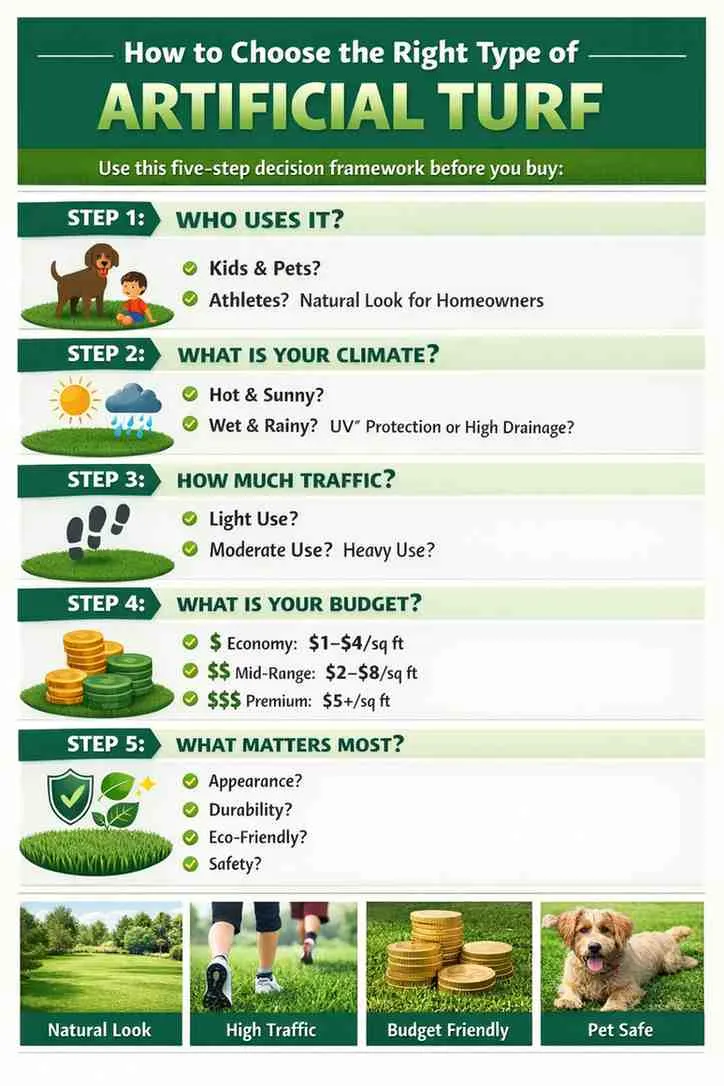
Infographic: A simple 5-step guide to help homeowners choose the best type of artificial turf based on usage, climate, traffic level, and budget.
Use this five-step decision framework before you buy:
Step 1: Who uses it? Kids and pets need antimicrobial, non-toxic materials. Athletes need certified performance surfaces. Homeowners typically want the most natural look.
Step 2: What is your climate? Hot areas like Texas need UV-resistant fibers and cooler infill options. Rainy climates need high-drainage backing.
Step 3: How much traffic? Light decorative use suits polypropylene turf. Moderate residential lawns need polyethylene artificial turf. Heavy commercial or sports use requires nylon artificial turf.
Step 4: What is your budget? Budget projects start with PP at $1–$4/sq ft. Mid-range PE runs $2–$8/sq ft. Premium nylon starts at $5/sq ft and goes higher.
Step 5: What matters most? Appearance, durability, safety, or eco-friendliness? Each type of artificial turf trades off differently across these factors.
Quick Reference Table: Best Turf For Each Use Case
| Use Case | Best Material | Best Pile Height | Best Infill |
| Front Yard Lawn | Polyethylene (PE) | 1.5–2.5 inch | Silica Sand + Envirofill |
| Dog Run / Pet Area | PE with antimicrobial | 1–1.25 inch | Zeolite (Zeofill) |
| Kids Playground | PE (heavy face weight) | 1–3 inch + pad | TPE |
| Home Putting Green | Nylon | 0.5–0.75 inch | Fine Mesh Sand |
| Football / Soccer Field | PE + Nylon Thatch | 2–3 inch | TPE or Crumb Rubber |
| Rooftop / Deck | Nylon or PE | 1–1.5 inch | Silica Sand (light) |
| Indoor Gym | Nylon (no infill) | 0.5–1 inch | None / Minimal Sand |
Choosing the right best bushes for the front of the house, to pair with your new lawn helps complete the curb appeal transformation too.
Cost by Turf Type (500 sq ft Estimate)
| Turf Type | Material Cost/sq ft | Total Installed |
| Budget PP Landscape | $1–$4 | $2,500–$6,000 |
| Mid-Range PE Landscape | $2–$8 | $3,000–$9,000 |
| Premium PE Residential | $5–$10 | $5,000–$11,000 |
| Pet Turf (PE + antimicrobial) | $3–$9 | $4,000–$9,500 |
| Putting Green (Nylon) | $6–$12 | $6,000–$13,000 |
| Sports Field Turf | $4–$8 | $50,000+ (full field) |
2026 Innovations in Synthetic Grass
The types of artificial turf grass available in 2026 include options that did not exist even two years ago.
Smart Sensor Turf embeds sensors that monitor temperature, moisture, and surface wear in real time. Professional stadiums are piloting this technology to schedule maintenance before damage occurs.
Infill-Free Turf eliminates loose infill entirely. New systems reduce plastic shedding by up to 99% and extend surface lifespan by 50%. This is a major shift for artificial turf field installations.
Bio-Based Eco Turf uses fibers made from sugarcane or recycled plastics. Infill is 100% microplastic-free. This aligns with EU microplastics regulations and growing sustainability demands in commercial landscaping.
Cooling Technology Turf uses new fiber coatings to lower surface temperature by up to 15 degrees Fahrenheit. This is critical for hot climates where synthetic grass surfaces have historically overheated.
Conclusion
Understanding the types of artificial turf helps you make a decision that saves money, time, and frustration for years. The right choice depends on your material (PE, nylon, or PP), fiber shape, application, and infill. Whether you are upgrading a front yard, building a dog run, installing a putting green turf, or setting up artificial turf for sports fields, there is a specific product built for your exact needs.
At SodGreen, we specialize in Artificial Turf Installation Dallas TX and help homeowners and businesses choose the right types of artificial turf for their specific climate, traffic level, and budget. Our team handles everything from site prep to final installation, and we carry multi purpose turf systems for residential and commercial projects of any size.
Ready to upgrade your lawn? Contact SodGreen today for a free quote and free samples delivered to your door.
Frequently Asked Questions
What are the main types of artificial turf?
The 8 main types are residential landscape, sports, pet, putting green, playground, commercial, pool surround, and indoor/gym turf. They are also grouped by material: polyethylene, nylon, and polypropylene.
Which type is best for dogs?
Polyethylene artificial turf with antimicrobial coating is best. Use a 1–1.25 inch pile height and zeolite infill for odor control.
What is the most realistic type of artificial turf?
Polyethylene artificial turf with monofilament fibers and multi-tone blades looks closest to real grass.
What type is used on sports fields?
PE monofilament or slit-film types of artificial turf grass with 2–3 inch pile and TPE or crumb rubber infill. Professional artificial turf for sports fields must carry FIFA, World Rugby, or FIH certification.
How long does artificial turf last?
Polypropylene turf: 5–8 years. Polyethylene artificial turf: 10–15 years. Nylon artificial turf: 15–20 years. Gen-3 products installed correctly can reach 20+ years.
Is artificial turf safe for children?
Yes, when you select lead-free, non-toxic, antimicrobial turf that meets ASTM F1292 fall safety standards. Use appropriate shock-absorbing infill under playground surfaces.
What infill is best for putting greens?
Fine-mesh specialty putting sand. It provides the firmness and ball speed consistency that putting green turf requires.
What is the cheapest type of artificial turf?
Polypropylene turf starts at $1 per sq ft for materials. It is cost effective for short-term or indoor decorative use but not suitable for outdoor high-traffic areas.

Leave A Comment