 Skip to content
How to Install Artificial Grass for Dogs: Complete Step-by-Step Guide (2026)
If your backyard looks like a mud pit after every rain, you are not alone. Dog owners across Dallas, Texas deal with the same problems: urine burns, dead patches, and dirty paws tracking mud through the house. The good news? Knowing how to install artificial grass for dogs correctly can solve all of these problems for the next 10 to 15 years.
This guide covers every step from soil removal to infill selection including the mistakes that most other guides skip. We also cover the big questions DFW homeowners ask before they call a professional installer like SodGreen. Whether you plan to do it yourself or hire a crew, this is the information you need.
Why Artificial Grass Works Better for Dogs Than Natural Grass
Natural grass simply cannot hold up to daily dog activity in Texas. The intense heat dries out roots, urine burns yellow patches into the lawn, and digging destroys any area where dogs love to play. Pet-friendly artificial grass installation removes all of those problems at once.
Before choosing your turf, understand these key differences:
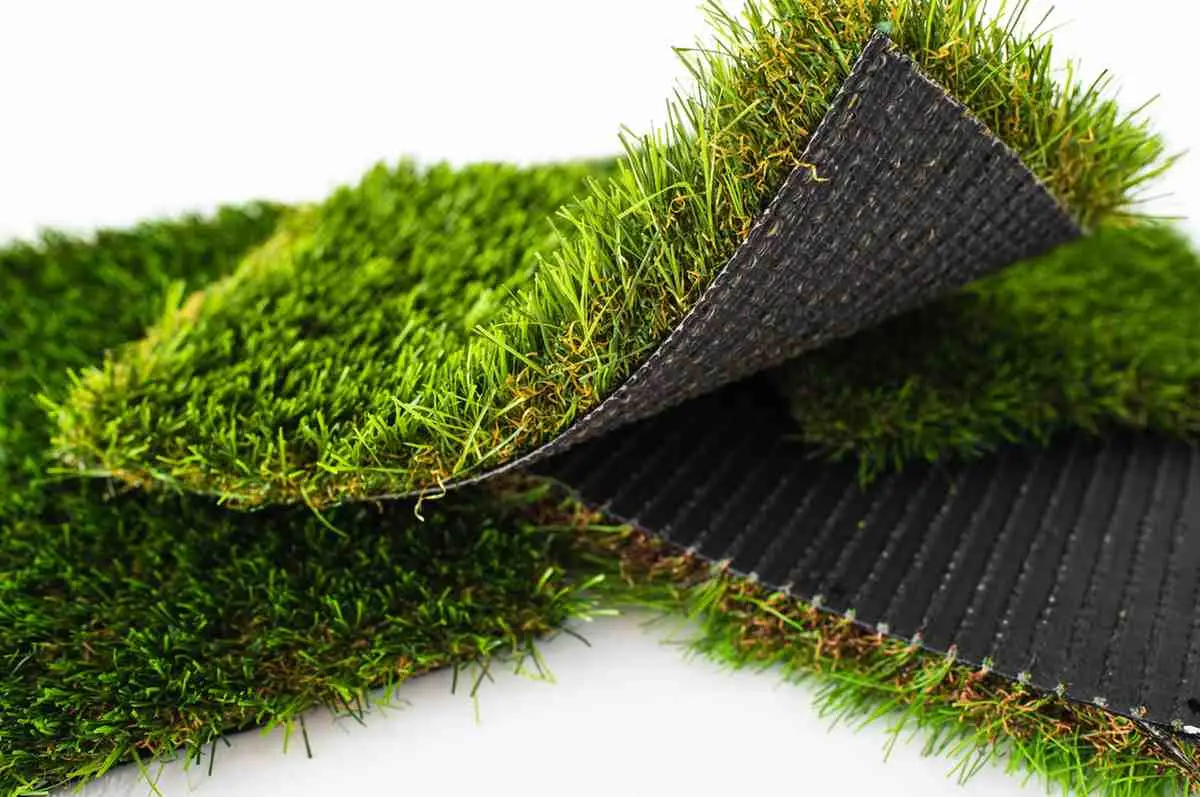
- Pet-specific turf vs. regular landscape turf: Pet turf has a polyurethane backing with a higher density of drainage holes at least 100 per square foot. Standard landscape turf drains far slower and holds urine odors.
- Pile height: Stick to 1 to 1.5 inches (around 15 to 20mm). Taller fibers look nice but trap more waste and are harder to clean.
- Blade shape: W-shaped and C-shaped fibers hold their shape under heavy paw traffic. Flat blades mat down quickly.
- Safety: Always buy turf with lead-free certification and no heavy metals. Ask for a product data sheet before purchasing.
- Heat concern: In the Dallas area, artificial lawn surfaces can reach 150°F in direct summer sun. Use a cooling infill, add shade structures, or rinse the surface before your dog goes out. This is a detail most competitors ignore completely.
What You Need Before You Start
Full Tools and Materials Checklist
Gather everything before you start. Stopping mid-installation to find supplies causes mistakes.
- Utility knife: for cutting turf to size
- Sod cutter or flat spade: for removing natural grass
- Rake and heavy-duty roller or compactor: for leveling the base
- Pre-emergent weed killer: apply 24 to 48 hours before starting
- Bender boards or aluminum edging: to define the perimeter
- Decomposed granite (DG) or crushed limestone: 3 to 4 inches for the base
- DG stabilizer: prevents the base from shifting under edges
- DrainCore or AirDrain sheets: highly recommended for heavy dog use
- Turf deodorizer (Zeofill): apply under and on top of turf
- Seaming tape and professional adhesive: for joining multiple turf pieces
- Galvanized U-nails or staples: for securing the edges
- Antibacterial sand infill: for fiber support and odor control
Important note on weed barrier fabric: Most guides tell you to lay a weed barrier under pet turf. Do not do it. The fabric traps urine and bacteria underneath the surface, which creates odors that never go away. Use a pre-emergent weed killer instead.
Cost Breakdown: DIY vs. Professional Installation
No other local competitor publishes this clearly. Here is what to budget:
| Item | DIY Cost (per sq ft) | Pro Install Cost |
| Turf material | $2.50 – $6.00 | Included |
| Base material (DG/limestone) | $0.50 – $1.00 | Included |
| Drainage layer (DrainCore) | $0.30 – $0.60 | Included |
| Infill (antibacterial sand) | $0.30 – $0.80 | Included |
| Labor | $0 | $5 – $9 |
| TOTAL ESTIMATE | $4 – $8 / sq ft | $9 – $15 / sq ft |
For a typical 500 sq ft backyard in Dallas, a professional installation by we runs between $4,500 and $7,500 depending on site conditions. Financing is available, contact us for a free estimate.
Site Preparation: The Foundation of a Long-Lasting Installation
Rushing site prep is the number one reason artificial turf fails early. Do not skip or shorten these steps.
Step 1: Measure and Plan
Calculate your square footage. Add 5 to 10 percent for waste and custom cuts. Mark any obstacles sprinkler heads, tree roots, flagstone walkways, or concrete paths. Remove or cap sprinkler heads completely before you begin.
Check your yard’s natural slope. You want a 1 to 2 percent grade sloping away from the house. This is critical for proper drainage for artificial grass in flat Dallas yards where water has nowhere to go.
Step 2: Remove Existing Grass and Soil
Install artificial grass correctly by starting with a clean base. Remove 3 to 4 inches of soil, not the 2 inches some guides suggest. Dogs run, jump, and dig; a deeper base holds up far better over time. Remove extra soil around the perimeter so dogs cannot dig under the edges.
Step 3: Apply Weed Killer and Install Edging
Spray a pre-emergent herbicide on the exposed soil. Wait 24 to 48 hours. Then install bender boards or aluminum edging around the entire perimeter. This step is skipped in most online guides, but it is what keeps your artificial lawn looking straight and clean for years.
Step 4: Lay and Compact the Base
Spread 3 to 4 inches of decomposed granite or crushed stone base for turf installation. Use a mechanical roller to compact the base firmly. Apply a DG stabilizer after compacting this chemical hardens the surface so edges do not lift over time. Skip this step and you will see turf edges rising within a year.
Drainage System For Artificial Grass
Pet-friendly artificial grass lives or dies on drainage. Dog urine concentrates in the same spots every day. Without proper drainage, that urine pools beneath the surface and creates odors you cannot clean away.
Your Three Drainage Options
- Option 1: Turf drainage holes only: Works for light dog use or single small dogs. Requires very frequent rinsing to stay odor-free.
- Option 2: DrainCore or AirDrain sheets: Plastic grid sheets installed under the turf. These lift the backing off the soil, create airflow, and allow liquids to flush completely. Best choice for most Dallas homeowners with dogs.
- Option 3: French drain or perforated pipe: Best for flat yards with no natural slope. If your yard holds standing water after rain, discuss a French drain system with your installer before laying any turf.
Also apply a layer of Zeofill turf deodorizer directly on top of your compacted base, before the drainage sheet goes down. This creates a barrier that neutralizes odor at the source.
How to Install Artificial Grass for Dogs: Step-by-Step
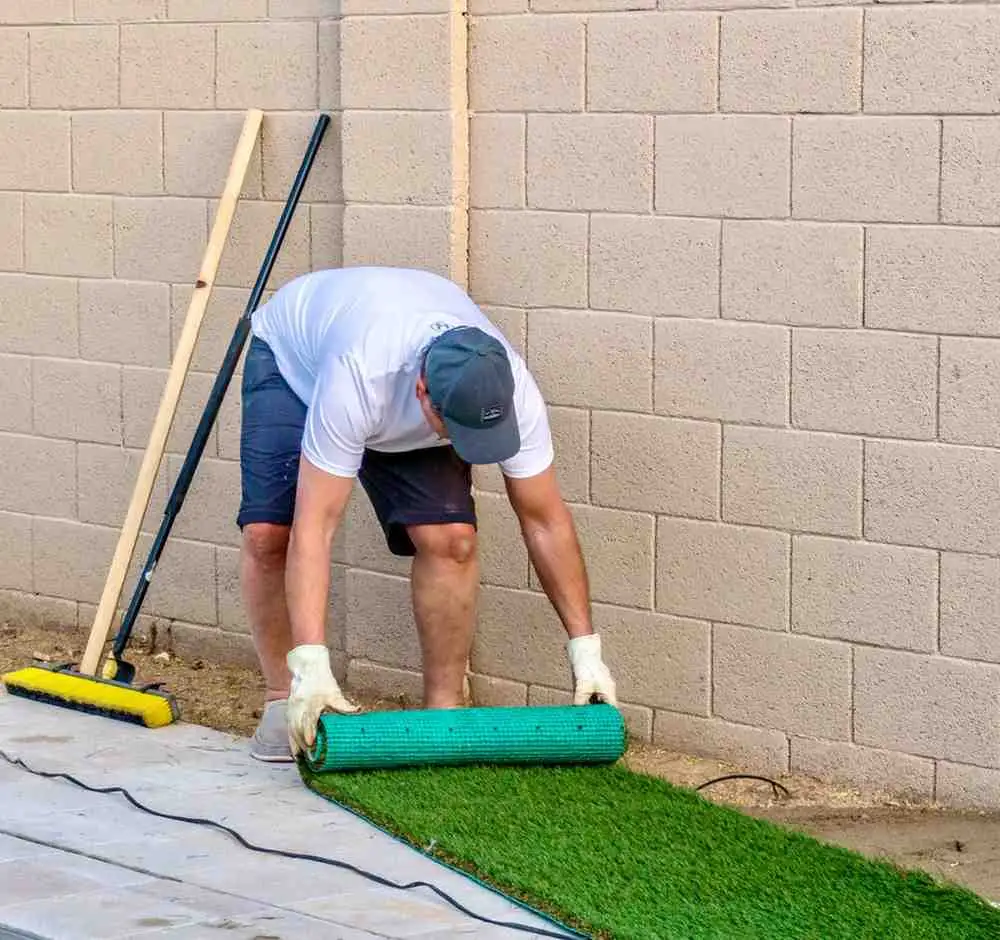
Step 1: Unroll and Acclimate the Turf
Installing artificial turf for dogs starts with acclimation. Unroll the turf and leave it in direct sunlight for 30 to 60 minutes. Texas heat actually helps here the fibers soften and become easier to work with. Check that the grain (the direction blades lean) faces toward your house for the best visual appearance.
Step 2: Cut to Size
Use a sharp utility knife to cut along the back of the turf, not the face. Make clean straight cuts. For curves around fencing or garden beds, cut in small increments and test the fit before trimming further. Always order 5 to 10 percent extra material. A small piece of leftover turf saves you if you need a patch later.
Step 3: Seam Multiple Pieces
If your yard requires more than one piece of turf, seam placement matters. Never place seams in high-traffic areas dogs running the same path every day will eventually pull them apart. Use the zipper method or S-seam method to make seams nearly invisible. Use professional adhesive, not just seaming tape. Match blade direction exactly on both pieces of turf before gluing.
Step 4: Secure the Edges
Securing the edges is the most important step for dog owners. Dogs will find loose corners and pull. Drive galvanized nails every 2 to 3 inches along all edges of the turf. Add nails every 2 feet across the field. Push nails deep so the heads sit flush with the backing. The more secure alternative is to build a perimeter frame from treated wood before installing artificial turf, and staple the turf directly to the frame. This method holds up to even determined diggers.
Infill Selection: Which Type Is Safe for Your Dog?
Infill keeps fibers upright, adds weight to prevent shifting, and is the main tool for managing odor and temperature.
| Infill Type | Best For | Avoid If |
| Crumb rubber | NOT recommended for dogs | Always — gets hot, odor issues |
| Silica sand | Budget installations, single small dog | Multiple dogs or hot climates |
| Antibacterial sand | Most dog owners in DFW | Very heavy dog use |
| Envirofill with Microban | Heavy dog use, odor-prone yards | Budget-sensitive projects |
| Zeofill | Natural odor absorption | Yards needing long-term infill life |
Apply 1 to 2 pounds of infill per square foot. Use a drop spreader for even coverage, then use a power brush to work the infill down into the fibers. Prevent weeds from appearing through the edges by re-applying weed killer around the perimeter once a season.
Training Your Dog to Use Artificial Grass
This section does not appear in any competitor guide but it is one of the most common questions dog owners ask after installation.
Some dogs hesitate to use a new surface. Their nose tells them it is not real grass, and they may search for another spot. Use these techniques during the first 10 to 14 days:
- Stick to your dog’s normal potty schedule and walk them directly to the turf.
- Use positive reinforcement treat and praise immediately after they go on the turf.
- Add a scent attractant spray to the surface. Many pet stores sell sprays designed specifically to encourage dogs to go on artificial turf for dogs.
- Install a small fake fire hydrant in one corner. Dogs naturally gravitate to vertical objects.
- For multi-dog households, let one dog use the area first and the other dog will follow the scent.
Most dogs adjust within 7 to 14 days with a consistent routine.
Maintenance Schedule for Pet Turf
How to Maintain Artificial Grass properly determines how long it lasts. Pet turf is low maintenance not zero maintenance.
- Daily (2 minutes): Pick up solid waste immediately. Quick rinse with a hose if needed.
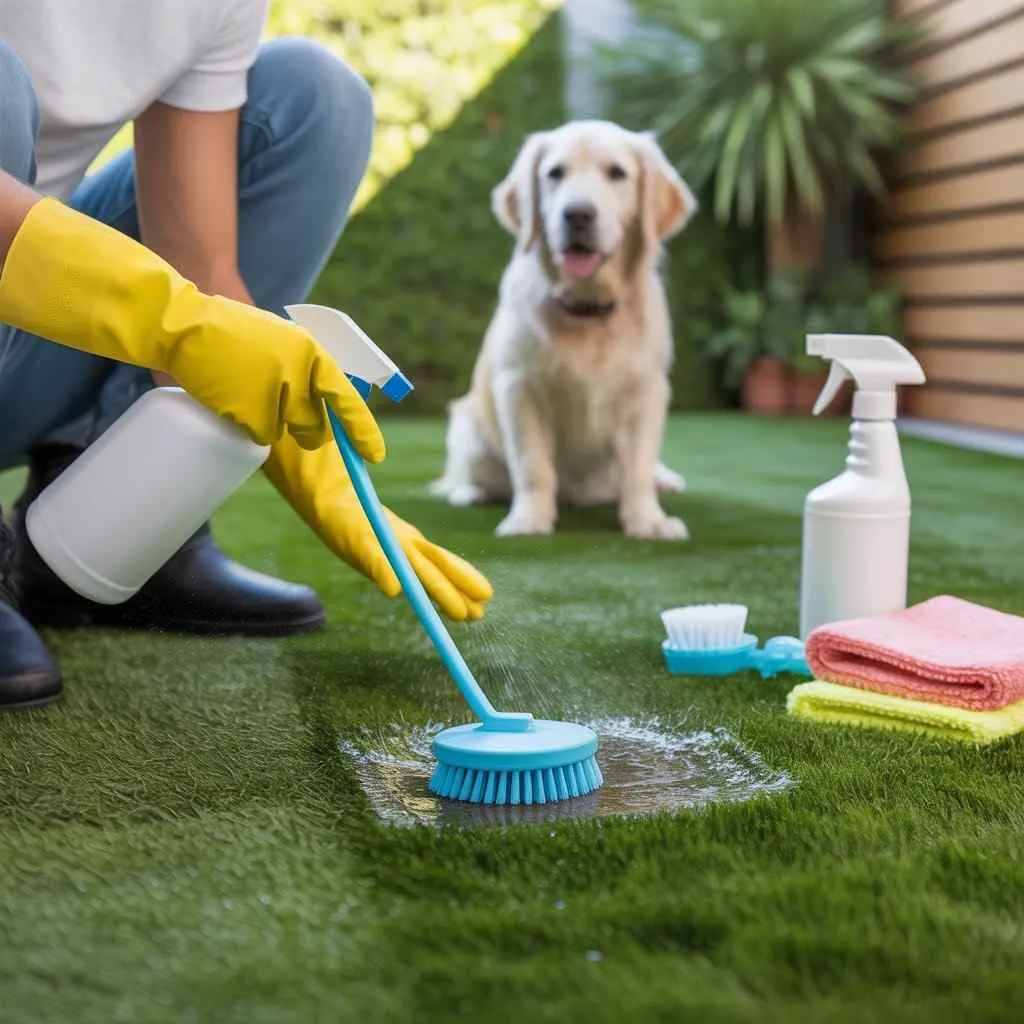
- Weekly (10 minutes): Hose down the entire surface. Apply an enzymatic cleaner or a bio-enzymatic solution like PE-51. Brush fibers to keep them upright.
- Monthly: Deep clean with mild detergent. Check infill levels top up if low. Check edge staples dogs can loosen them over time.
- Seasonally: Power brush the entire surface. Re-apply pre-emergent weed killer around the perimeter. Check drainage channels for debris.
Products that work well: Simple Green Outdoor Odor Eliminator, Nature’s Miracle Enzymatic Spray, and PE-51 Bio Enzymatic Cleaner.
Common Mistakes to Avoid
- Using weed barrier fabric: under pet turf it traps bacteria and creates permanent odors.
- Skipping the drainage layer: the number one cause of smell problems.
- Choosing crumb rubber infill: it retains heat and is not safe for pets.
- Not securing edges tightly: dogs will find and pull loose seams.
- Buying uncertified cheap turf: always ask for a lead-free and heavy-metal-free certification.
- Skipping the DG stabilizer: edges will lift within 12 months.
- Placing seams in high-traffic paths: seams fail faster under constant foot and paw traffic.
- Removing only 2 inches of soil: 3 to 4 inches is the correct depth for a stable dog-friendly base.
DIY vs. Professional Installation: Full Comparison
| Factor | DIY | SodGreen Professional |
| Cost per sq ft | $4 – $8 | $9 – $15 |
| Time required | 1 to 2 weekends | 1 to 2 days |
| Drainage quality | Variable | Optimized for your yard |
| Warranty | Usually none | 5 to 15 years on installation |
| Seam quality | Good if done right | Near-invisible seams |
| Complex drainage | Difficult | Handled professionally |
DIY works well for small areas under 300 square feet with good natural drainage. For yards over 500 square feet, flat Dallas lots with standing water issues, or concrete base installations, professional help is worth every dollar. We have installed artificial turf for dogs across Dallas, Frisco, Plano, Allen, McKinney, Fort Worth, Irving, and every city in the DFW Metroplex for over 10 years.
Ready to Get a Clean, Green Yard for Your Dog?
Learning how to install artificial grass for dogs correctly takes planning, but the result lasts over a decade with almost no ongoing cost. The key steps are choosing the right turf, building a solid 3 to 4 inch base, installing a proper drainage system, and using a safe antibacterial infill. Avoid weed barrier fabric, secure every edge tightly, and rinse consistently.
SodGreen specializes in Artificial Turf Installation Dallas and the entire DFW Metroplex. Our team has handled everything from small urban backyards to large multi-dog play areas across Dallas, Frisco, Plano, McKinney, Fort Worth, and beyond. If your yard has drainage challenges, a concrete base, or you simply want a professional result without the weekend project, we are ready to help.
Book Your Quote to request a free estimate. Financing is available for qualifying homeowners.
Frequently Asked Questions
Is artificial grass safe for dogs?
Yes, when you choose a certified lead-free product with no heavy metals. Always request a product safety sheet. Avoid cheap imported turf with no certifications.
Does artificial grass get hot for dogs in Texas?
It can. Turf surfaces in Dallas summer heat can reach 130 to 150 degrees Fahrenheit. Use a cooling infill like Envirofill, add shade with a pergola or shade sail, or rinse the surface before outdoor time. Morning and evening use is safest during summer.
How long does pet turf last?
High-quality pet turf lasts 10 to 15 years with proper maintenance. Infill may need topping up every 2 to 3 years depending on use.
Can dogs dig up artificial grass?
Determined diggers can. The best prevention is securing edges with nails every 2 inches and building a perimeter frame for the turf to staple to. Dogs that dig usually target loose corners and seams, not the middle.
How do I stop artificial grass from smelling like dog urine?
Rinse the area immediately after your dog uses it. Apply an enzymatic cleaner weekly. Use an antibacterial sand infill with Microban technology. Never use a weed barrier fabric under pet turf it traps odors permanently.
What is the best base for pet turf?
A crushed stone base for turf installation either decomposed granite or crushed limestone gives the best drainage and stability. Use 3 to 4 inches, compact it, and apply a DG stabilizer before laying turf.
Can I install artificial grass on concrete for dogs?
Yes. You skip the base preparation and glue the turf edges directly to the concrete. A DrainCore or AirDrain sheet is even more important on concrete since urine has nowhere else to go.
What do you put under artificial grass for dogs?
For best results: compacted DG base, then a DrainCore drainage sheet, then Zeofill deodorizer, then the turf. Do not use weed barrier fabric.
How often should I replace pet turf infill?
Top up antibacterial sand infill every 2 to 3 years. Replace Zeofill every 12 to 18 months as it absorbs odors and needs refreshing.


Leave A Comment